NASA’s Europa Clipper spacecraft is set to launch on a 1.6-billion-mile (2.6-billion-kilometer) voyage to Jupiter’s ocean moon Europa in less than 7-months (Oct. 10). To ensure it can withstand the wild vibrations of the blast as well as the intense heat and cold of space, it was recently put through a series of hard-core tests at JPL.
The space simulator put Europa Clipper through environmental testing, or trials that simulate the environment the spacecraft will face, subjecting it to shaking, chilling, airlessness, electromagnetic fields, and more. This most recent test took 16 days to complete in JPL’s 85-foot-tall, 25-foot-wide (26-meter-by-8-meter) thermal vacuum chamber (TVAC). The chamber essentially creates a near-perfect vacuum inside to mimic the airless environment of space.
- 3 LEGO space toys in 1 box – Boys and girls ages 9 and up who love space can build and rebuild 3 different sets using the same set of bricks with...
- Endless space play possibilities – Kids can play out daring stories among the stars with 3 different space playsets: an astronaut figure, a space...
- Posable space figures – The astronaut toy has posable legs, feet, arms and fingers, and the space dog has a posable tail and legs so kids can choose...
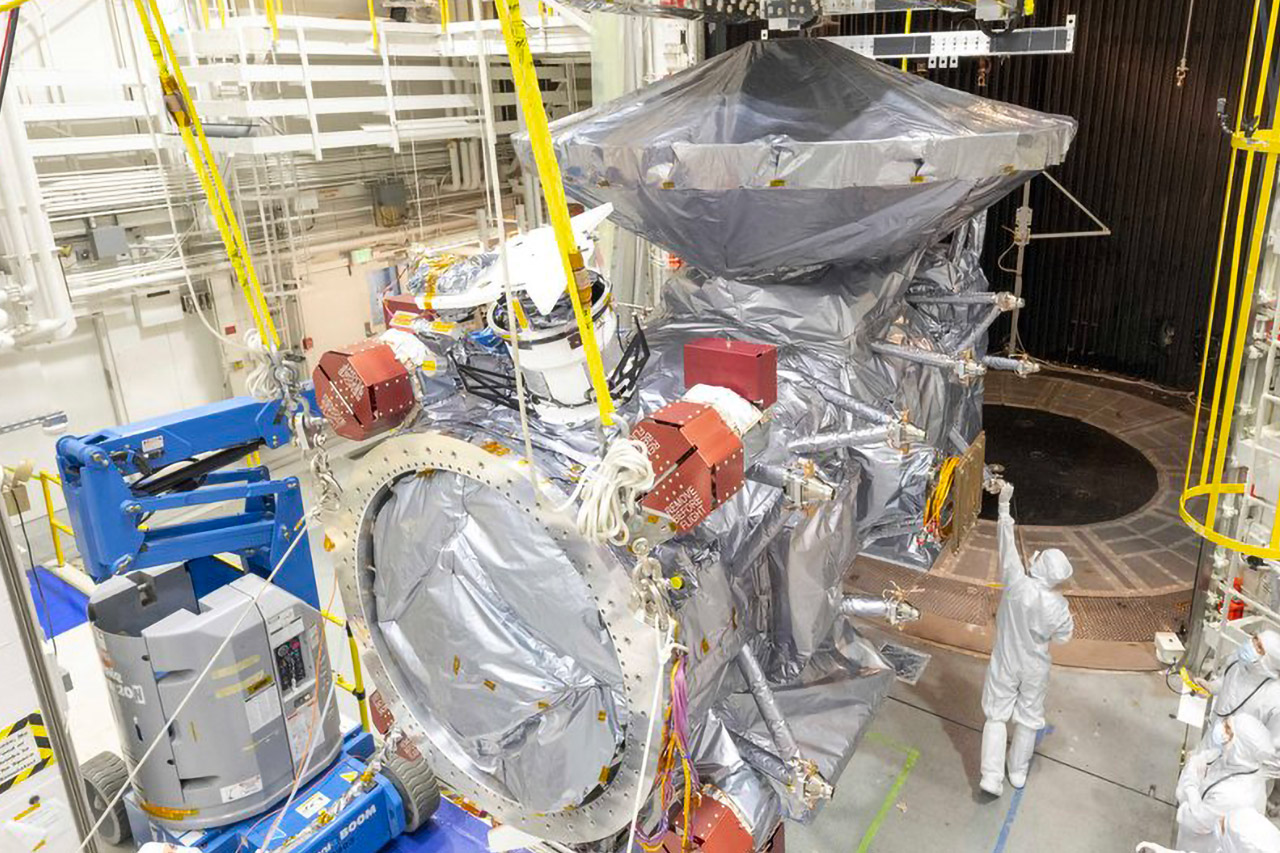
These were the last big tests to find any flaws. Our engineers executed a well-designed and challenging set of tests that put the system through its paces. What we found is that the spacecraft can handle the environments that it will see during and after launch. The system performed very well and operates as expected,” said Jordan Evans, the mission’s project manager at JPL.