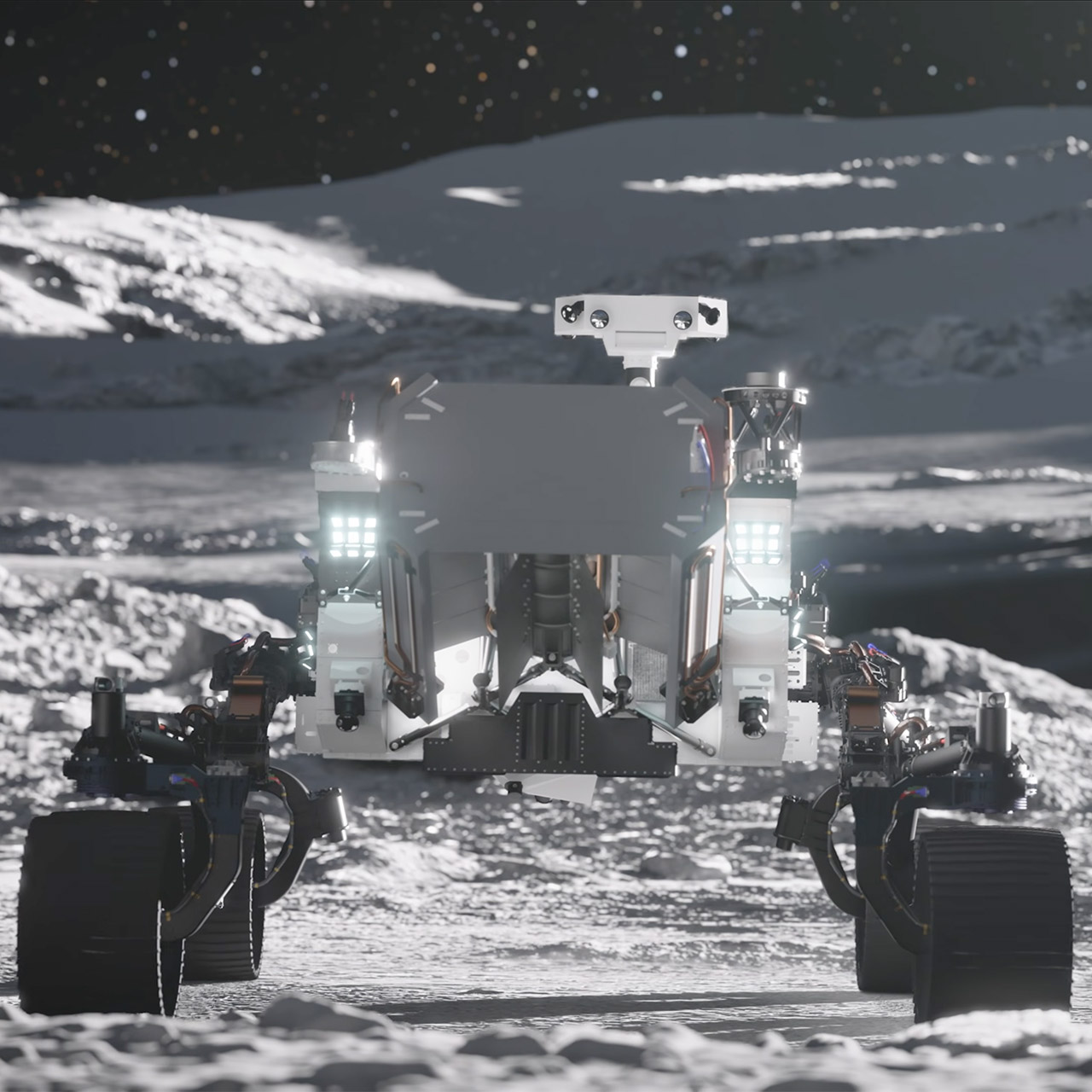
NASA confirmed this month that its nuclear-powered Polar Rover for Observation, Mapping, and In-Situ Exploration (PROMISE) will head to the Moon’s South Pole no earlier than late 2028. The six-wheeled vehicle, built at the Jet Propulsion Laboratory from a Curiosity test-bed body, electronics, and mobility system plus spare and test parts from both Curiosity and Perseverance, is meant to scout sites and check resources ahead of any permanent human outpost.
Engineers at JPL are preparing to transform the full-scale engineering model that has spent years in the Mars Yard running the Curiosity rover through its operational paces and ironing out the kinks. The hardware itself is no stranger to adventure, having already proven itself with the same rocker-bogie suspension and wheel design tested on two planets, so it’s simply a matter of giving it a new lease on life by outfitting it with lunar instruments, updating the software, and installing a spare multi-mission radioisotope thermoelectric generator at the back. That generator provides the rover with a continuous 110 watts of electricity as well as a small amount of warmth. This implies it can remain working through the long lunar night or simply sit in a perpetually shadowed crater where sunlight never enters.

- BUILD AN OFFICIAL NASA ROCKET – Kids prepare to explore outer space with the LEGO Technic NASA Artemis Space Launch System Rocket (42221) building...
- 3-STAGE ROCKET SEPARATION – Young builders can turn the hand crank to watch the rocket separate in 3 distinct stages: solid rocket boosters, core...
- STEM BUILDING TOY FOR KIDS – This educational rocket kit was created in collaboration with NASA and ESA to showcase the authentic system that will...
In those dark zones, a solar-powered machine would simply shut down or freeze its components, but the PROMISE rover will not be held back. With its power supply, it will be able to travel further and sit for days while waiting for its instruments to function. At the heart of the primary payload are four tools borrowed from the smaller VIPER rover: a TRIDENT drill that can pull samples up from a meter down in small bites while measuring soil firmness and temperature, a mass spectrometer that can determine what chemicals are in the dirt, a near infrared spectrometer that can detect ices and minerals, and a neutron spectrometer that maps hydrogen to detect signs of water. Also on board is an infrared radiometer that can detect cold traps at temperatures as low as minus 400 degrees Fahrenheit, a radiation detector that has already been tried and tested on Curiosity after 15 years in the field, a small laser retroreflector for precision tracking from orbit, and a stereo camera suite with lights to allow the rover to build 3D maps even at night.
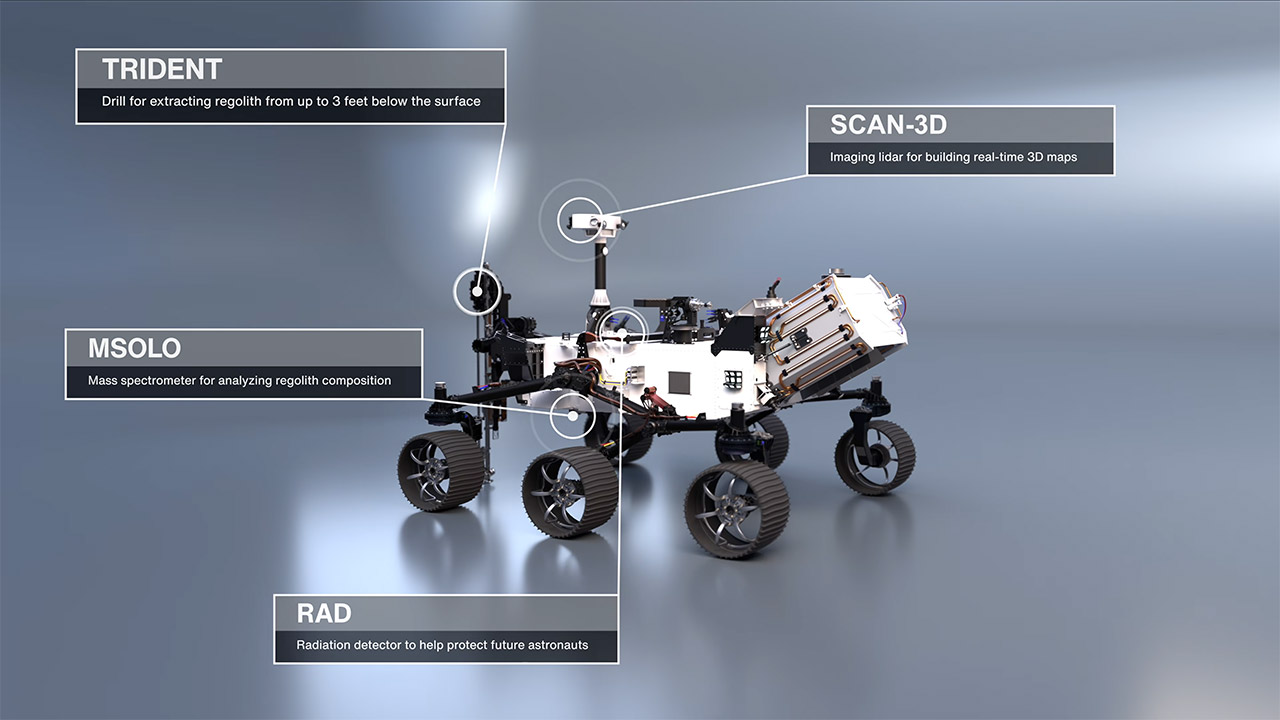
Along with all the science, there are three technology trials that will provide us with some fascinating insights. There is a new computer that can handle radiation in real time and process large amounts of data quickly. Then there’s commercial lidar, which generates comprehensive 3D maps of topography on the fly. Last but not least, the software that combines the wheel and lidar information allows the rover to calculate its own course with less assistance from Earth, which is beneficial when communication lags reach seconds and everything is pitch black. Overall, the setup should provide us with a solid understanding of how the wheels handle the powdery regolith, as well as some hard numbers to work with when constructing lunar landers, shelters, and vehicles.
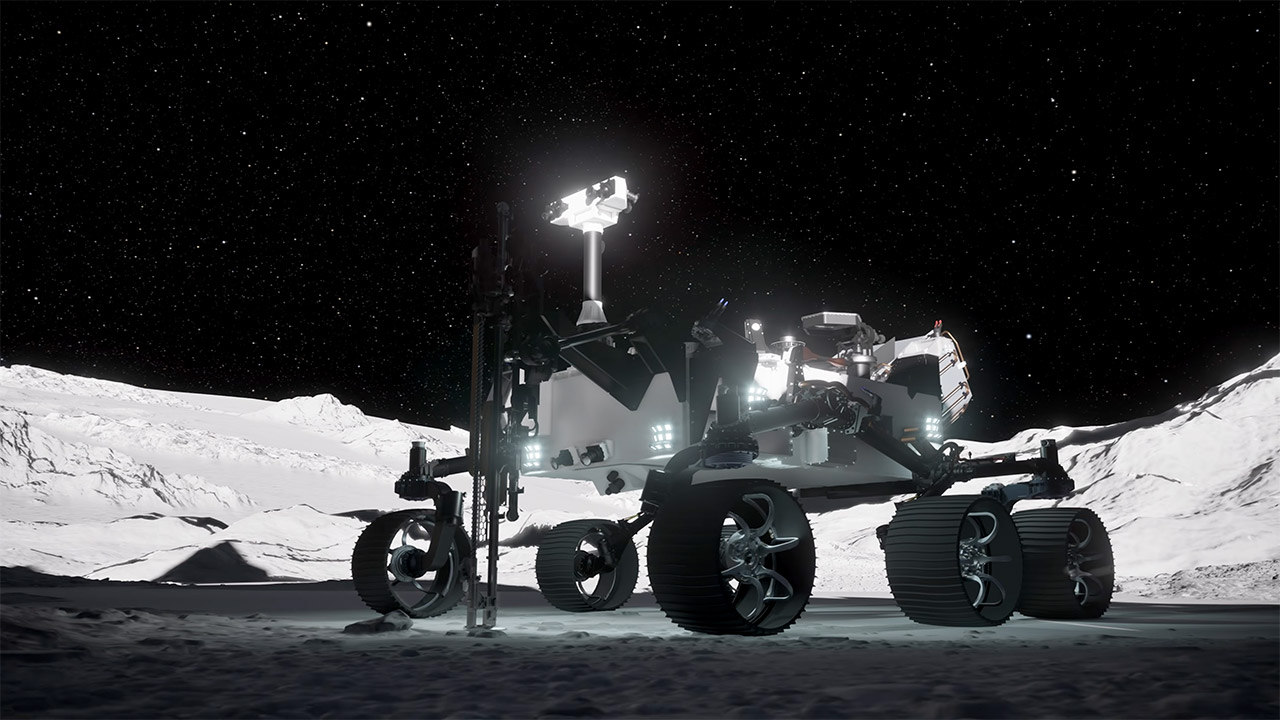
Blue Origin has a $94 million base contract on the table, with an additional $140 million available if it meets its performance criteria, which include delivering a decent-sized rover, approximately a ton, on its Blue Moon Mark 1 lander. However, NASA has stated that they believe they can keep the whole cost under $400 million, which is far less than some had anticipated, especially given the unique nature of the design. Jim Keane, the project scientist, and his team at JPL are drawing on almost three decades of expertise with Mars rovers, which is allowing them to keep things more streamlined and spend less time on integration and testing. After landing, the 18-month mission will return a wealth of data to aid the Moon Base project, which aims to progress from sending robotic probes and testing power sources to having people live there by the early 2030s.
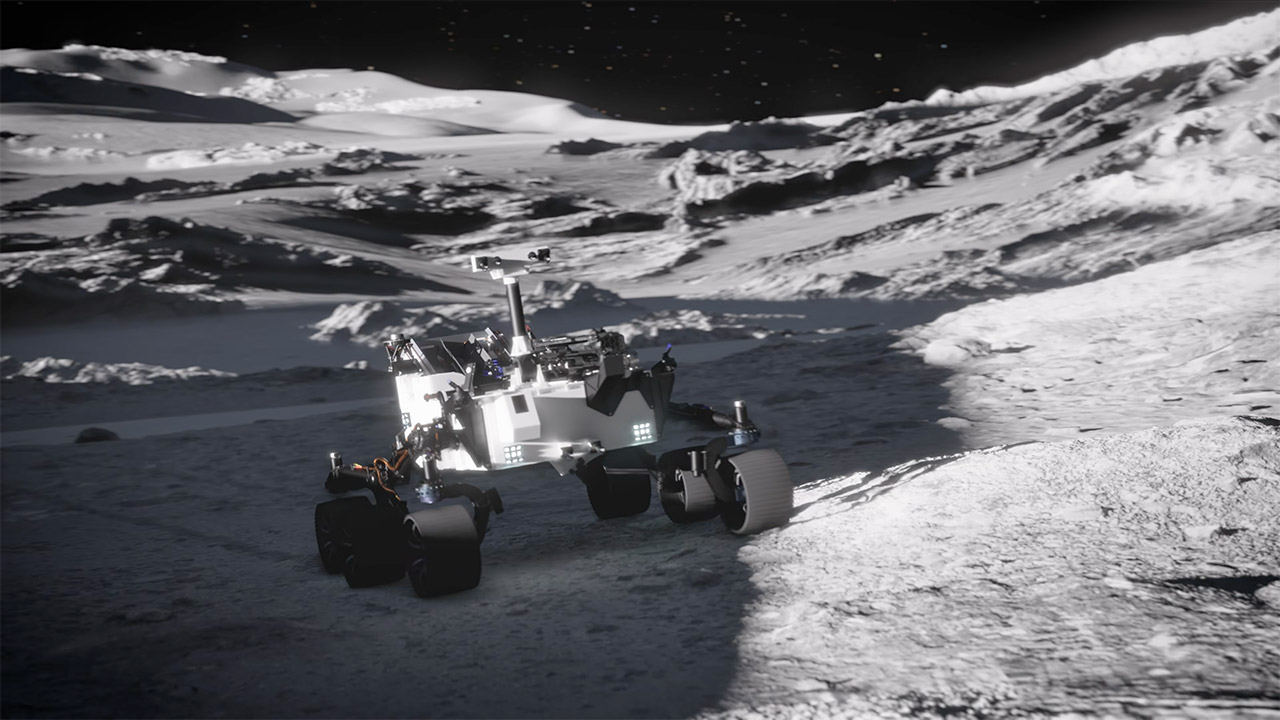
VIPER is slated to arrive first, and while it will only last a few months on solar power, it will enable researchers gather information on one specific area near the South Pole. PROMISE will spend a significant amount of time looking at a different location, including the darkest areas of lunar craters. They should be able to create fairly accurate maps of things like how deep the ice is, how strong the ground is, how much radiation is out there, and which paths are safe to drive on, all of which should aid in determining the best locations for habitats and power systems, as well as digging for water that can be converted into oxygen and rocket fuel. If all goes as planned, the first nuclear-powered rover on the Moon should arrive by the end of the decade, carrying all of the equipment originally slated to assist with the next Mars trip but is now being repurposed for the next phase in lunar research.