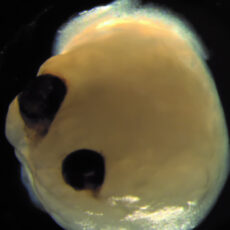


Neuroengineers from Rice University have developed wireless technology capable of activating specific fruit fly brain circuits in less than 1-second, or around 50-times faster than previous methods. To achieve this, the research team utilized magnetic signals to activate and target neurons that controlled the body position of freely moving fruit flies in an enclosure.
After activating the neurons, the team used genetic engineering to express a special heat-sensitive ion channel in neurons that cause flies to partially spread their wings, a common mating gesture. Magnetic nanoparticles were then injected that could be heated with an applied magnetic field, while an overhead camera watched as they roamed freely about an enclosure atop an electromagnet. By modifying the magnet’s field in a specified way, the nanoparticles could be heated to activate the neurons. This study is significant because the ability to activate genetically targeted cells at precise times could be a powerful tool for studying the brain, treating disease and developing direct brain-machine communication technology. For human brains, there’s MIT’s Robo-Thread, which can wind through narrow passages with ease.

- Experience total immersion with 3D positional audio, hand tracking and easy-to-use controllers working together to make virtual worlds feel real.
- Explore an expanding universe of over 500 titles across gaming, fitness, social/multiplayer and entertainment, including exclusive releases and...
- Enjoy fast, smooth gameplay and immersive graphics as high-speed action unfolds around you with a fast processor and immersive graphics.

The long-term goal of this work is to create methods for activating specific regions of the brain in humans for therapeutic purposes without ever having to perform surgery. To get to the natural precision of the brain we probably need to get a response down to a few hundredths of a second. So there is still a ways to go,” said Jacob Robinson, associate professor in electrical and computer engineering at Rice and a member of Rice’s Neuroengineering Initiative.