
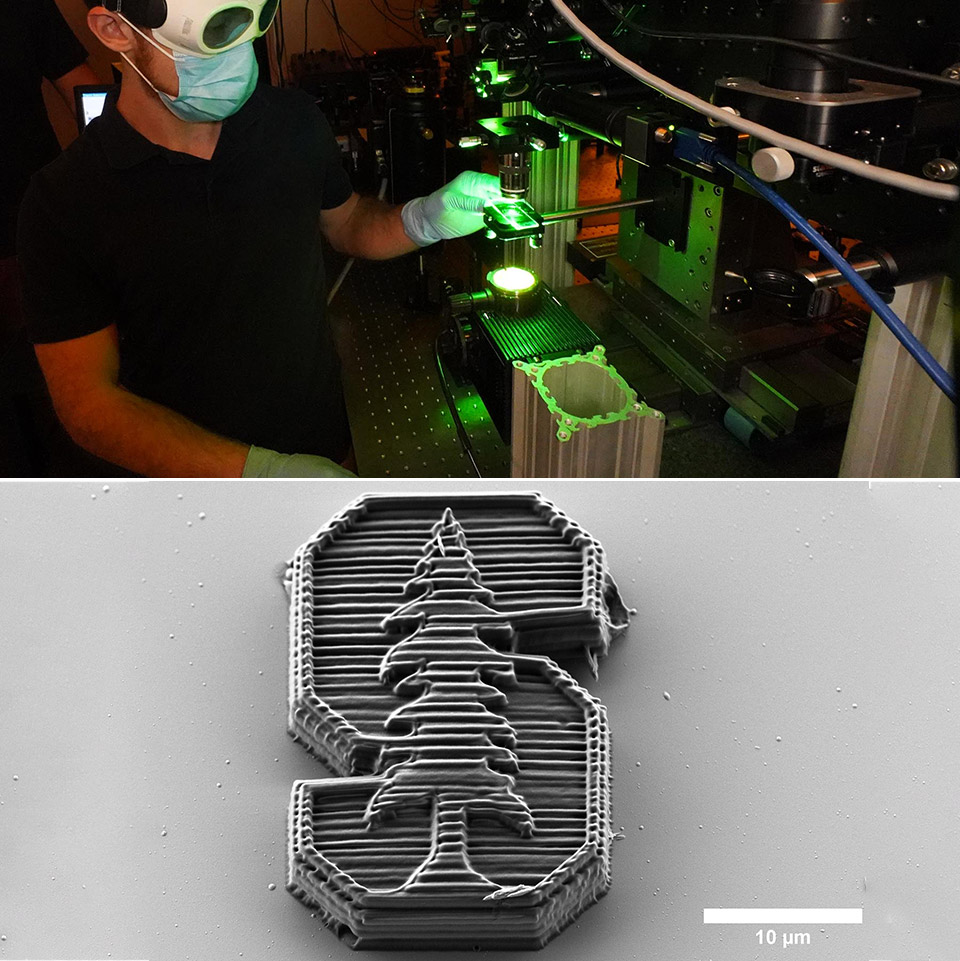

There are 3d-printed, Wordle-solving robots, and then this innovative new nanoscale 3d printing material by Stanford engineers that could one day be used to protect the structures of satellites, drones and microelectronics. It is designed to print nanoscale, or structures that are a fraction of the width of a human hair, lattices that are both strong and light.
This material is capable of absorbing twice as much energy as other 3D-printed materials of a comparable density. Future applications could be used to create better lightweight protection for fragile pieces of satellites, drones, and microelectronics. To achieve this feat, the engineers had to incorporate metal nanoclusters, which basically tiny clumps of atoms, into their printing medium.

- Resume Printing Function: Ender 3 has the ability to resume printing even after a power outage or lapse occurs.
- Easy and Qucik Assembly: It comes with several assembled parts, you only need about 2 hours to assemble 20 nuts well.
- Advanced Extruder Technology: Upgraded extruder greatly reduces plugging risk and bad extrustion; V-shape with POM wheels make it move noiseless,...

There’s a lot of interest right now in designing different types of 3D structures for mechanical performance. What we’ve done on top of that is develop a material that is really good at resisting forces, so it’s not just the 3D structure, but also the material that provides very good protection,” said Wendy Gu, an assistant professor of mechanical engineering.


