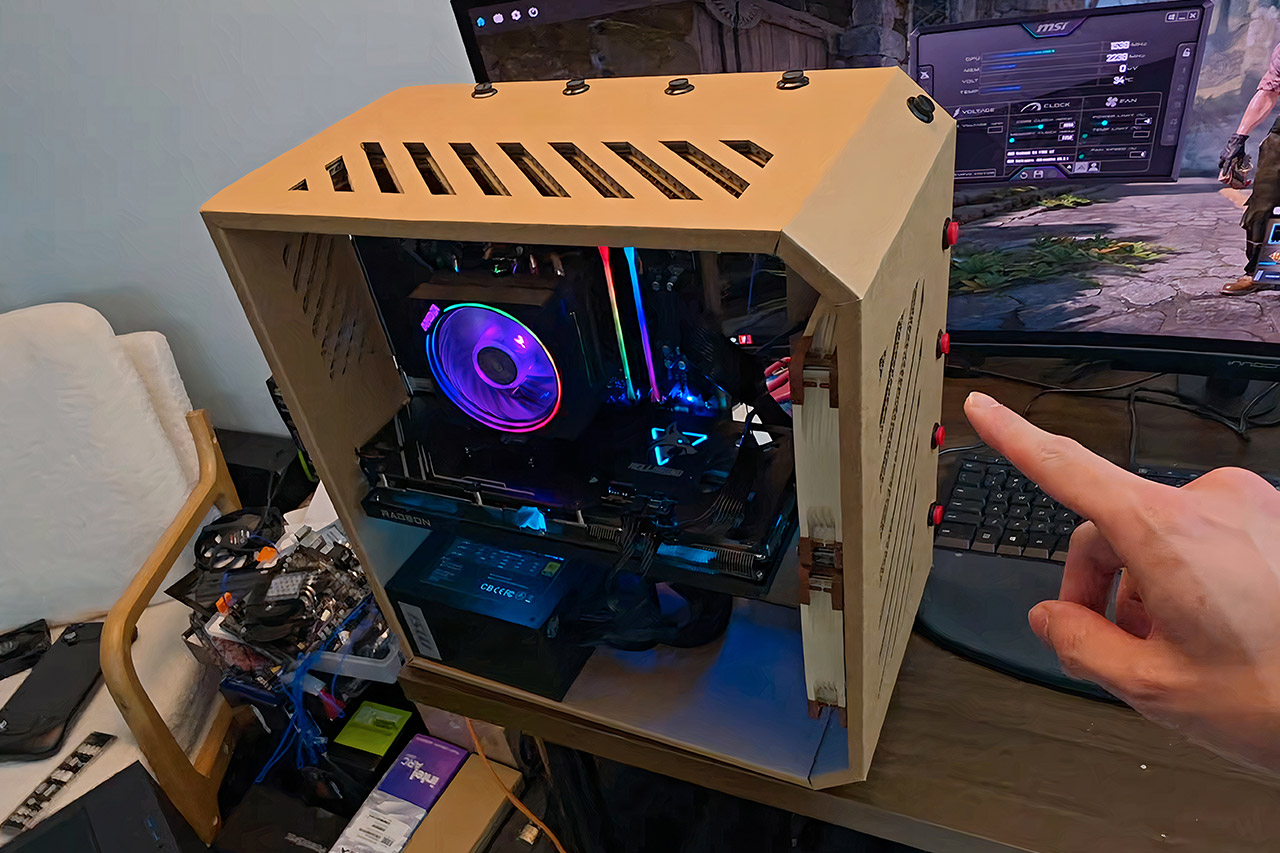
Modders have been experimenting with cardboard enclosures for years, but few can pull off something as elegant as computer enthusiast mryeester’s latest creation. His finished system appears to have been put together as a purposeful design choice rather than an emergency repair job. It has the works, as in clean cutouts, lots of layers to keep it rigid, and just enough room inside to fit conventional components without difficulty.
The real magic happened when mryeester collaborated with a friend who is familiar with cardboard, in this case a retail display designer. They worked together to rough out the overall design in CAD software before sending the drawings to a professional CNC cutter capable of handling thick, corrugated cardboard. They ended up stacking numerous layers on top of each other to form walls that are relatively solid. What could have been a flimsy substance that flexed and bent if looked at incorrectly? Those panels can actually withstand a significant amount of weight without failing.
- DOMINATE 1080P GAMING: Equipped with the Radeon RX 6500 XT 4GB graphics card, this gaming desktop delivers smooth, high-frame-rate gameplay in your...
- POWERFUL PROCESSOR: The 6-core, 12-thread Ryzen 5 5500 processor handles demanding games, browsing, streaming and multitasking with ease, providing a...
- LIGHTNING-FAST SPEED: Boot up in seconds and load games in a flash with the ultra-fast 512GB NVME SSD. Offers significantly faster performance than...
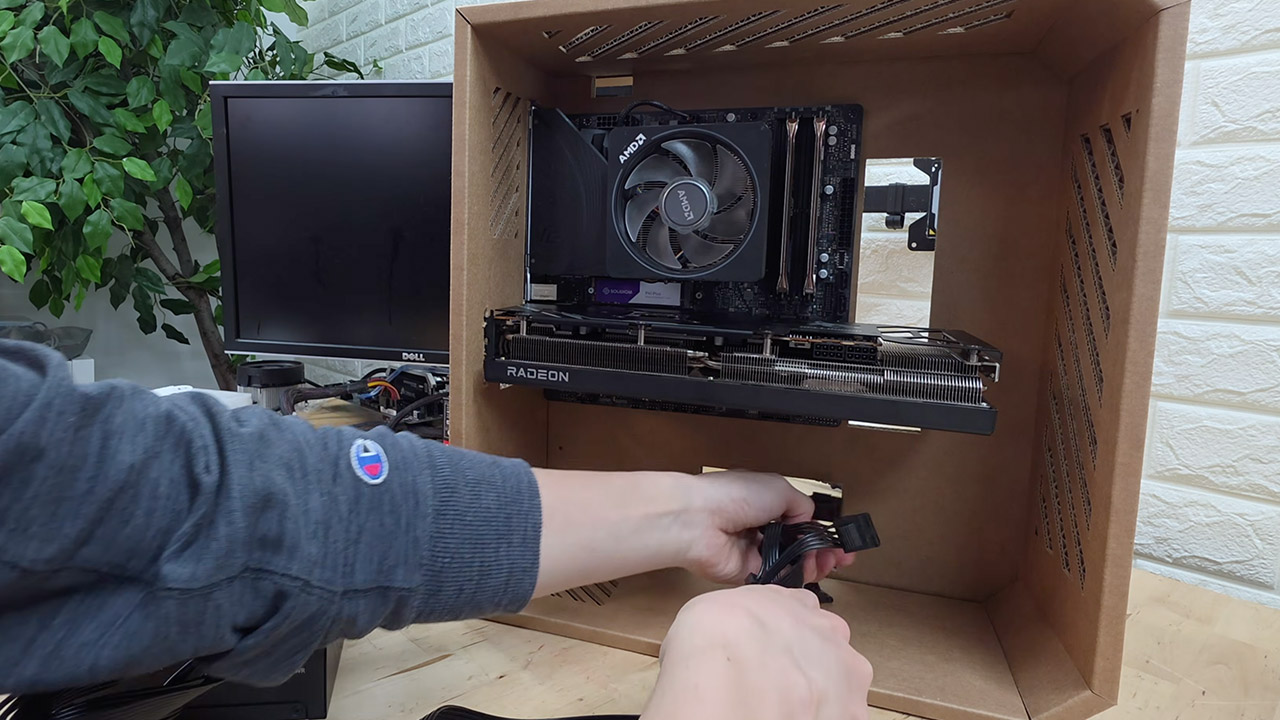
They added some ventilation slots to the latest revisions, which are hacked right into the sides to allow air to flow freely around the GPU and CPU. To be honest, putting the thing together was a bit of a challenge at first, but everything eventually fell into place. The motherboard mounting points matched up perfectly, and once everything was screwed down, the entire assembly was rock solid. Adding the graphics card was a little more complicated; an extra cut was required to clear the input-output bracket, but even without screws, it just rested there nicely, due to the stacked cardboard and bolts holding it down.
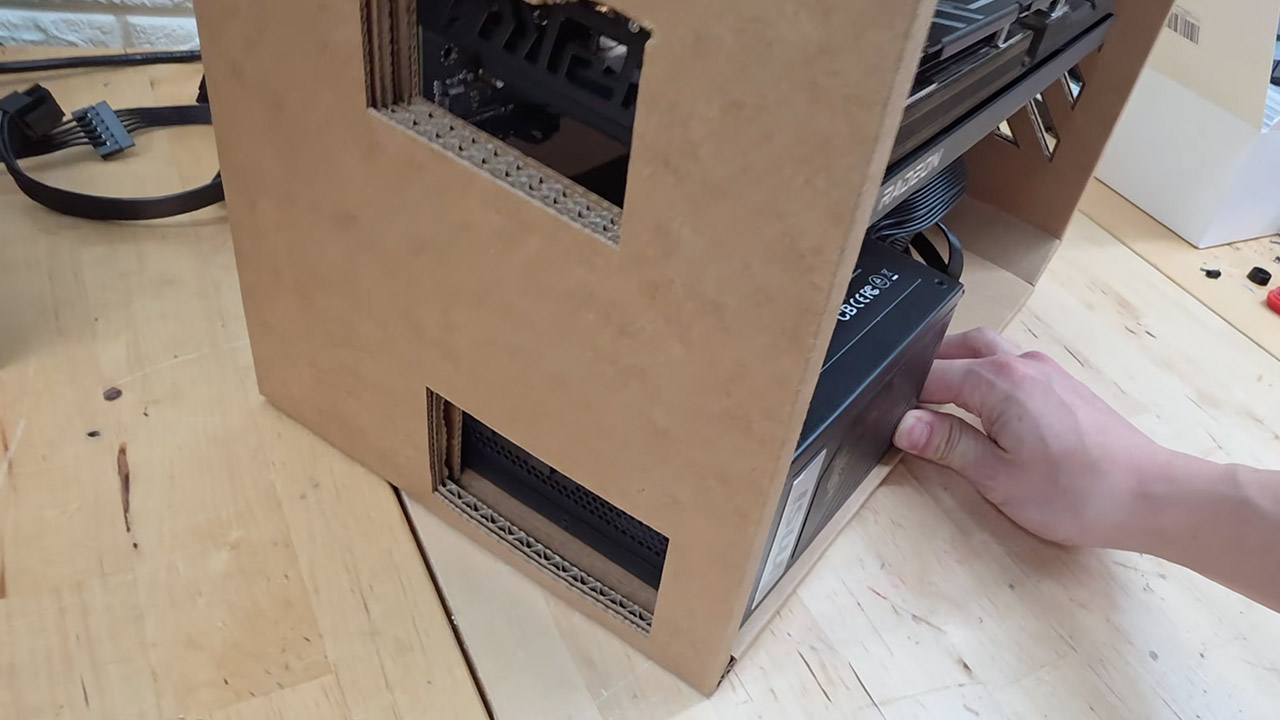
The power supply location was not a problem because the initial design called for a compact SFX unit, which they simply replaced with a full-size ATX. This required a bit of fiddling with scissors to clip the material back a little more. Overall, it was really simple; once they had the alignment correct, the side panels clicked into place with ease, and the whole thing snapped shut like a charm.
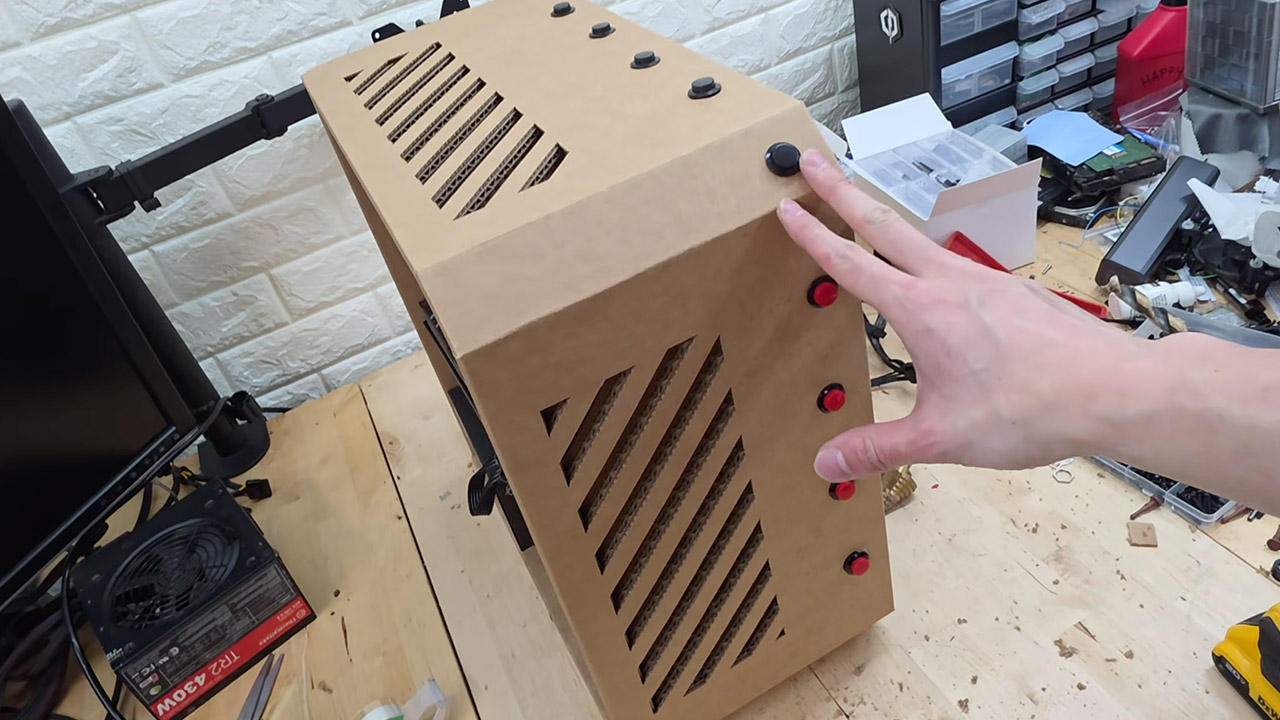
However, it’s the small details that really make the build stand out, such as the nine unique power buttons on one panel, each of which is wired such that only the correct combination will turn on the system. It’s a funny security feature that adds individuality to the system when turned on. They’ve also done an excellent job with CNC cutting, as every edge and corner appears clean and polished, rather than rough-around-the-edges DIY.
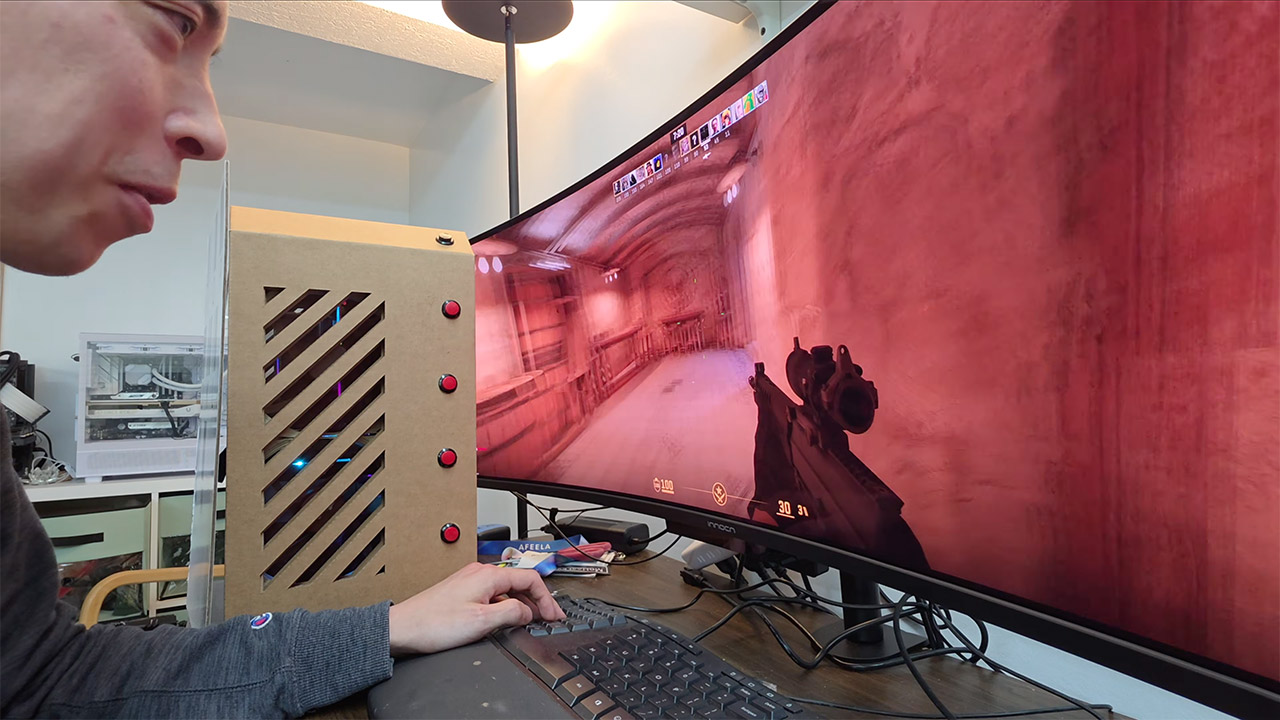
Of course, as with any build like this, there were a few hurdles to overcome along the road, as nothing ever goes perfectly smoothly. They had to double-check some measurements for certain brackets on the fly, and fitting in some of the larger parts required some patience with a trusty old utility knife, but each adjustment only reinforced how strong the layered cardboard was in real-world use. They didn’t bother with moisture-proofing this time, but they have ideas for future iterations that may include it.
[Source]