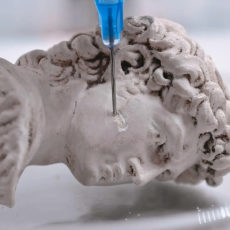
Forget resin, PNIPAM 3D printing ink extrudes as a liquid and then solidifies in water. This process uses a liquid polymer solution known as poly(N-isopropylacrylamide), which when extruded through a needle into a calcium chloride salt solution, it instantly solidifies as it makes contact with the salt water.
The rapid solidification process is the result of the salting-out effect, where the salt ions draw water molecules out of the polymer solution due to their strong attraction to water. This water removal causes the hydrophobic polymer chains in the PNIPAM ink to densely aggregate, resulting in a solid form. Even more impressive is that the solid structures produced can be easily dissolved in fresh water, reverting to their liquid form. Scientists hope that one day PNIPAM can contribute to environmentally friendly polymer manufacturing technologies.

- Featuring a fully automatic one-click leveling system, this cutting-edge printer eliminates the need for manual calibration of the Z-axis, ensuring a...
- With a Core XY structure enabling speeds of up to Max 600mm/s and rapid acceleration of up to 20000 mm/s², this printer excels in efficiency and...
- Experience rapid nozzle changes in just 3 seconds with this high-performance 3D printer featuring a high-flow 32mm³/s nozzle for stable high-speed...
This is all done under ambient conditions, with no need for additional steps, specialized equipment, toxic chemicals, heat or pressure,” said Jinhye Bae, study senior author and a professor at the UC San Diego Jacobs School of Engineering.
[Source]