Throaty Mumbo already spent an hour proving a vinyl record can cough up a SEGA game if you are patient enough and a little mean to the format. His follow-up, posted as Can We Port Video Games to VHS?, asks the meaner question. A cassette is linear. A videotape is also linear, except it also carries a moving picture, two audio tracks, and a deck that can be told to wind forward or back. GCVHS is his attempt to turn that mess into a console.
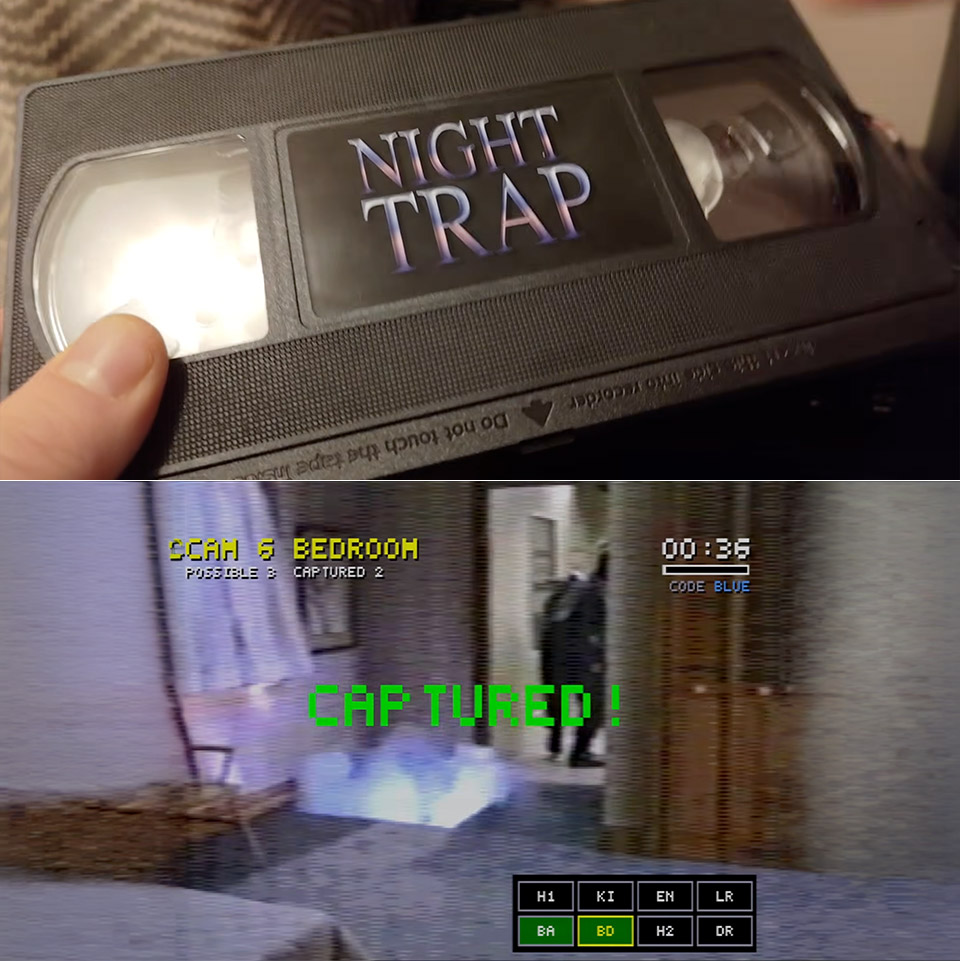
He begins to experiment with a machine called the Action Max from Worlds of Wonder, which has been around since 1987. It came in a box with a light pistol, a suction cup sensor, and a tape labeled as a video rather than the real game footage. Sonic Fury plays like a cheesy training film. The score system is intended to be shown by a flashing circle in the corner… but that’s it. The entire system is based on you hitting the circle with the gun to receive a score, but his bulb is dead, so the score remains zero, and for some reason, the tape just keeps rolling whether you hit anything or not. Even the Magnavox Odyssey was able to generate its own video signals, but Action Max just borrows the VCR to do so, referring to it as a “real system.”

- LITTLE DO-IT-ALL — Mac mini packs pure power into a small, five-by-five-inch desktop as the M6 chip delivers next-level AI capabilities. Mac mini...
- M6 CHIP — Everything you do on Mac mini feels more responsive with the M6 chip and its next-generation CPU. Fly through AI workflows with up to 4.8x...
- CONNECT IT ALL — Features three Thunderbolt 4 ports, an HDMI port, and a 2.5Gb Ethernet port in the back, and two USB-C ports and a headphone jack...
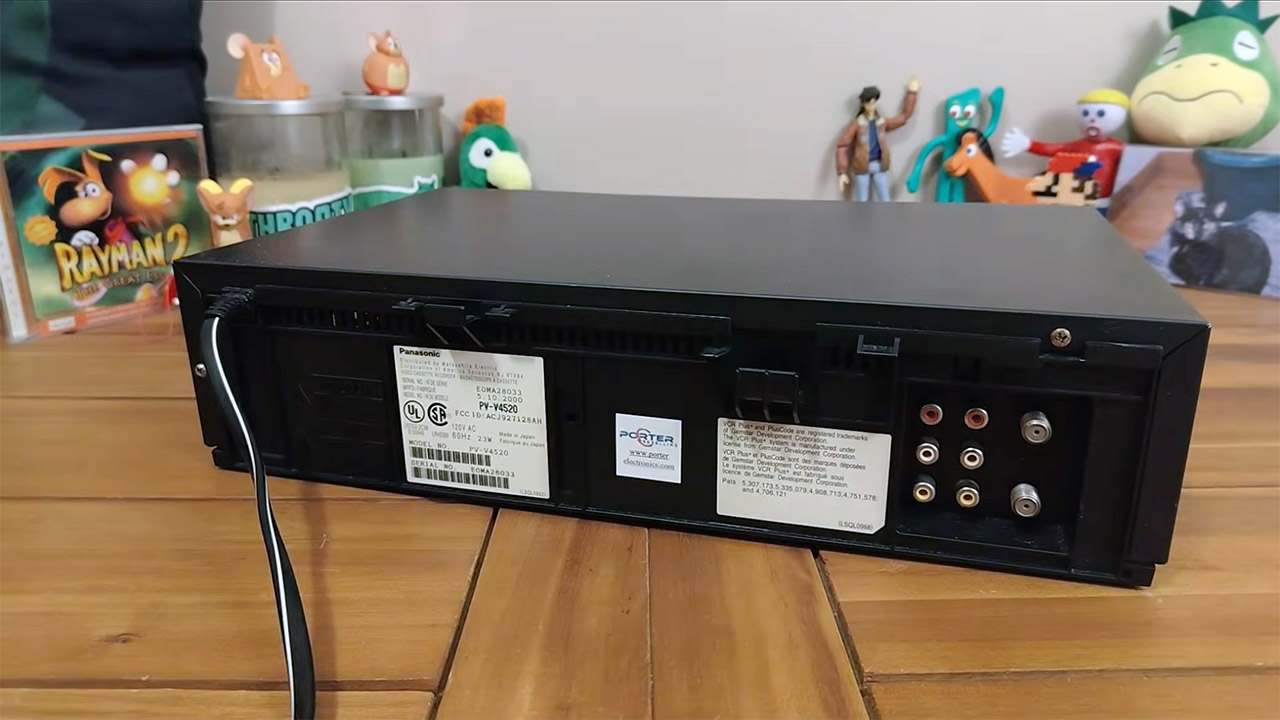
From there, he stops attempting to repair the 1987 model and starts building something new. There’s a simple Panasonic deck with a composite jack on the back; essentially, it’s a method for whatever’s on the tape to go out and into something that can distinguish between a game and a sitcom. He takes out an old microcontroller capture board that he previously used for his toy camcorder project; this board can accept composite input. The problem is that the frame rate is only 3 frames per second, and you’re lucky if the color is correct. A PC conducts all of the real decoding work, which makes it feel like a half-baked solution, so he gives up.
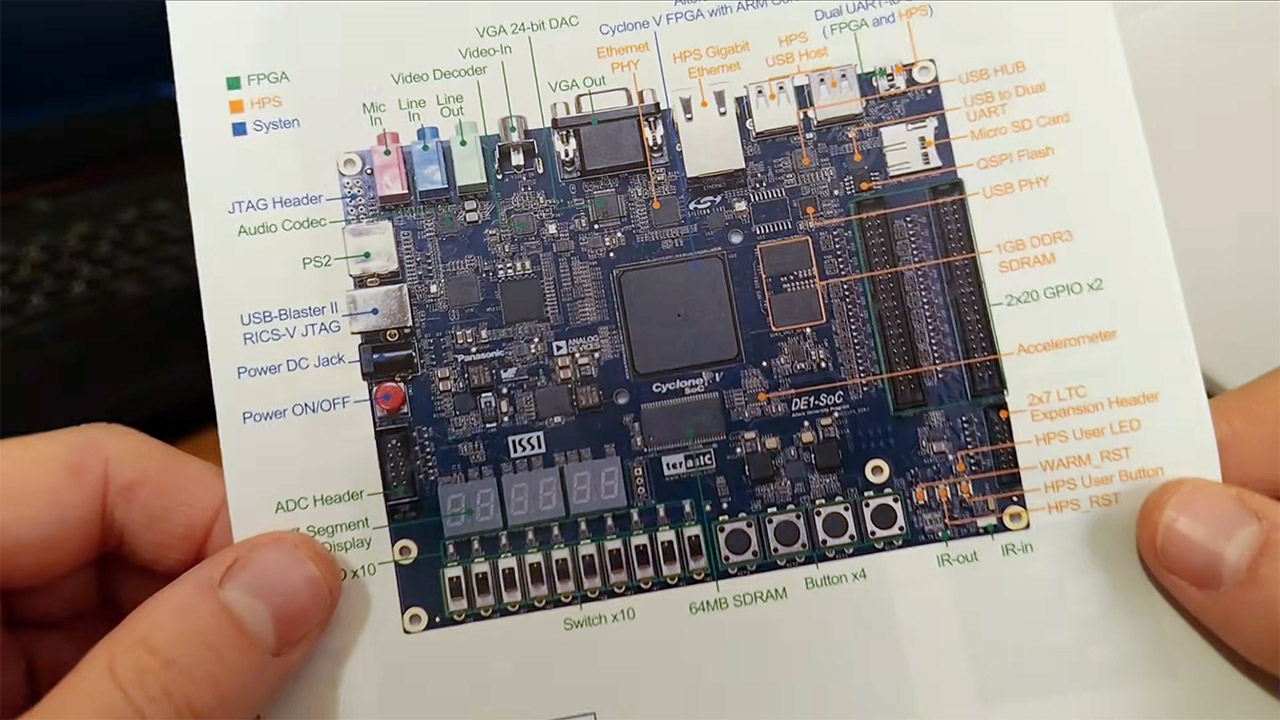
The Terasic DE1-SoC board takes over from there. In the middle is an Intel Cyclone V device, which can be used to create a unique video decoder rather than simply copying one from another source. The composite input is already on the FPGA side of the board, so he won’t have to solder anything. To begin, the board transforms into a composite-to-VGA converter, which is essentially a glorified video toaster with a student lab badge, but it does the job. The Duke Nukem footage and that trash video called Sonic Fury both appear on a monitor, and he’s added some rows of switches to mess with the colors, add some scan lines, or modify the hue, as well as a pretend status overlay. Put it in the graphics section of the console, and you’re practically done.
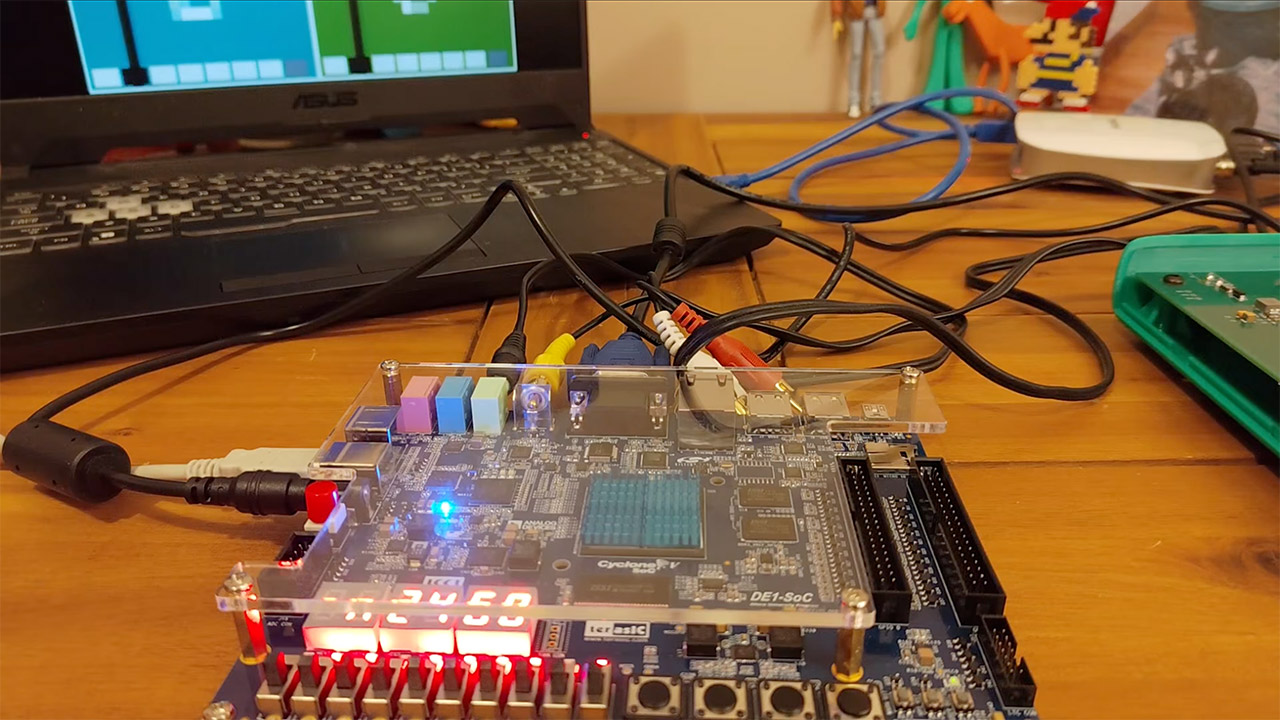
One tape has to hold more than one scene, or the player is stuck watching a movie. To accomplish this, he edits numerous clips into a single frame, starting with two, then four, and then trimming back down to the exact clip the game requires. Because a tape runs at around 60 frames per second, which is more than a branching scene requires, he decides to switch clips on successive frames and extract eight independent streams from a single signal at half the pace. The audio receives the same kind of piecemeal treatment. So he devises a cunning method, painting the sound into the left edge of the image as a visible waveform and then reading it back out that way.
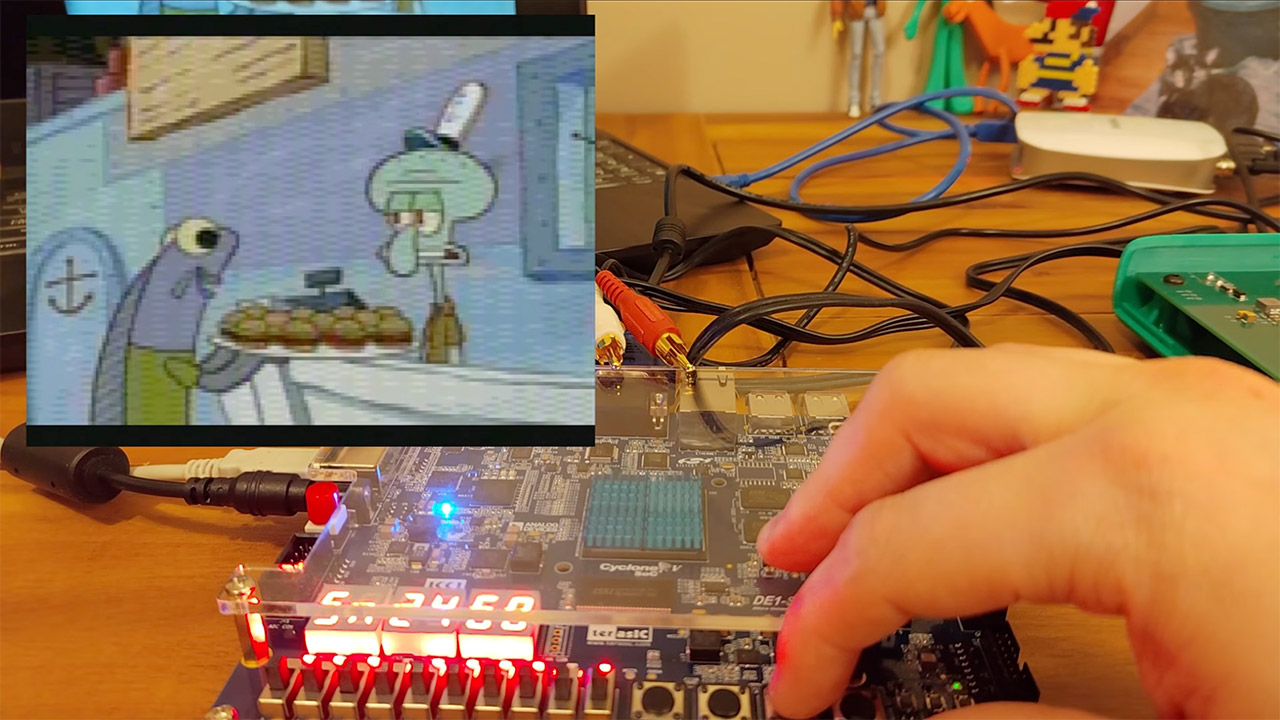
The left and right audio channels can each carry two channels, but he isn’t pleased, so he devises another hack: as a last option, he reads the sound information from the picture itself. A controller click is all that is required to transition from a cheetah clip to a plumber clip to a collection of randomly picked video files from the appropriate folder. Then he just records around ten minutes of that signal on a Sony premium tape, rewinds it, and then plays it through the DE1 to check how it looks. Switching still appears to function. Everything, however, comes out a little softer, which is probably the price you pay for preserving a game on an old VHS tape.
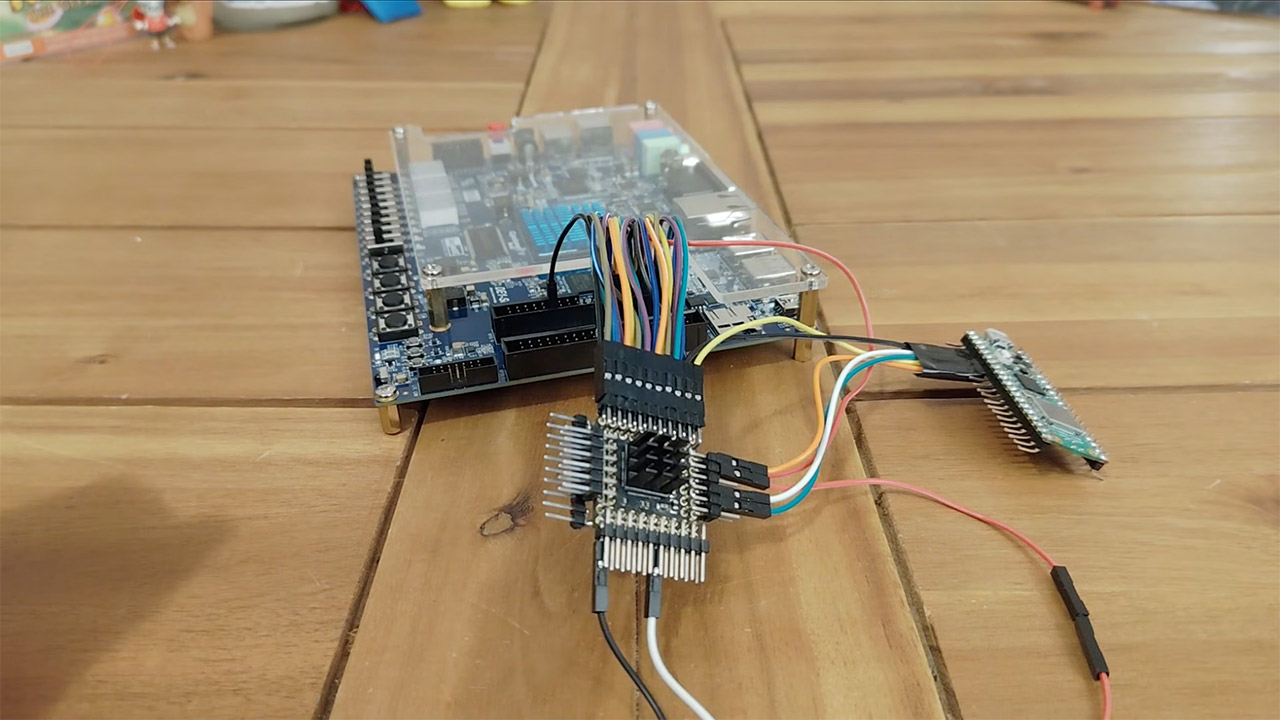
The key challenge, however, is that the processor must handle the game while not also serving as a TV. The GCVHS system takes care of this by distributing the effort between the two. The DE1 remains the graphics board, but the Pimoroni PGA2350 board, which is constructed around an RP2350 processor, runs the actual game on a separate set of wires. For mastering and testing, the individual even developed a VCR mock-up using the same chip family, as well as an SD card with false tape data and an infrared receiver. On the actual VCR, a small on-screen control panel sends an infrared signal from the front of the DE1’s blaster to wind the tape to a predetermined position. The control of choice, as expected, is an ancient N64 pad.
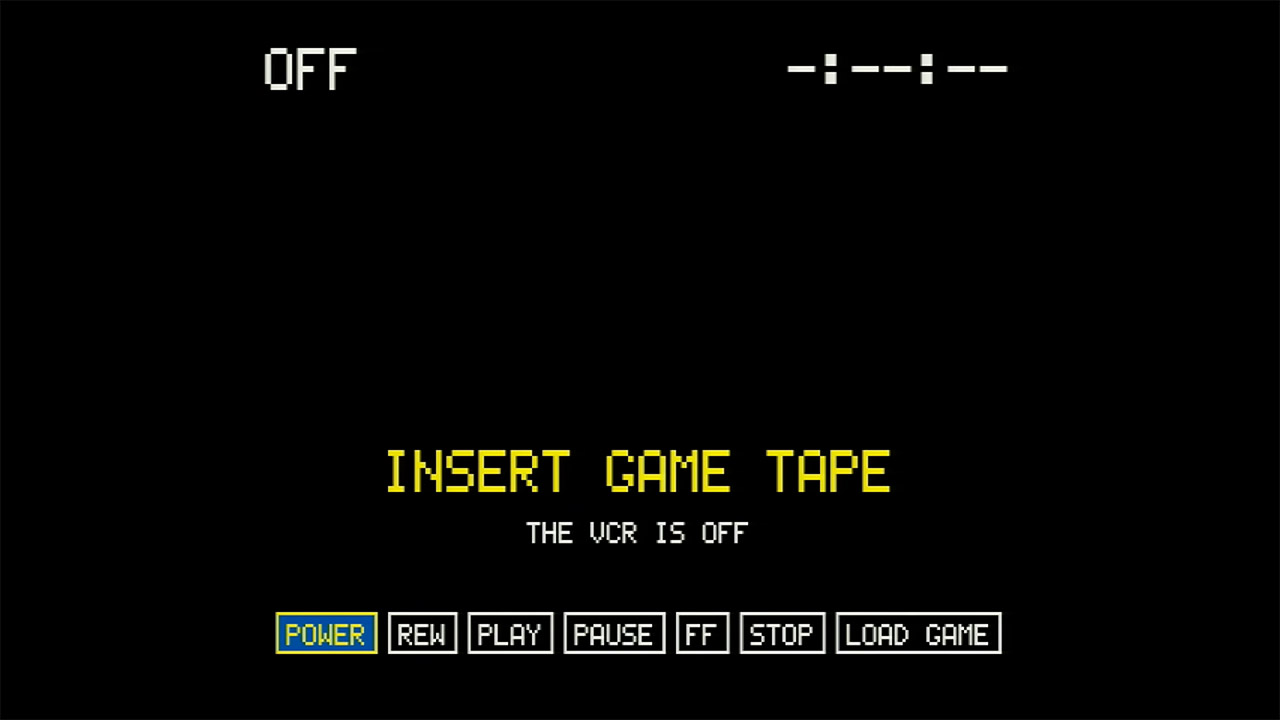
The code is carried together with the photos on the tape. To load the game, identify a precise burst of black and white pixels that flip as quickly as the format allows, as it is essentially a video QR code. When you detect it, the RP2350 extracts the bytecode from the composite feed. Firmware notes on the GCVHS repository describe the same split, with the code and video streams packaged into a single composite signal, some time markings to allow the deck to search properly, and the PGA2350 picking out the desired video stream to show inside a window.
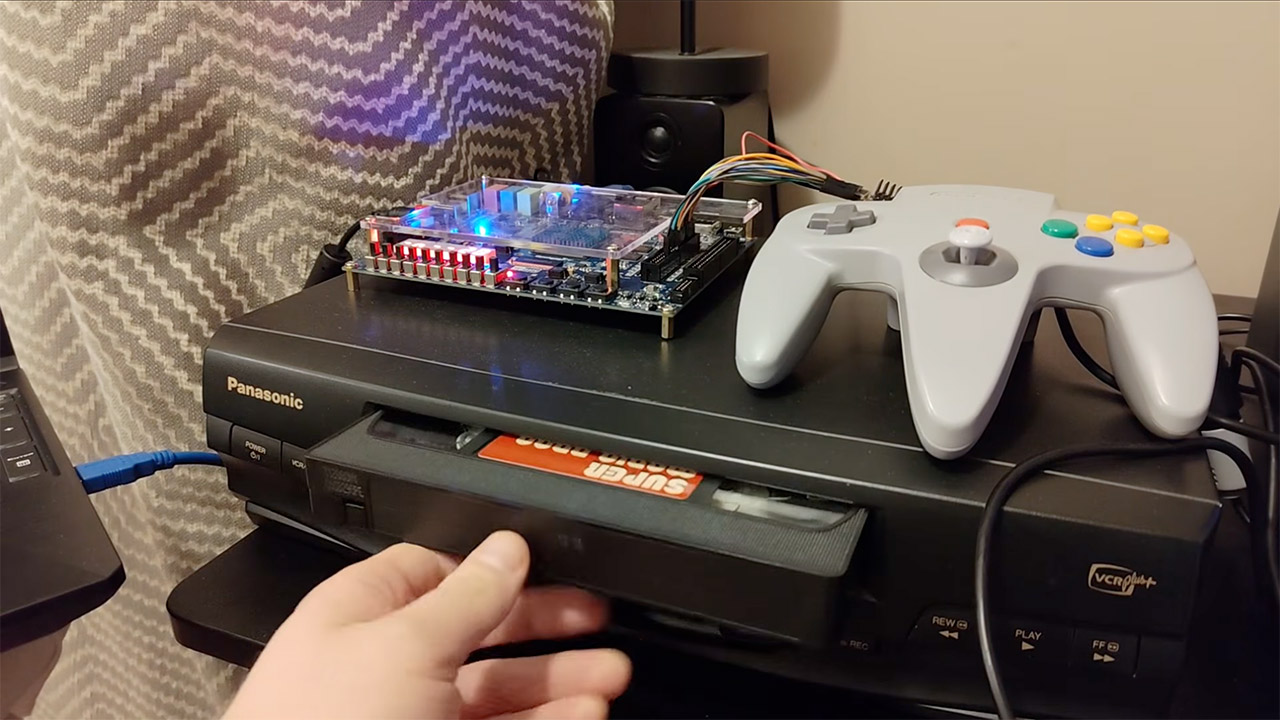
At the end of it all, he finds the solution he was looking for. A videotape can store code, eight clipped scenes, looping music, and a seek command, whereas a lab FPGA board with a Pico-class chip can simulate a full-fledged console with all of these features and more. The format, however, still requires you to wait for a motor every time the story splits into a different path.