Living muscle cells, the same kind that pull on bone inside a body, now pull a paper-thin robot through water. Researchers at MIT built a gum-stick-sized aquabot whose two fins beat when light hits them, and they steered it through a simple maze in a petri dish by flashing that light from outside the dish.
Ritu Raman, a mechanical engineer, and her PhD student Maheera Bawa were the main forces behind this discovery from the Raman Lab. They received invaluable assistance from colleagues Arielle Berman, Laura Schwendeman, Ferdows Afghah, and Seanbiron Johnson. Their discovery, titled “2D skeletal muscle thin film actuators enhance efficiency of biohybrid robots,” was published in the journal Advanced Functional Materials on September 29, 2026, with funding from the US Office of Naval discovery.

- BUILD, CODE & DRIVE YOUR OWN ROBOT CAR: Turn coding, electronics and engineering into a working programmable robot car you can assemble, program and...
- EXPLORE FPV, LINE TRACKING & OBSTACLE AVOIDANCE: Control the robot with the ELEGOO app or IR remote, view live FPV video through the onboard camera...
- BEGINNER-FRIENDLY BUILD WITH GUIDED WIRING: Keyed XH2.54 connectors help reduce wiring mistakes, while the illustrated tutorial and example programs...
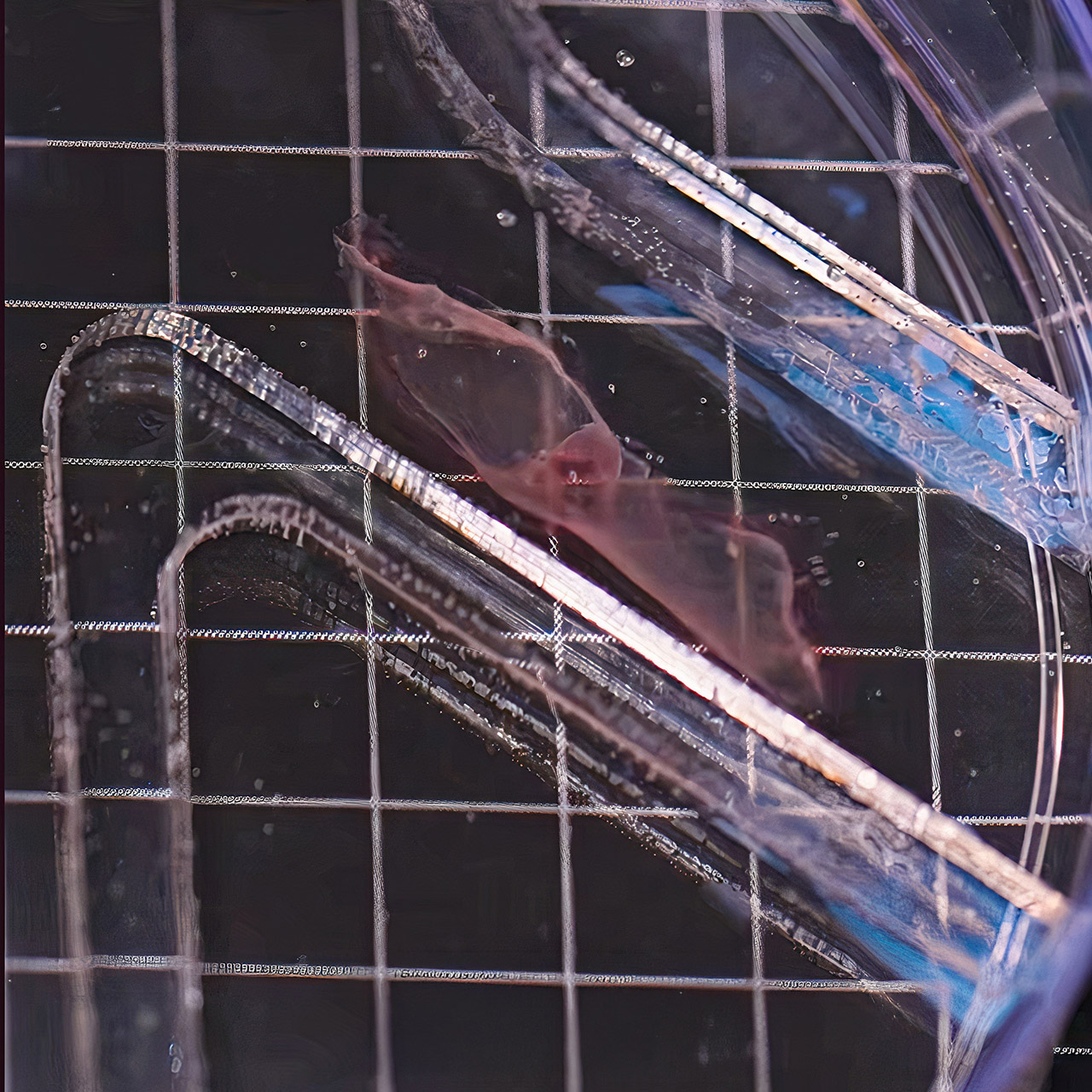
The fins on this device are quite small, being 15 millimeters long, 7 millimeters wide, and barely about half a millimeter thick. A gel skeleton comprised of gelatin, which is already widely utilized in tissue engineering, gives these fins their shape. What distinguishes this gel is that it contains a layer of skeletal muscle cells. These cells were genetically altered to twitch when they are exposed to light. The cells were then placed in square bottomed grooves that were pressed into the gel. Over time, the cells align, fuse into long fibers, and contract, pulling themselves in one direction.
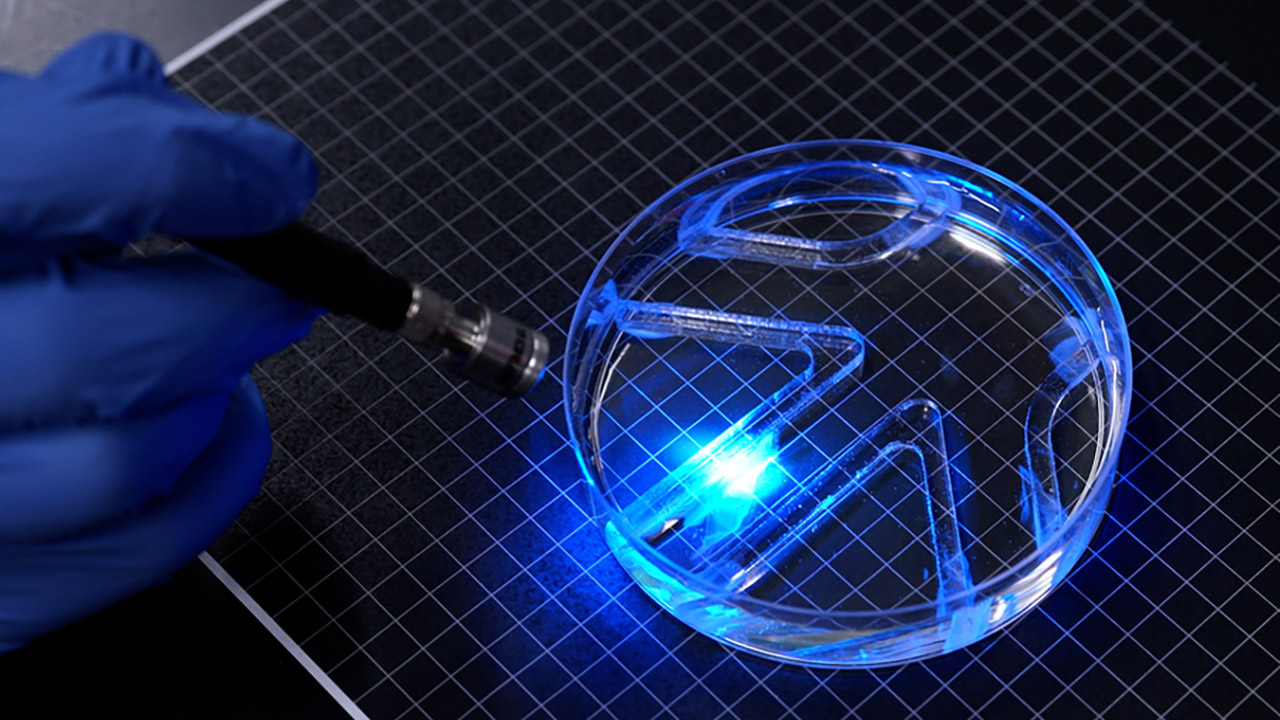
Photo credit: Melanie Gonick, MIT
The researchers had some earlier versions of this device created and tested on a type of gel called fibrin, which turned out to be far too soft and produced a slew of issues. The new gelatin-based gel proved firm enough to prevent the film from distorting or pulling away. Adding some square grooves and making the film thicker resulted in a much more stable product. What was equally critical was to train the muscle with a routine, in this example flashing a light regularly, which they discovered improved muscle performance significantly; with the new design, fin displacement was four times more than when the muscle was not trained.
The interesting thing here is that the muscle is fully unanchored and can go for more than 30 days without any assistance. You may pick a single fin and shine the light on it, and it will begin to move. You can move the light back and forth between the fins to make it turn, and if you shine it on both, it will begin to move ahead. They were even able to get it to travel very swiftly, as they said it could cover four body lengths in a minute, which is impressive considering this contraption is essentially just a lab demonstration. Above all, the idea of a machine that can navigate water as readily as a human is a long way off. I mean, Olympic swimmers can cover a lot more ground in the same minute, but as Raman points out, water is a challenging environment to manage, and this machine is actually extremely strong for its size.
Photo credit: Melanie Gonick, MIT
Another promising aspect of this technology is that it requires far fewer cells and far less space than previous biohybrid robots. The majority of these robots begin as large, cumbersome 3-dimensional slabs of lab-grown muscle requiring millions of cells. This new design, on the other hand, is thin and flat, requiring only one cell line and significantly fewer cells overall. This should make all subsequent versions far less expensive and more portable. Raman was also eager to highlight the benefits of employing living tissue in this type of study. The tissue remains soft and can respond to its surroundings in a variety of ways, including healing itself. This type of technology will be extremely valuable for operations that must take place in environments that are too fragile or unpredictable for traditional gear. She used environmental monitoring in water as a short-term example before mentioning precision surgery as a longer-term aim.
Their next goal is to make the thing swim faster, but for the time being, the Aquabot is simply a lab demo controlled by a handheld light, and it’s fairly rudimentary, with the fins just kind of lying there oriented in one way. Still, even in its current shape, the monster can negotiate a maze that a typical machine of the same thickness would be unable to do.
[Source]