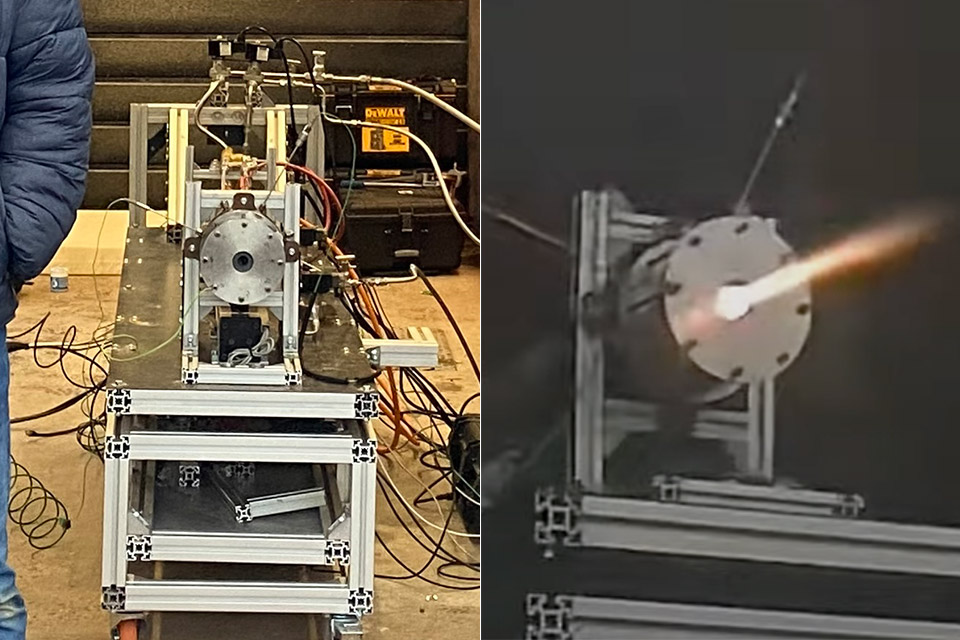
Engineers from the University of Glasgow have built a rocket engine that consumes a part of its own body for fuel. More specifically, an ‘autophage’ rocket engine that uses waste heat from combustion to sequentially melt its own plastic fuselage as it fires.
After melting its own plastic fuselage, the molten material is then fed into the engine’s combustion chamber as additional fuel to burn alongside its regular liquid propellants. Technically speaking, the autophage rocket would require less propellant in onboard tanks, thus freeing up space that could be allocated to payload instead.

- INTERMEDIATE MODEL ROCKET SET: This Estes rocket-building set offers kids ages 10+ and experienced builders the chance to make a 1/66th-scale model of...
- SOARS UP TO 700 FT.: The Blue Origin New Shepard rocket has a light weight and a projected altitude of up to 700 ft. (213 m) using a C6-5 engine (sold...
- READY TO ASSEMBLE: Rocket building inspires creativity and a passion for science and outer space! Our intermediate-skill rocket kit comes ready to...
A conventional rocket’s structure makes up between five and 12 percent of its total mass. Our tests show that the Ouroborous-3 can burn a very similar amount of its own structural mass as propellant. If we could make at least some of that mass available for payload instead, it would be a compelling prospect for future rocket designs,” said Professor Patrick Harkness of the University of Glasgow’s James Watt School of Engineering.
[Source]