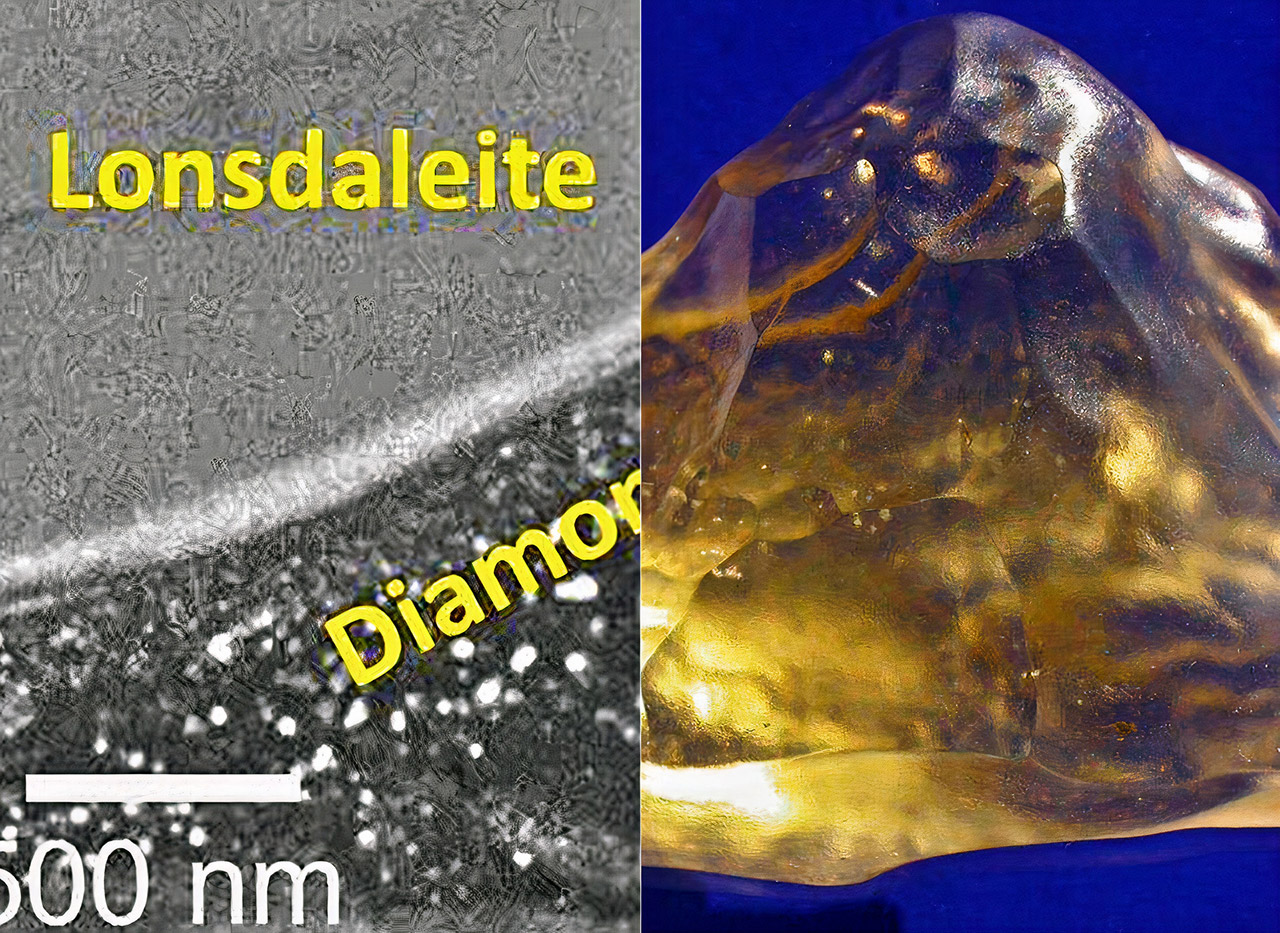

Diamonds are known for their extreme hardness, high thermal conductivity, quantum optical, as well as biomedical applications, but there are still many unanswered questions as to how they form, particularly at room temperature and without catalysts. Professor Bradby, RMIT Professor Dougal McCulloch and their team used advanced electron microscopy techniques to capture solid intact slices from the experimental samples to create better understand how nanocrystalline diamond and lonsdaleite formed.
They discovered that the materials were formed within bands, in which they called “rivers,” but these artificial diamonds are not meant as jewelry. That’s right, these are more practical for use in industrial applications where slicing through tough material is required or as protective shielding. For example, lonsdaleite could be used for cutting through ultra-solid materials on mining sites.

- 2.0 inch IPS color screen: In the digital microscope magnifier screen observation mode, you could take photos, and review in real-time. With storage...
- Connect the computer/PC : You can connect your computer or PC through a Type-C usb cable, then open the built-in camera software on the computer to...
- Focusing mode: Fixed ultra macro, Max Fixed magnification up to 500x, 4x zoom adjustment knob. Simply place the microscope flat on the surface of the...
Our pictures showed that the regular diamonds only form in the middle of these Lonsdaleite veins under this new method developed by our cross-institutional team. Seeing these little ‘rivers’ of Lonsdaleite and regular diamond for the first time was just amazing and really helps us understand how they might form,” said Dougal McCulloch, RMIT Professor.