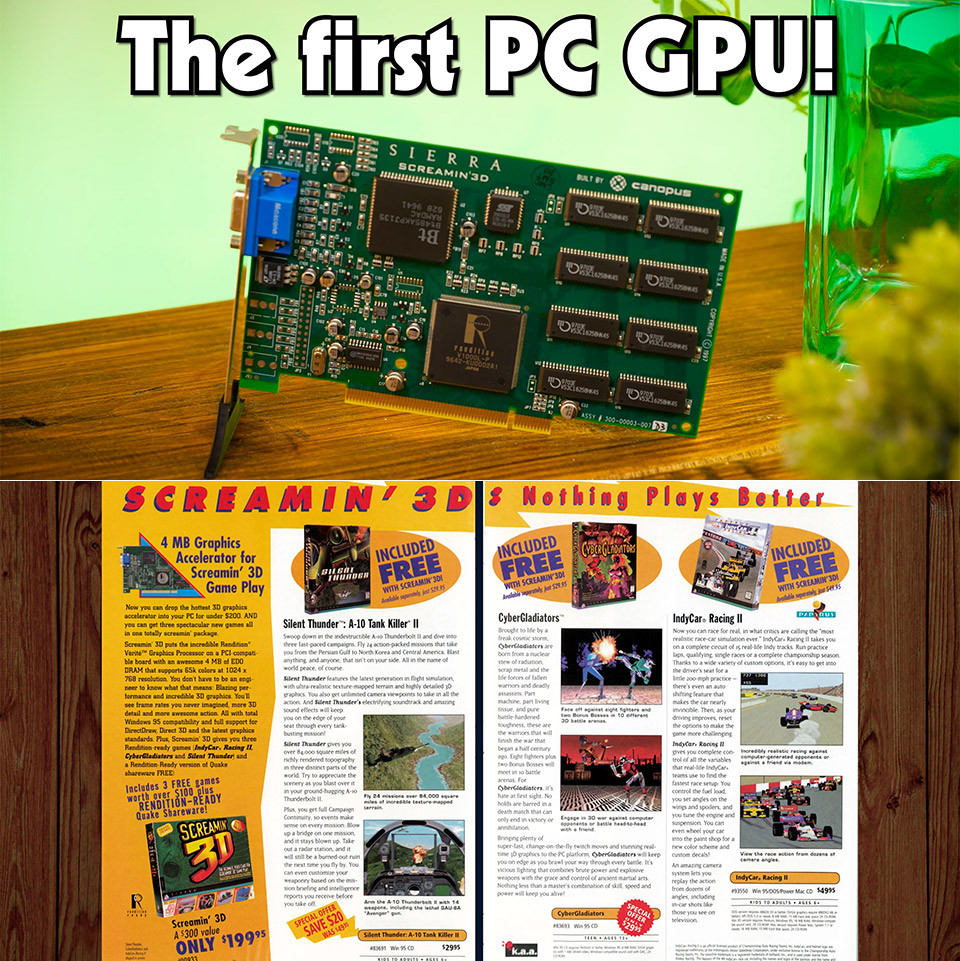
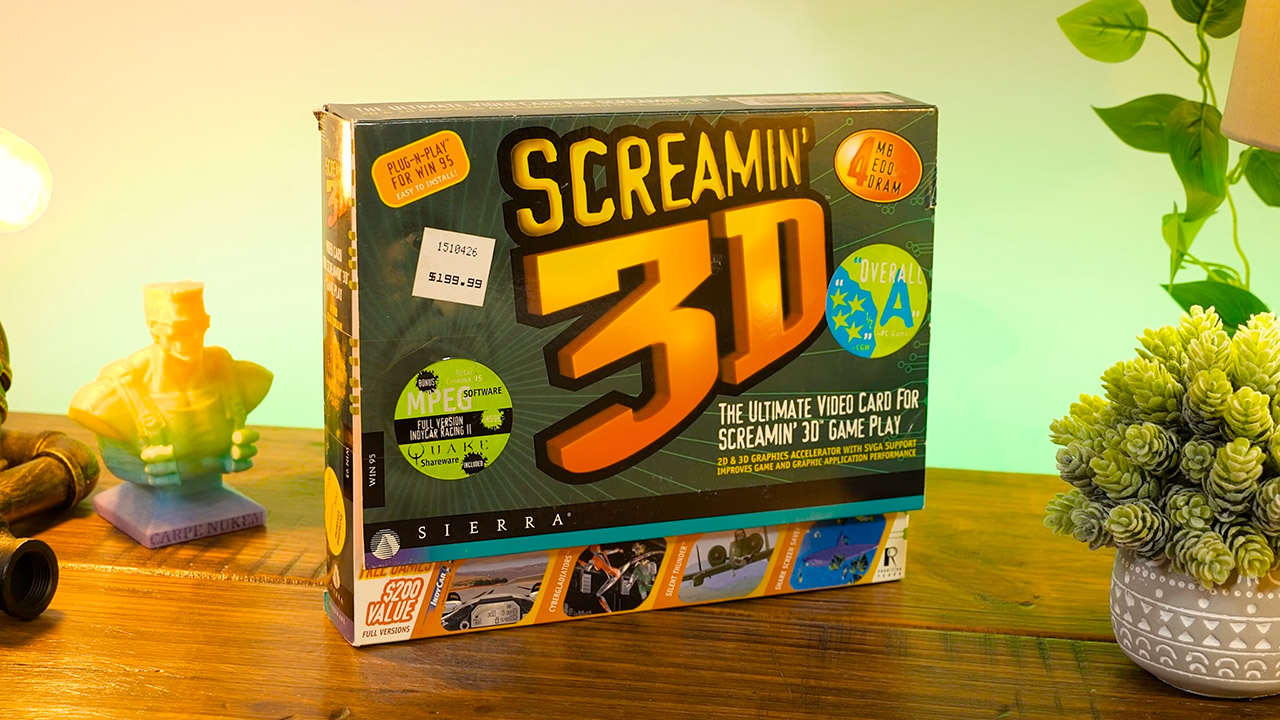
Sierra On-Line spent most of the 1990s shipping adventure games with names like King’s Quest and Space Quest, then spent one Christmas trying to sell the board those games would run on. Screamin’ 3D reached stores in November 1996 at a suggested price of $199, the only graphics card the Oakhurst studio ever put its name on, and it vanished so completely that plenty of people who owned a Sierra box never knew the company had tried hardware at all.
Boxes shipped from the warehouse containing IndyCar Racing II, CyberGladiators, Silent Thunder: A-10 Tank Killer II, and a Quake demo built specifically for this board. Behind the scenes, Canopus developed the card in Japan, and Sierra packed and sold it after advertising in Interaction magazine and using the same retail method that had previously moved CD-ROMs. Product manager Scott Fasser told reporters that they had tried something similar years ago with the Ad Lib Music Synthesizer sound card, when the chances of getting audio to function on a PC were about 50/50. At the time, Sierra was second only to Microsoft among home computer purchasers, and Ken Williams believed that having that name behind the card would be enough to persuade users to choose one 3D chip over a slew of other, new brands.

- Save with this bundle, which includes Nintendo Switch 2, the most powerful Nintendo system yet
- Includes Nintendo Switch Sports Resort digital game download
- 3 months of Nintendo Switch Online included for online play and more
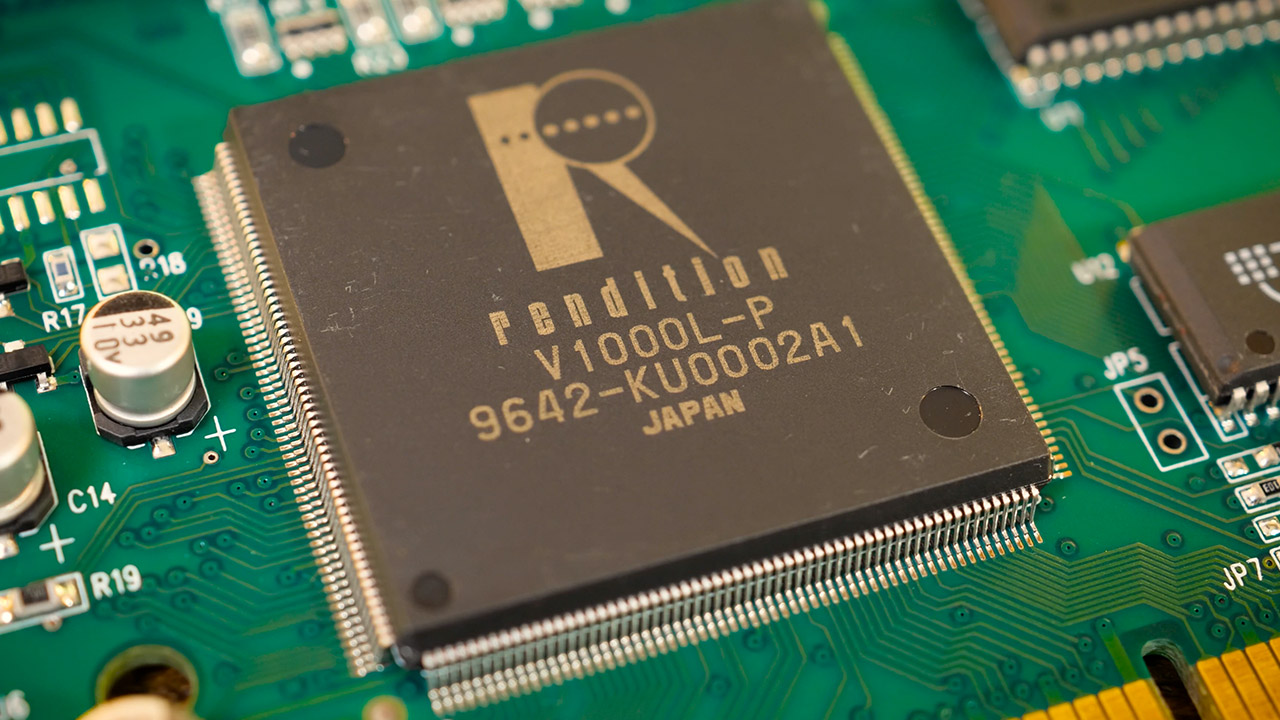
Inside the PCI slot is Rendition’s Vérité V1000, a chip developed by a Mountain View startup that revealed the design in 1995 and launched the product around a year later. The 4MB EDO memory was on a 64-bit bus, and early versions ran at roughly 50MHz, 5 volts, and the V1000E. Later boards switched to the 3.3 volt V1000L, which ran cooler but may have clock speeds closer to 60MHz, which corresponded to the Sierra card used in the latest teardowns. There was a small, programmable core at the front end of the pixel pipeline, which functioned more like a processor with fewer instructions to manage than a fixed drawing engine. Rival chips from S3, ATI, and Matrox typically only provided a limited set of 3D capabilities; Rendition, on the other hand, could load new microcode and add new behavior to the chip even after it had left the manufacturing line, as long as you stayed within the constraints of that small core.
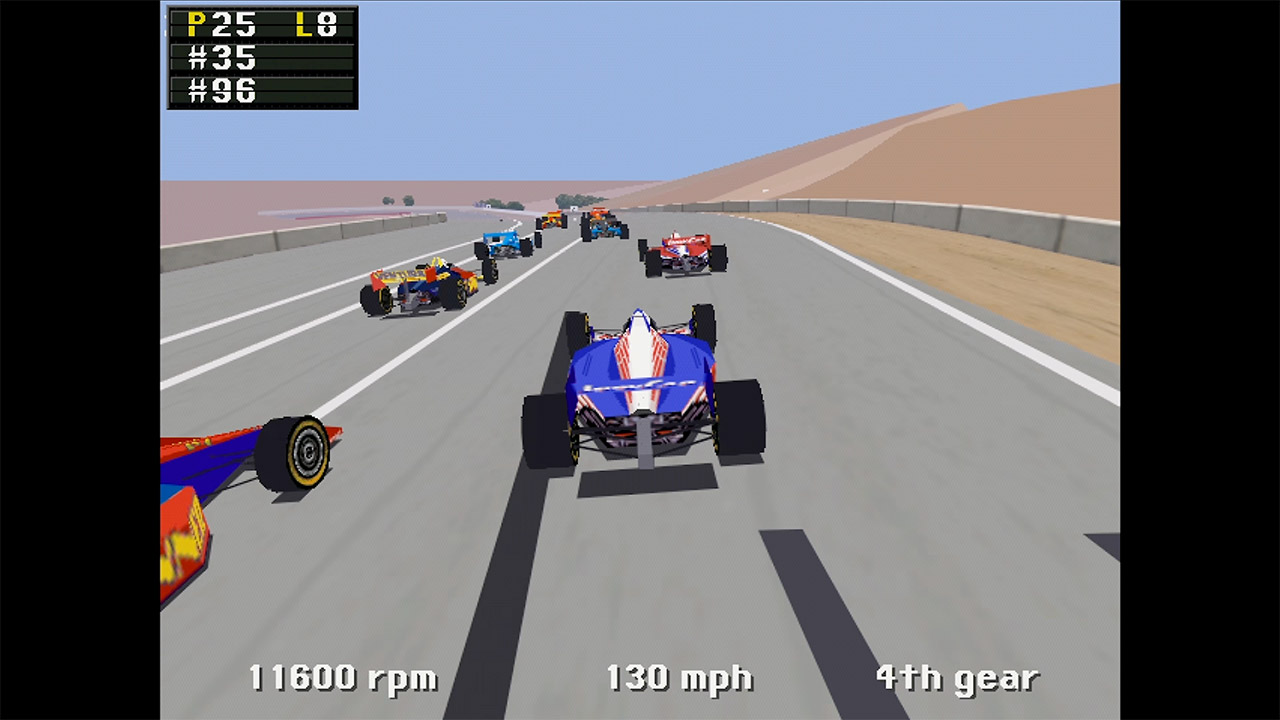
Games reached the board through Rendition’s own interfaces, Speedy3D for DOS and RRedline for Windows, as well as Microsoft Direct3D. Several games natively supported the Vérité, including IndyCar Racing II, Descent II, Tomb Raider, and Grand Prix Legends. Then it all came down to Quake, which was launched by Rendition and id on December 2, 1996, and the first version of the game handed over the graphical task to a graphics chip, vQuake. On a Pentium 166, in software mode at 320 x 200, would get you about 26 frames per second. The same system with a Vérité would generate roughly 22 frames at 640 x 480 with filtering enabled, or more over 30 frames per second at 512 x 384. Color depth increased and textures smoothed improved, and for a short time before 3dfx’s Voodoo and its Glide patch became available, Vérité owners had the only accelerated Quake on the market.
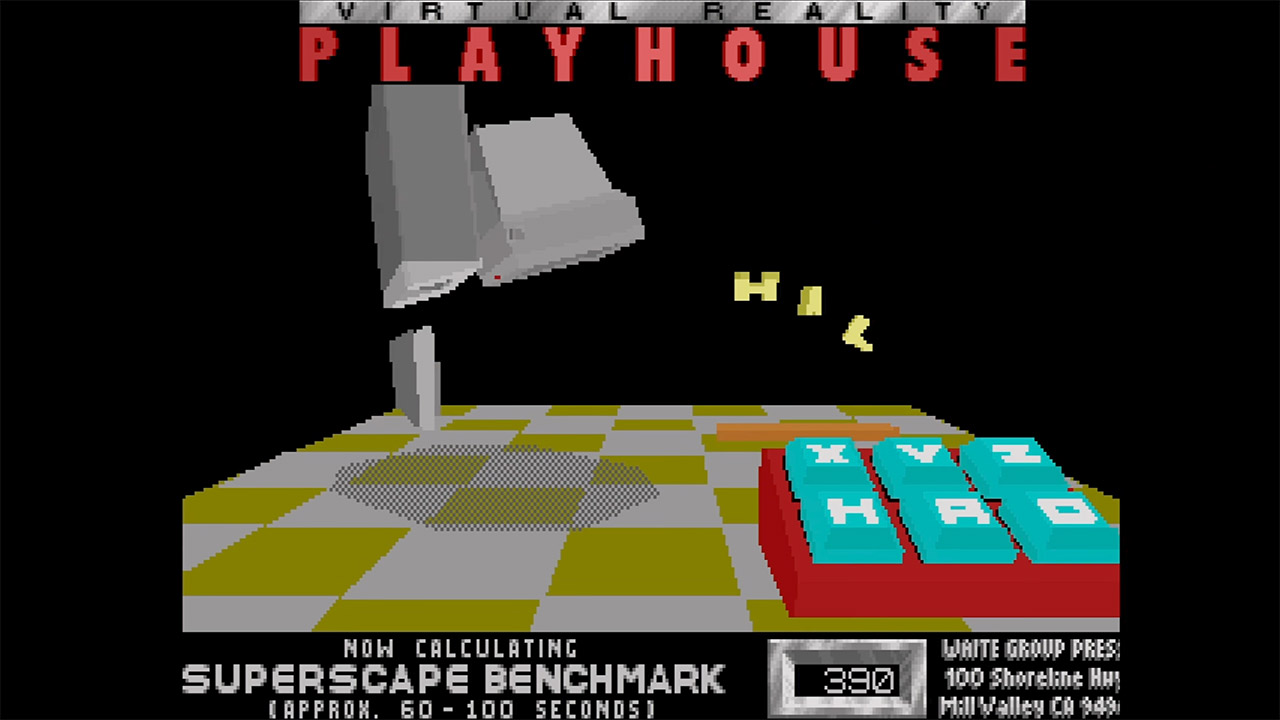
Two-dimensional windows and plain ol’ DOS graphics crawled along on the V1000, so slow that Sierra began begging Canopus to rewrite the drivers, claiming that it was a full 30% faster than other boards with the same chip, including Creative’s 3D Blaster PCI, despite the fact that the others had already received some tweaks. A single card that handled the desktop and the games was still the practical argument against 3dfx, whose Voodoo was faster in titles but needed a second board and a pass-through cable for everything else. Working with the Vérité tools, according to John Carmack, was a big turning point in moving ID toward utilizing OpenGL after attempting to deal with proprietary interfaces, but you could actually get this chip to function; just be prepared for a lengthy and painful ordeal.
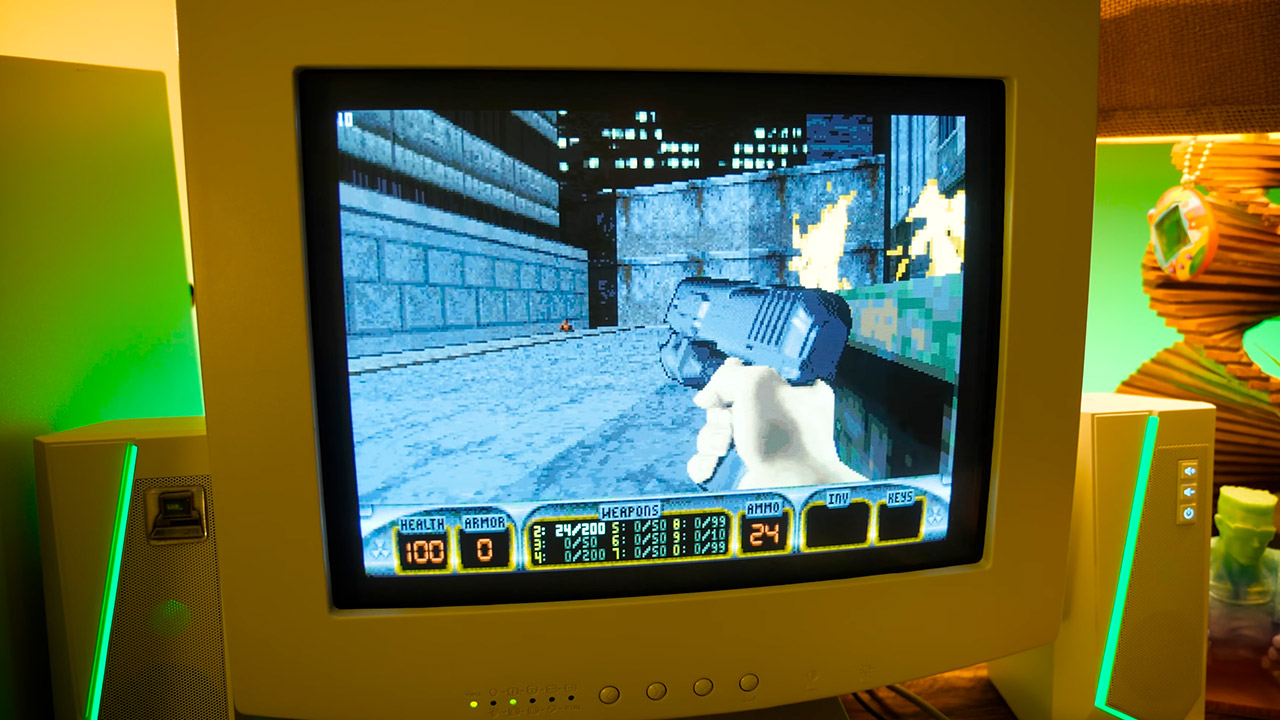
Williams eventually confessed that the margins on the V1000 were simply never going to work. Sierra would pay around $70 and then try to sell them to retailers for around $90, but if they delivered 10,000 units and had to return 2,000, they were facing a complete cycle of returns that might last for months, wiping away whatever profit they had.
Hardware aged in weeks. A game could sit on a shelf. A graphics card could not. Sierra never tried a second board. Rendition followed the V1000 with the faster V2100 and V2200, then faded as NVIDIA, ATI, and 3dfx took the shelf space. Cards that survive today mostly live in collector videos and old driver archives, a PCI board with a Sierra logo on a chip the studio did not design, sold for one season and then left behind.