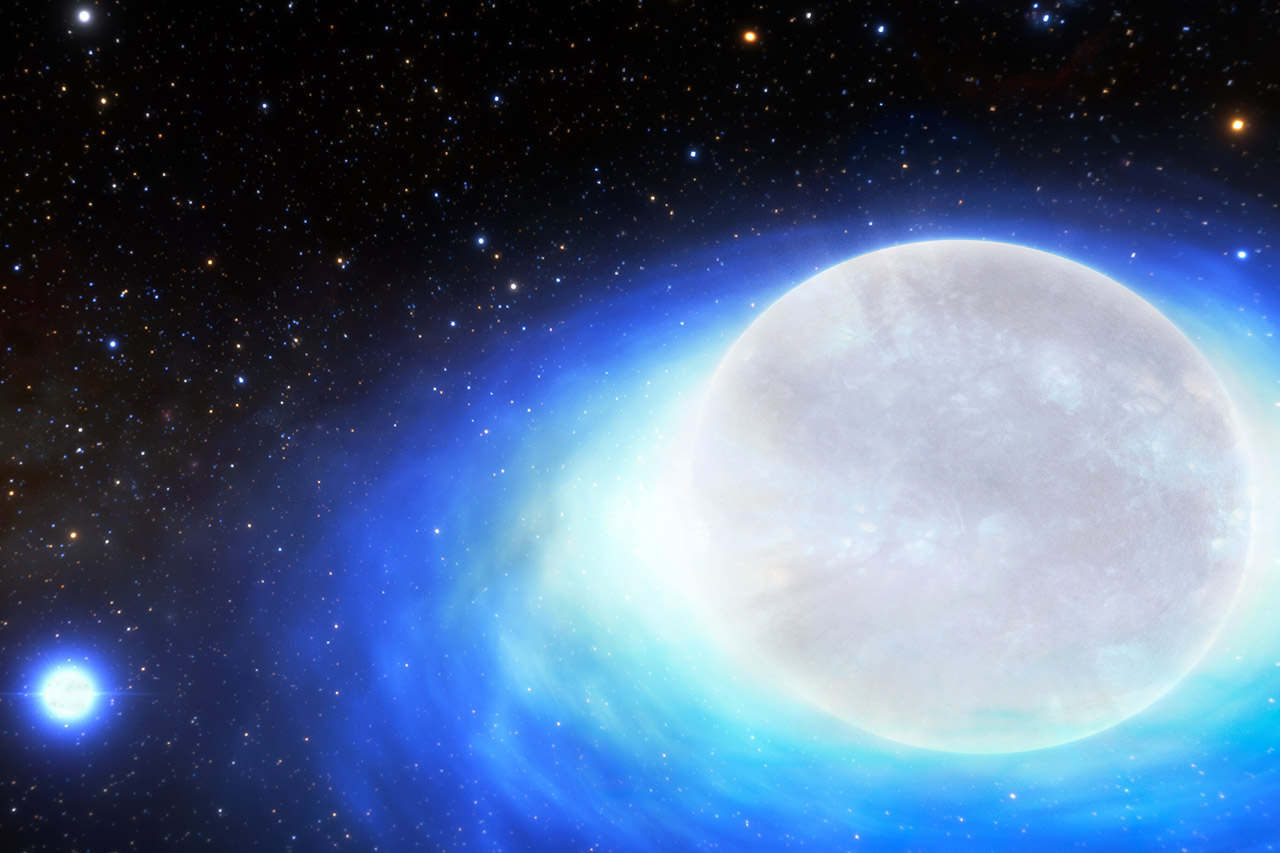
Astronomers at NOIRLab used the SMARTS 1.5-meter telescope at the Cerro Tololo Inter-American Observatory (CTIO) to detect a star system that one day will form a kilonova. The difference between a supernova and kilonova is the fact that the former occurs when a star with 8 solar masses collapses into themselves, while the former happens when 2 neutron stars in a binary system collide.
Classified as CPD-29 2176, this star system is located about 11,400 light-years from Earth and consists of a neutron star created by an ultra-stripped supernova that is orbiting another massive star gradually becoming an ultra-stripped supernova itself. This would make it a kilonova progenitor system, and studying it would help astronomers uncover the mysteries of how kilonovae form by shedding light on the origin of the heaviest elements in the universe.
- POWERFUL TELESCOPE FOR ASTRONOMY BEGINNERS: The AstroMaster 130EQ delivers sharp optics, a stable equatorial mount, and smooth manual controls, making...
- HIGH-QUALITY 130MM OPTICS: Enjoy views through the 130mm (5”) Newtonian reflector, which features high-quality aluminum and SiO₂ coatings and...
- SMOOTH, ACCURATE POINTING: Effortlessly aim and center your target using the two slow-motion control knobs for right ascension and declination whether...

The current neutron star would have to form without ejecting its companion from the system. An ultra-stripped supernova is the best explanation for why these companion stars are in such a tight orbit. To one day create a kilonova, the other star would also need to explode as an ultra-stripped supernova so the two neutron stars could eventually collide and merge,” said Noel D. Richardson at Embry-Riddle Aeronautical University and lead author of the paper.