Photo credit: DP Review
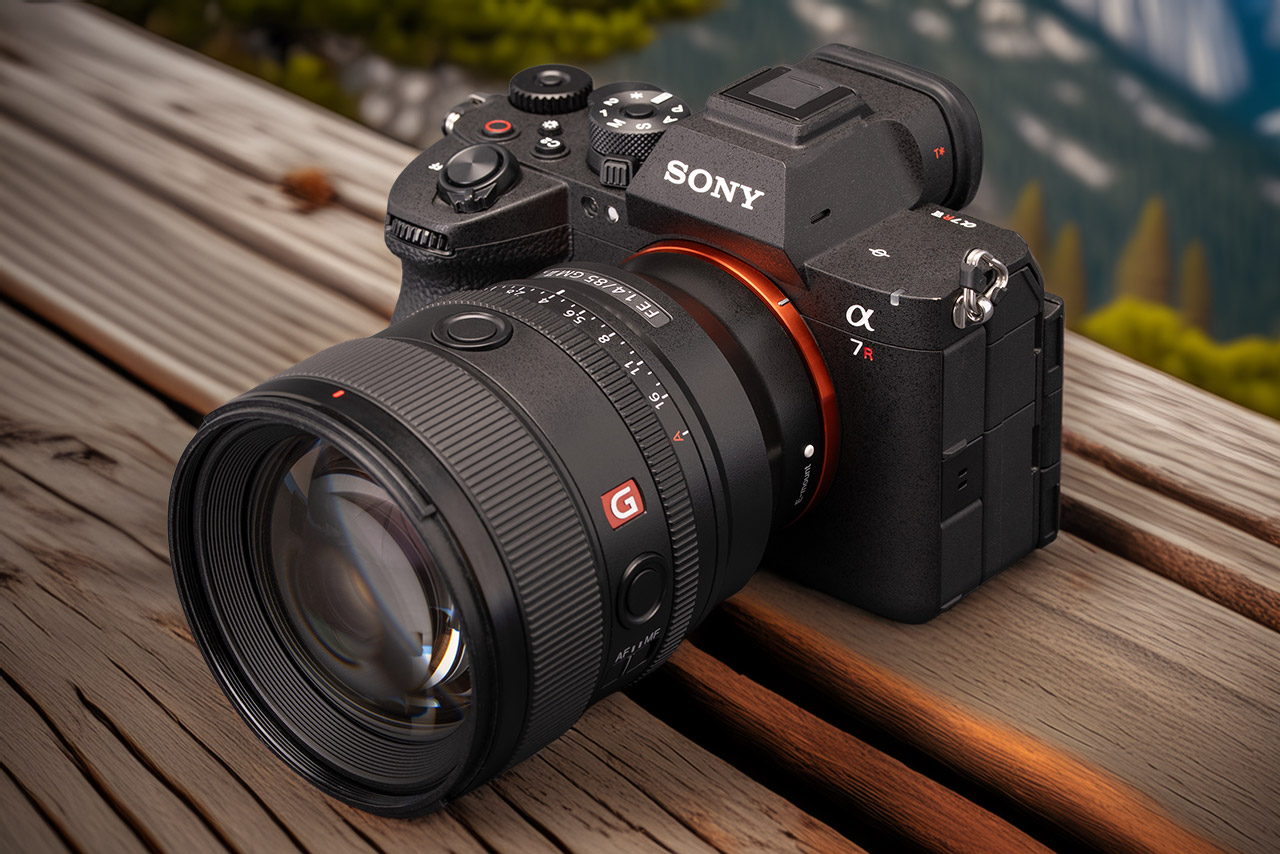
Sony just launched the a7R VI, a mirrorless camera built around a 66.8-megapixel full-frame sensor that finally pairs razor-sharp detail with the kind of speed serious shooters have waited years to see in this lineup. Photographers who once chose between capturing every leaf on a distant tree or freezing a bird in mid-flight no longer have to pick sides.
Engineers gave this camera body a significant boost with a high-quality sensor combined with the latest BIONZ XR2 processing engine. Data from the sensor begins to move much faster, more than five times faster than in the prior model. One modification alone allows you to shoot black-out-free bursts at 30 frames per second with the electronic shutter while still retaining every pixel of resolution. Pre-capture mode allows you to save 15 frames before pressing the shutter button, just in case your reflexes fail by a fraction of a second.

- 24.2MP APS-C Exmor CMOS Sensor and fast BIONZ X processor
- 4K Movie oversampled from 6k w/ full pixel readout, no pixel binning
- Product Showcase Setting transitions focus from face to object
Focus on subjects is far more confident than it used to be, as the system locks in on eyes, faces, heads, bodies, and even skeleton positions to track a runner even if they move away or become lost in a throng. It also identifies animals, birds, automobiles, and insects and can calculate focus and exposure up to 60 times per second while shooting in burst mode. Low light down to EV-6 and very narrow apertures like f/22 are not an issue. Even if you decrease the image in editing, it still seems sharp as a tack because the original file had so many pixels to begin with.
Video shooters benefit just as much, as full-frame 8K footage at 30 frames per second is achieved by oversampling an even higher 8.2K output, while 4K runs at 60 or 120 frames per second with no crop when the appropriate setting is used. A new dual-gain mode reduces noise in the shadows while preserving highlight detail, and the camera can shoot in 8K for up to two hours before overheating occurs. Stabilization now compensates twice as much in the roll direction and introduces a smooth active mode for walking shots.
The body itself feels familiar yet refined, as the magnesium alloy shell keeps the weight under control, and the grip has been modified to fit the larger NP-SA100 battery snugly in the hand. That battery will last for 710 shots if you shoot on the rear screen or 600 with the viewfinder. There’s also a little indication to alert you when the battery is about to run out. Buttons on the rear light up with a single push, allowing you to read your settings even after the sun has set. The new viewfinder has 9.44 million pixels, covers the entire DCI-P3 color gamut, and produces three times more light than the previous one, allowing you to operate comfortably in bright daylight.
Two USB-C connections reside on the side, allowing you to charge one battery while transferring files from the other. The card slots accept CFexpress Type A or SD cards, and an optional vertical grip stores two of these new batteries, ensuring you have power all day for those huge events. Sony also added support for its Camera Authenticity system so editors and clients can verify that files came straight from the camera instead of being generated later
The a7R VI costs $4,500, which is a few hundred dollars more than its predecessor and aligns with a recent trend in Sony’s high-end line. It’s set to come in June, and the good news for anyone who’s already invested heavily in Sony glass is that they can start using it right immediately, without having to go out and buy new lenses or adapters.