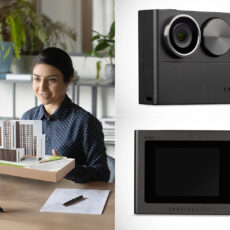
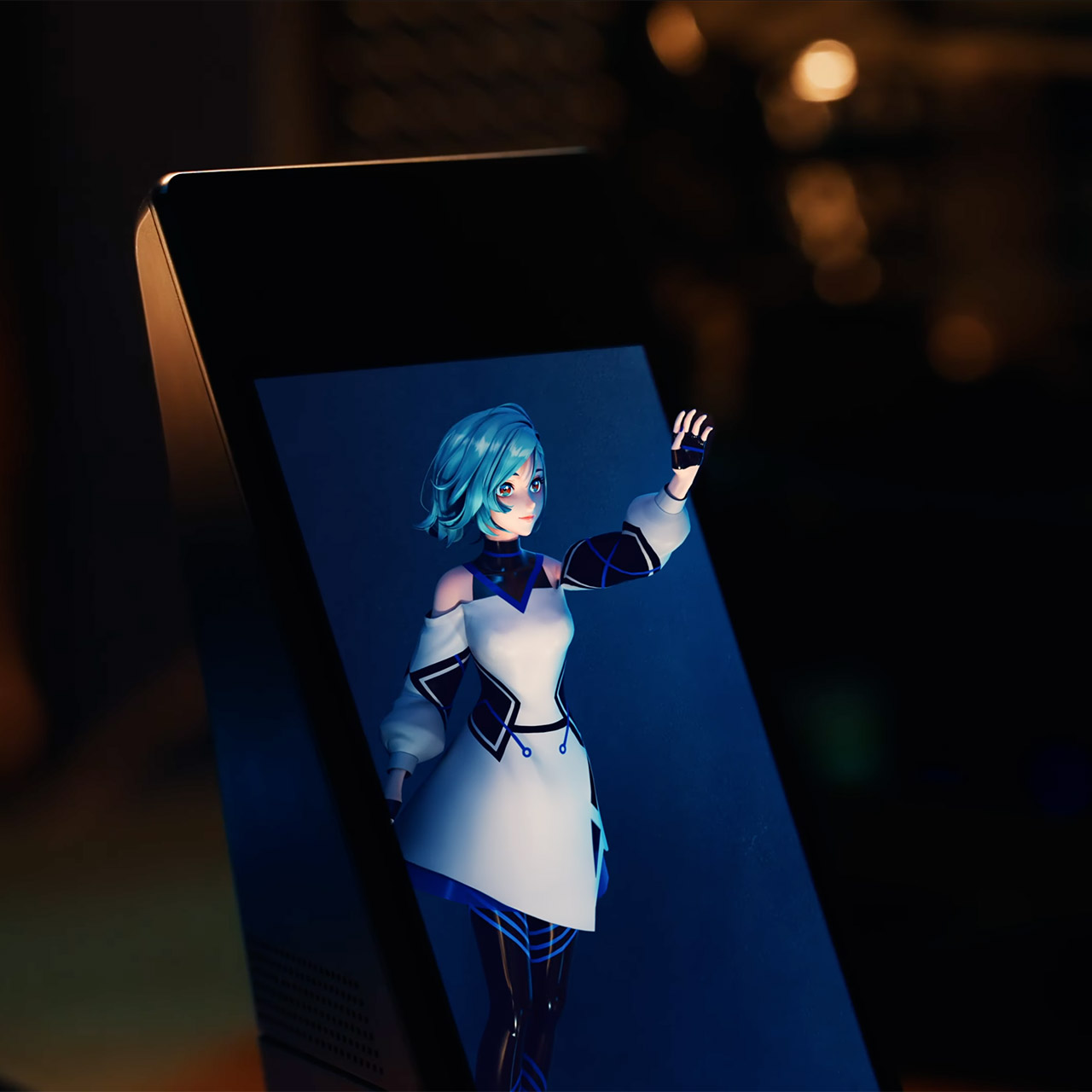
Sony just announced the ELF-MN1, a six-inch spatial reality display that shows characters, avatars, and objects in full depth right on a desk or side table, all without any special glasses or a headset. It joins the company’s XYN lineup of spatial tools and arrives in Japan on December 11 for an open price that lands around 54,000 yen, or roughly $342.89 at current rates. Demand has already outrun early expectations, so delivery may take longer than usual once orders open.
In the past, Sony’s 15 or 27-inch Spatial Reality Displays were extremely expensive, costing several thousand dollars. They were only available to professionals that need an extremely precise 3D imagery, such as engineers, surgeons, and designers. You don’t need to be an expert to enjoy it; all you have to do is place it next to your laptop and launch your favorite character. Sony has now successfully shrunk that exact same thing to fit neatly on a smartphone. It is supported at a slight angle by a clear acrylic stand, and the total weight of the device, including the stand, is around 350 grams. All you need to do is use a single USB-C cable to connect it to a compatible iPhone, Android phone, or Windows computer. If you have the correct cable and charger, the display can even transmit power back to your phone.

- NO WIRES, MORE FUN — Break free from cords. Game, play and explore immersive worlds — untethered and without limits.
- 2X GRAPHICAL PROCESSING POWER — Enjoy lightning-fast load times and next-gen graphics for smooth gaming powered by the Snapdragon XR2 Gen...
- EXPERIENCE VIRTUAL REALITY — Take gaming to a new level and blend virtual objects with your physical space to experience two worlds at once in your...
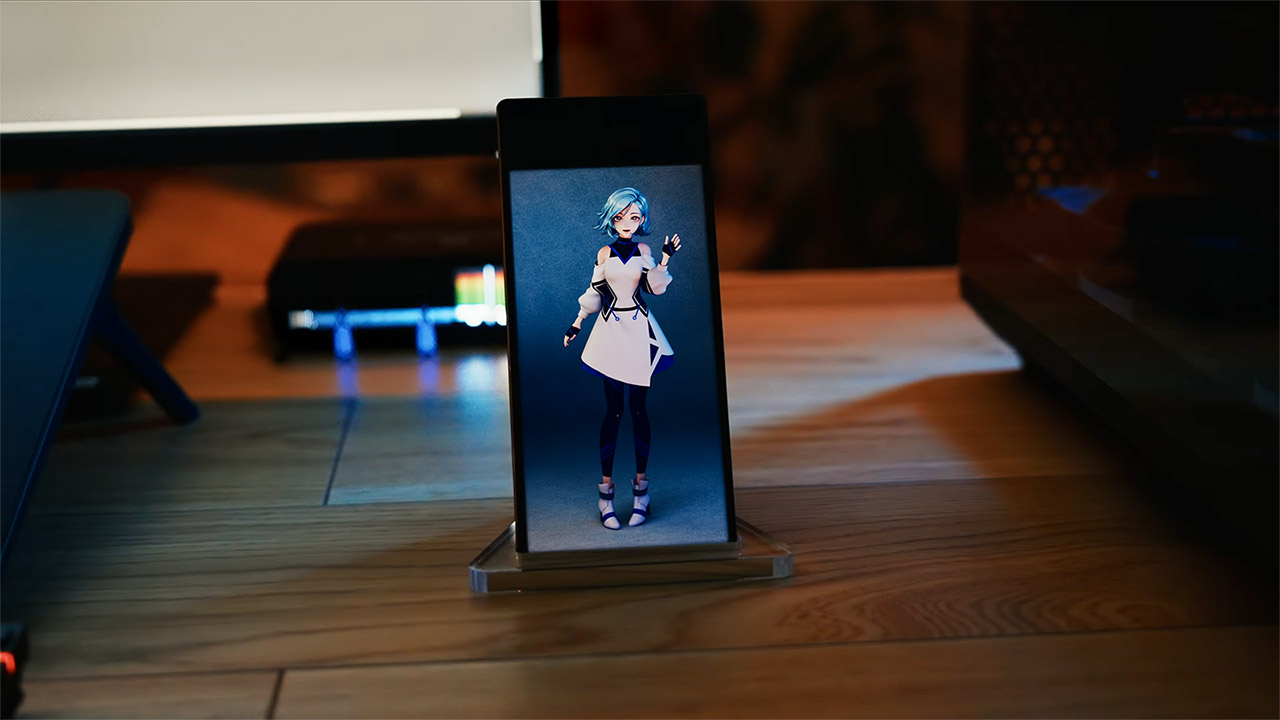
Inside the Spatial Reality Display is a clever set of microscopic optical lenses that split the image, giving each eye a slightly distinct perspective. A third-generation gaze sensor has been combined with an infrared sensor to track both pupils even in low-light conditions and notify the system exactly where you are sitting. The software then kicks in and redraws the 3D environment in real time, allowing your character or item to change naturally as you move your head. The effective resolution is 1,080 x 2,160 pixels at 403 pixels per inch – the sharpest density Sony has ever used on a Spatial Reality Display – with a brightness of 470 nits and a contrast ratio of 1,350 to 1, and a 25-degree field of view and a distance of 30-80 cm, it all adds up to a solid stereo effect for any single person. If someone else sees from the side, they will see a distorted or double image.
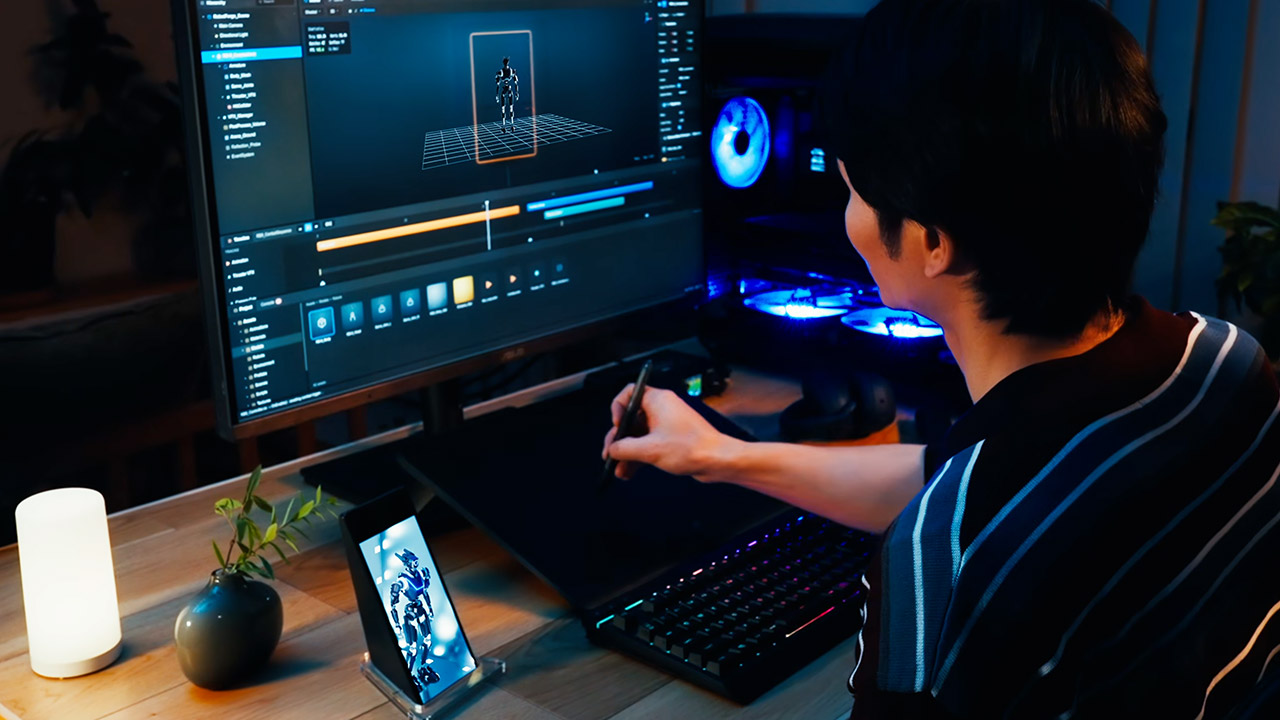
Some fairly interesting apps are already lined up to operate with the Spatial Reality Display, including HoloModels for digital characters, Deskrium for 3D objects, Animates for chatting companions, and a ‘focus companion’ named Fenestra. You can also create your own content with Sony’s Unity and OpenXR tools, and to make it feel more like a living room experience, there are built-in one-watt stereo speakers and a microphone that allows some of the apps to respond to voice commands. It’s quiet enough to be a desk companion and uses only approximately 14 watts while engaged.
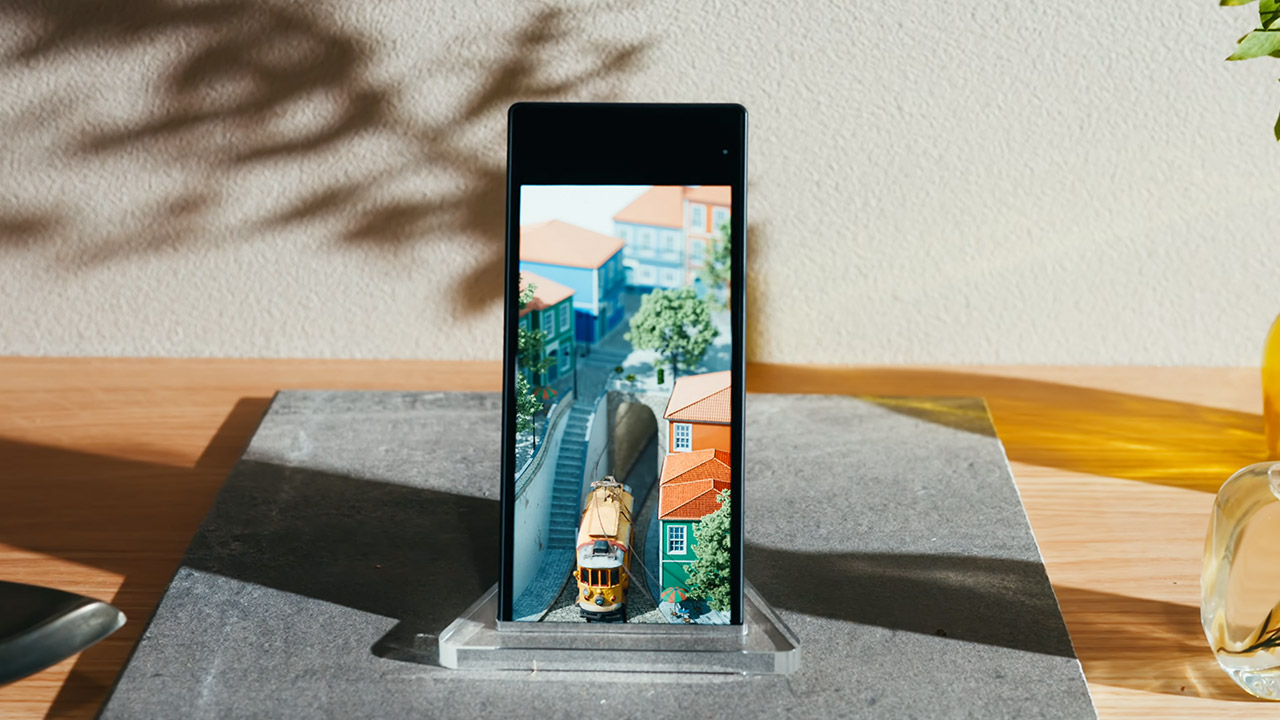
Sony stores in Ginza and Nagoya plan to have demo units on view from mid-November so people can try the effect before the December launch. For now the ELF-MN1 stays Japan-only, yet the company has already shown how far it can push glasses-free 3D once the hardware shrinks and the price drops into ordinary range. A character that once lived only on a phone screen can now stand on the desk and turn its head when the viewer leans in.