
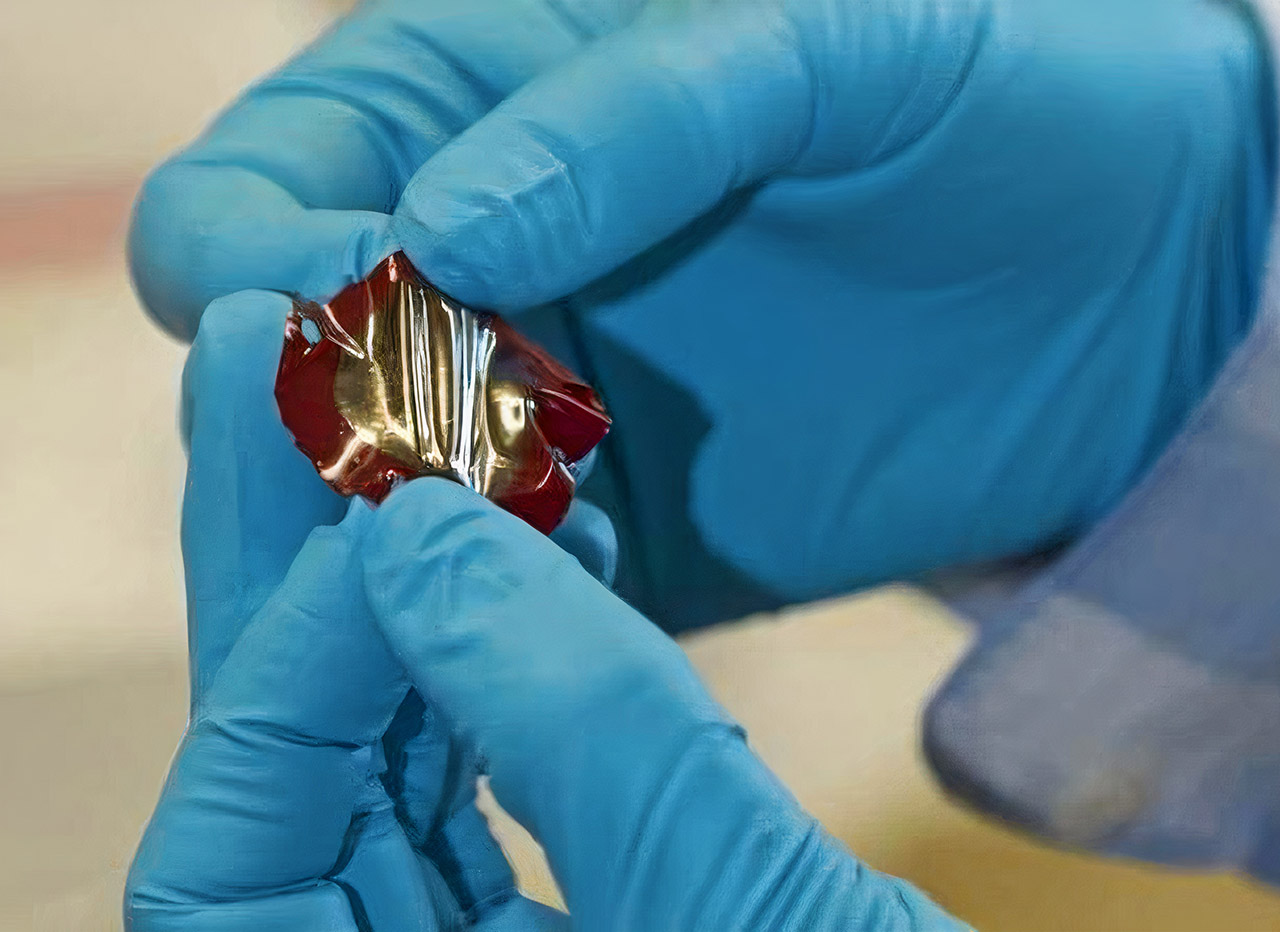
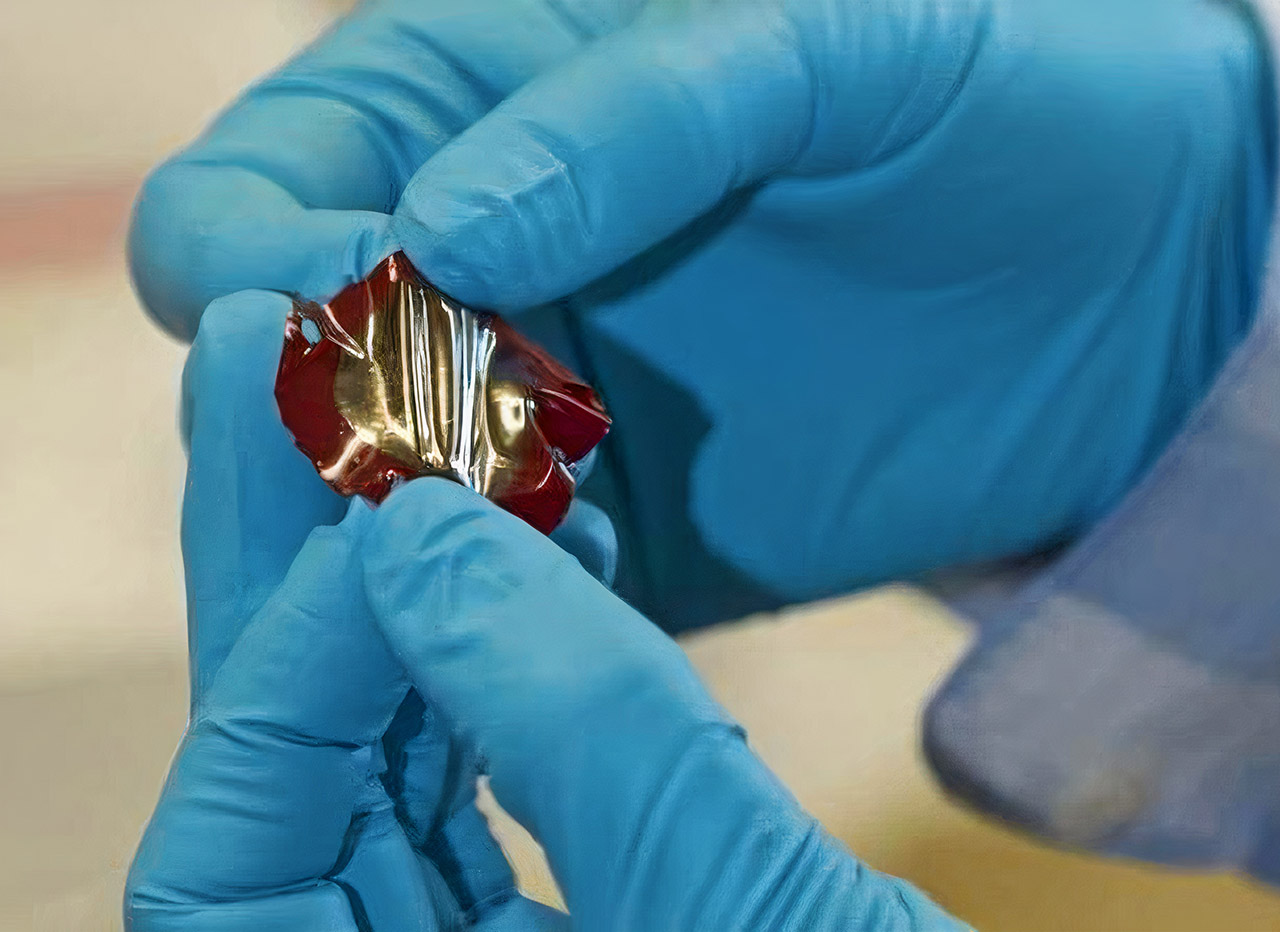
Scientists at the Swiss Federal Laboratories for Materials Science and Technology have developed an ultra-thin organic material that can transform stress into electricity using the piezoelectric effect. This process basically turns mechanical movements into electricity, and the material is basically a rubber substance consisting of a composite material made of polar nanoparticles and an elastomer.

The research team utilized silicone in the prototype, with researcher Song Ko making an internal polarization using a strong electrical field to connect the composite materials with the elastomer. The team then heated the film until the nanoparticles transition from a solid, glassy state into a rubbery and slightly viscous one, thus enabling them to manipulate the polarity and electrical field. This eventually can be used in soft robotics to allow them to “feel” their surroundings, while also sending impulses for it to be “understood” by their system(s). One caveat: the material requires polar nanoparticiles and silicone that have to be meticulously shaped before being connected.

- Brand-Oriented and Outdoor Charger Pro: With over 10 years of experience in solar power banks, BLAVOR has already gained the favor and trust of...
- Leading USB C Input Output Tech and Wireless: The latest upgrade includes a USB-C output with 20W fast charging capability, which can charge your...
- Premium Battery and Smallest Solar Charger: BLAVOR uses the safer Lithium-cobalt battery, which is 50% more cycling times than a normal Li-polymer...
This material could probably even be used to obtain energy from the human body. You could implant it near the heart to generate electricity from the heartbeat,” said Dorina Opris, researcher at the Swiss Federal Laboratories for Materials Science and Technology.

