

Scientists have discovered a new giant isopod species, named Bathynomus yucatanensis, in the ocean off the Gulf of Mexico. Compared to other deep sea isopods, this species has a longer antennae and the same number of pleotelson spines, which protrude from its tail end, while having a yellowish shell instead of the typical gray.
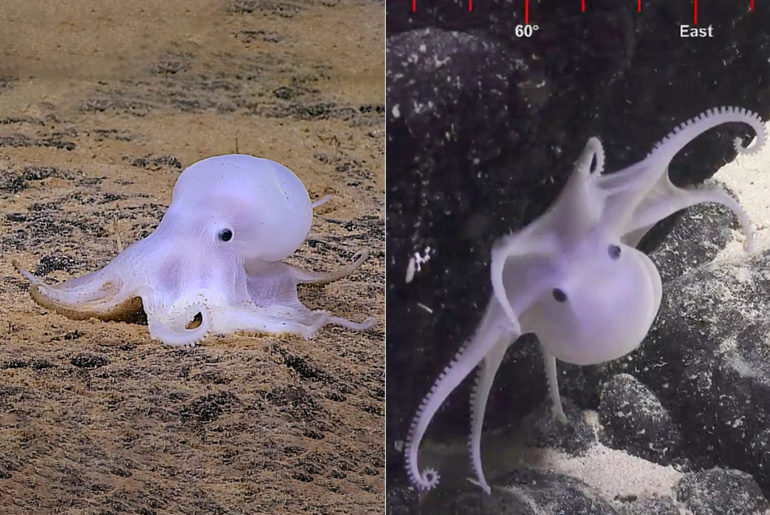

The National Oceanic and Atmospheric Administration (NOAA) spotted ‘Casper’, a ghost-like octopus, during an Okeanos expedition off Hawaii in 2016. Since then, it has only been seen once more because this species is typically found at over 13,000-feet beneath the surface. Unlike other cephalopods, this small octopus doesn’t appear to have any color-changing pigment cells.

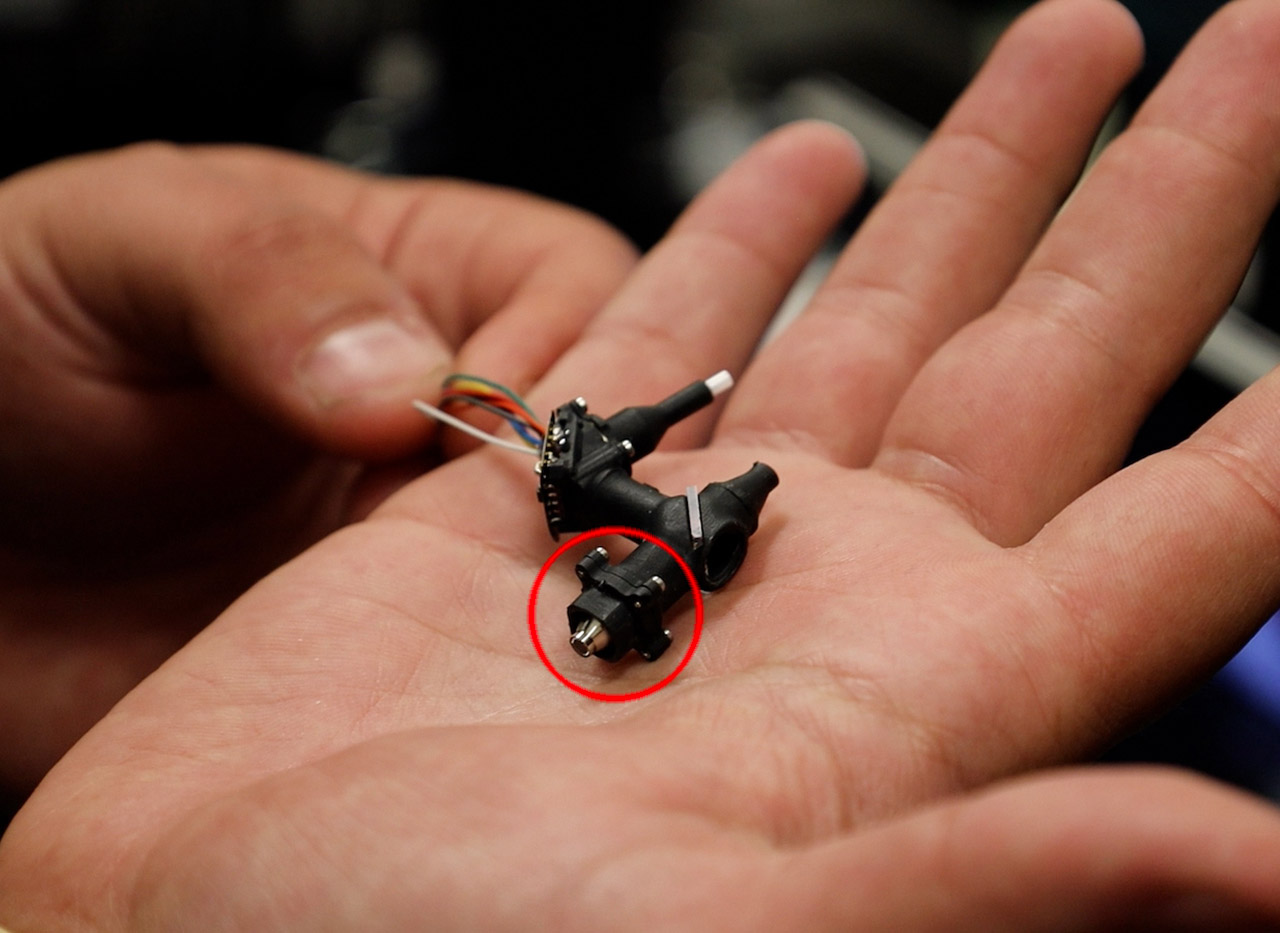
UCLA researchers just got a $4-million grant from the National Institutes of Health to upgrade their miniscope, a tiny microscope capable of observing an animal’s brain activity in real-time. More specifically, this 1-inch tall microscope that weighs less than 4-grams snaps into a baseplate implanted on top of an animal’s head, capturing neuronal activity that is sent by a thin wire to a computer for analysis.


Researchers from MIT, the Gwangju Institute of Science and Technology (GIST), and Seoul National University in Korea have developed a fiddler crab-inspired artificial vision system capable of seeing on both land and in water. What makes the fiddler crab so special is its amphibious imaging ability and an extremely wide field of view.


Nagoya Institute of Technology scientists in Japan have devised a method to convert fish waste into carbon nano-onions (CNOS) for LED lighting and QLED displays. This type of carbon nanostructure has a multitude of uses in biomedicine, bioimaging, energy conversion, and electronics. Unfortunately, the traditional methods for producing them are very complex, toxic, and resource-intensive.


Japan-based company Sweet Mommy unveils ‘Cool Dog’, a small wearable fan to keep your pet cool in the summer or just anytime when things get warm. Rei Uzawa, president of Sweet Mommy, says she was inspired to build the device after seeing her pet chihuahua acting exhausted after their summer walks.
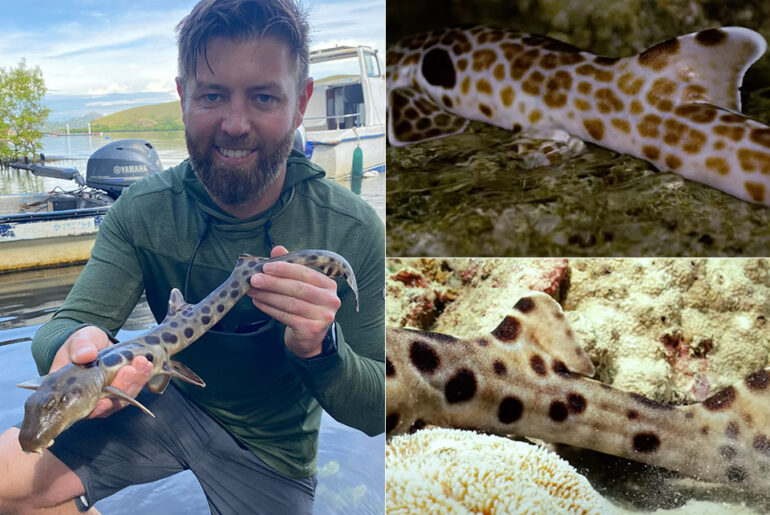

Scientists working with the Discovery Channel stumbled upon something unusual the night of May 3, 2022 on the coast of Papua New Guinea: walking sharks. No, this doesn’t meet they have feet, but rather fins that are used to drag its body across water and onto land. Scientifically speaking, this is classified as an epaulette shark, which have rarely been captured on video.
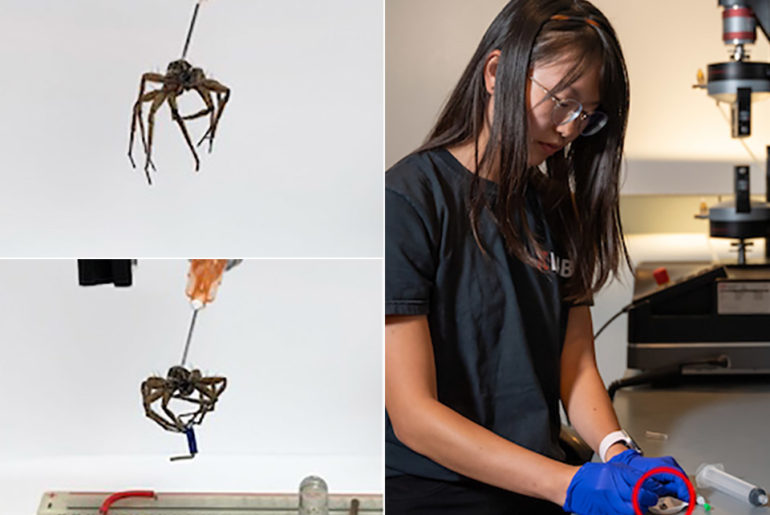

Photo credit: Brandon Martin
Mechanical engineers from Rice University managed to transform dead spiders into ‘necrobotic’ robots of sorts in the laboratory. More specifically, mechanical grippers that can be seamlessly blended into natural environments for picking up objects, such as other insects, that may outweigh them.
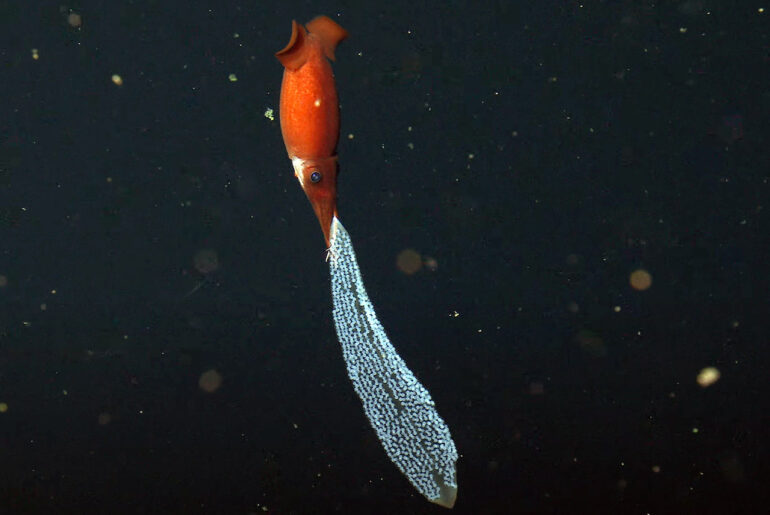

MBARI (Monterey Bay Aquarium Research Institute) researchers used a remotely operated vehicle (ROV) to observe a deep-sea squid mom carrying hundreds of eggs to keep them safe from predators. It was spotted at a depth of 4,560-feet at more than 56-miles offshore from MBARI’s facilities in Moss Landing, California.


Standing 10-feet-tall and measuring 22-feet in length, this 76-million-year-old Gorgosaurus skeleton is headed to a Sotheby’s auction in New York. For those interested in seeing it in person ahead of the auction, you’ll be able to do so starting July 21st. This dinosaur’s name translates to ‘fierce’ or ‘terrifying’ lizard and it reigned during the Late Cretaceous period.