Sure, we have smartphones and tablets nowadays, but back in 1995, if you wanted to game or work on-the-go, IBM’s Palm Top PC 110 was the way to go. Co-developed with Ricoh, this handheld personal computer is powered by the Intel 80486SX processor and features a 4.7-inch dual-scan LCD capable of display 256 colors, 4MB of RAM, 260MB hard drive, and even a Compact Flash card slot for external storage.

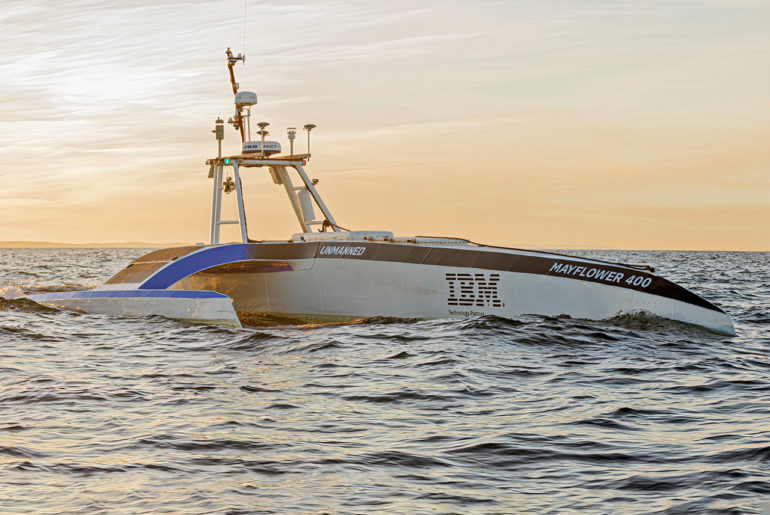
IBM and ocean research non-profit ProMare announced this week that the Mayflower Autonomous Ship (MAS400) has officially started its transatlantic crossing journey in international waters. There is no human captain or onboard crew, as it utilizes artificial intelligence and energy from the sun to traverse the waters. The ship works in tandem with scientists and other autonomous vessels, providing a flexible and cost-effective platform for deepening understanding of critical issues such as climate change.

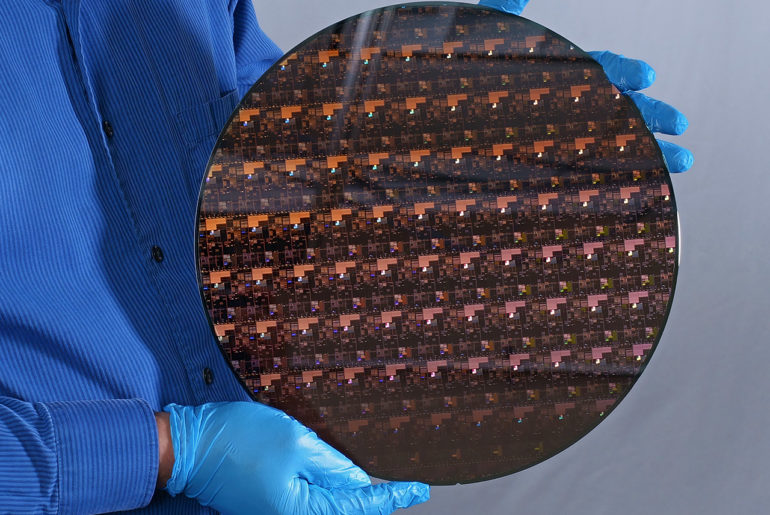
IBM Research officially revealed the world’s first chip with 2 nanometer (nm) nanosheet technology, paving the way for the future of semiconductors. Many know that by increasing the number of transistors per chip, they can become smaller, faster, more reliable, and more efficient. This breakthrough 2 nm design showcases the advanced scaling of semiconductors using IBM’s nanosheet technology, which enables the 2 nm chip to fit up to 50 billion transistors on a fingernail-sized chip.

Smaller than a grain of fancy salt, IBM has unveiled a computer touted as the world’s smallest, measuring 1mm x 1mm, and it reportedly costs less than 10-cents to make. The top image of a chip on a fingertip shows a total of 64 motherboards, with each containing two of these tiny computers.