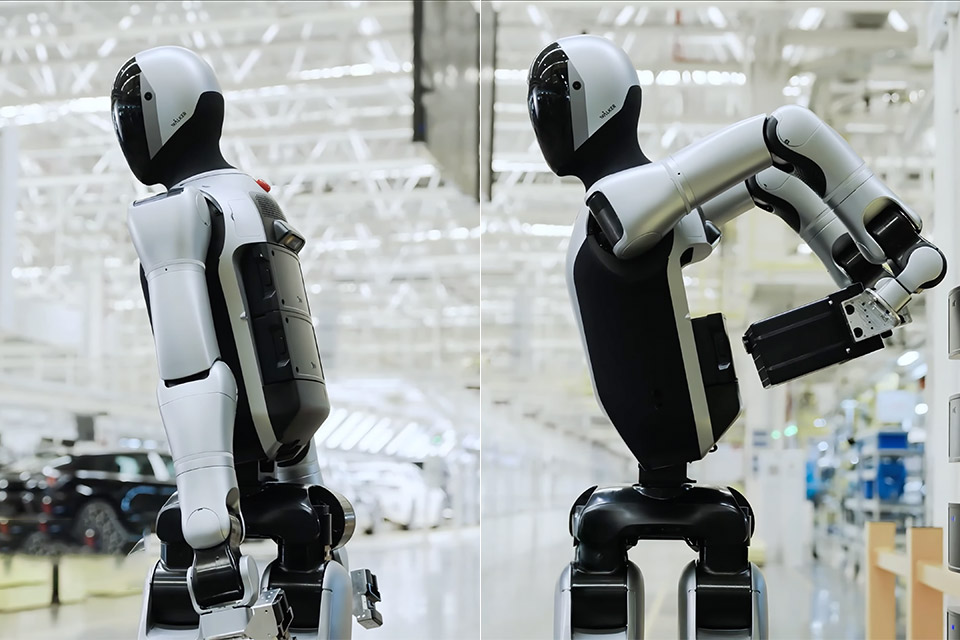
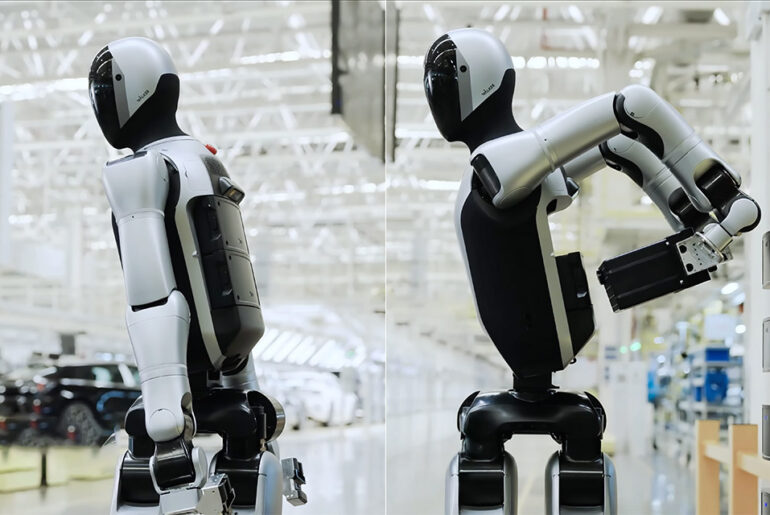
In a Shenzhen factory, a humanoid robot named Walker S2 walks to a charging station, removes its own battery and installs a new one in about 3 minutes. UBTECH Robotics claims it’s the world’s first humanoid robot to master autonomous battery swapping.
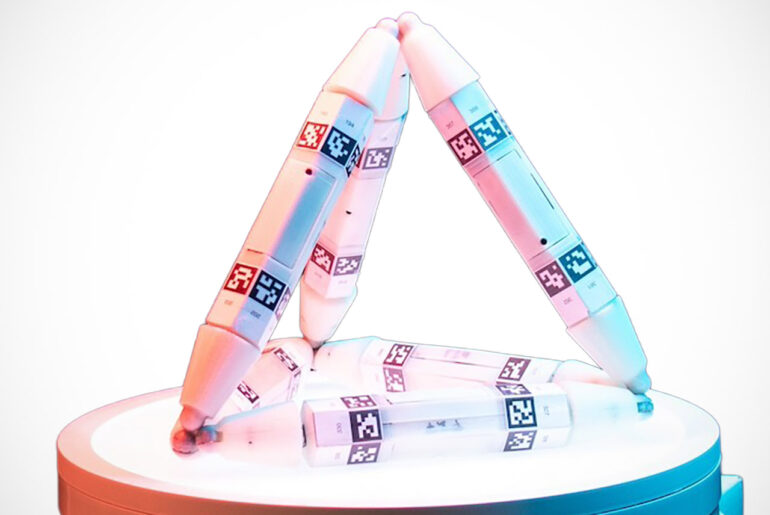
Columbia University’s latest engineering project is straight out of a sci-fi novel, but it’s based on a simple idea: what if robots could grow, heal and adapt by absorbing parts from other robots? They call it “robot metabolism” and it flips traditional robotics on its head, from stiff, electricity-driven machines to robots that act like living organisms, using materials from their environment to evolve.

Photo credit: WDW Magic
Seventy years after Walt Disney welcomed guests to his magical park in Anaheim, California, he’ll be back at Disneyland. On July 17, 2025, the Main Street Opera House will debut “Walt Disney – A Magical Life,” a show starring the first audio-animatronic of Walt himself.

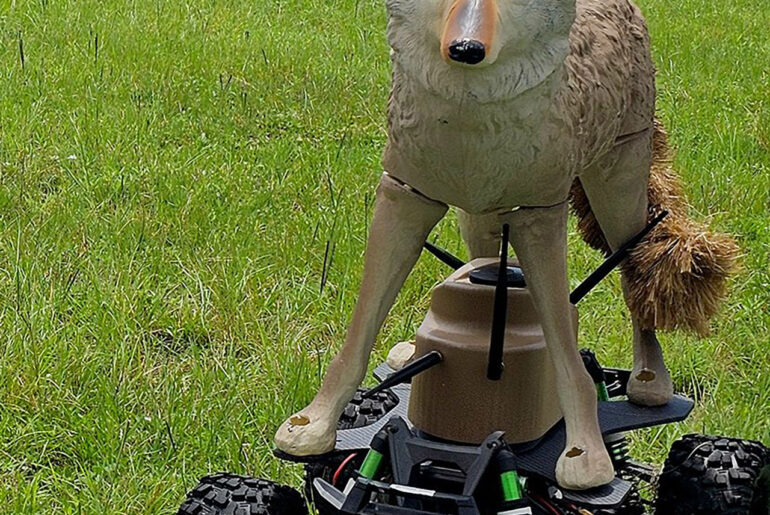
The U.S. Army Corps of Engineers have built something you don’t see everyday: Coyote Rovers, four-wheeled robotic vehicles topped with life-size plastic coyotes, cruising airfields to spook birds and critters away. Dreamed up by the Engineer Research and Development Center (ERDC), these odd robotic predators mix were designed to tackle a pricey problem.

Hugging Face has unveiled Reachy Mini, a desktop robot that feels like a bold step toward making robotics accessible to everyone. This open-source marvel is designed for AI developers, educators, hobbyists, and even curious kids.

Photo credit: University of Queensland
An unassuming darkling beetle hustles over a messy pile of rubble inside a lab at the University of Queensland, sporting a tiny microchip backpack. Researchers are actually steering this beetle, called “ZoBorg”, with a video game controller.

In a minimalist Tokyo lab, a woman lounges in a chair that could easily pass for something in a fancy spa. But she’s actually controlling a humanoid robot across the room with just the tiniest flexes of her muscles. The robot copies her every move, from lifting a box to wiping down a table to shaking someone’s hand. This is H2L’s Capsule Interface.

Amazon’s warehouses can now be described as a wild dance of robotic arms and zippy bots weaving through aisles, sorting packages with a precision that’s almost eerie. As of July 2025, the online retail giant has rolled out over a million robots across its global web of fulfillment centers, nearly neck-and-neck with its 1.56 million human workers.

In Beijing’s Yizhuang Development Zone, four teams of humanoid robots duked it out in the world’s first fully autonomous 3-on-3 soccer (football) showdown, hosted by the ROBO League. Tsinghua University’s THU Robotics squad stole the show, outscoring China Agricultural University’s Mountain Sea team 5-3 in a final that was nothing short of a tech breakthrough.

Photo credit: SCMP
Shanghai’s Zhangyuan neighborhood, a 140-year-old maze of tight alleys and Shikumen-style homes, just pulled off an engineering stunt for the ages. The Huayanli complex—7,500 tons of century-old buildings—was hoisted and shuffled across the city by 432 tiny robots, each small enough to fit in your hand, in a jaw-dropping technological dance.