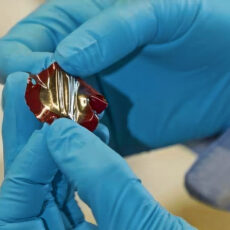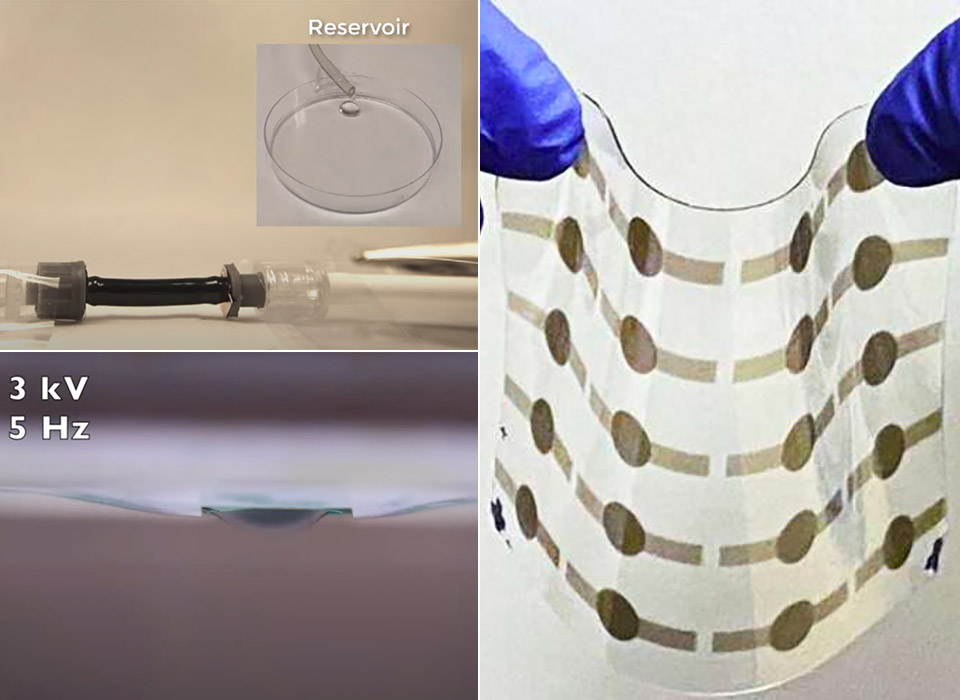
Scientists at UCLA’s Soft Materials Research Lab and SRI International have developed a flexible, durable material that could one day be use for artificial muscles. These artificial muscles would be stronger and even more flexible than their real-life human counterparts. The material is capable of outputting mechanical energy while remaining viable under high-stress conditions.
What practical applications could these artificial muscles have? Qibing Pei, a professor of materials science and engineering at UCLA’s Henry Samueli School of Engineering and the study’s corresponding author, said it would be possible to use as a wearable technology, possibly placed on the skin to help those with mobility issues regain some strength. Currently, a robotic arm with realistic muscles already exists.
No products found.
Creating an artificial muscle to enable work and detect force and touch has been one of the grand challenges of science and engineering. This flexible, versatile and efficient actuator could open the gates for artificial muscles in new generations of robots, or in sensors and wearable tech that can more accurately mimic or even improve humanlike motion and capabilities,” said Qibing Pei, a professor of materials science and engineering at the UCLA Samueli School of Engineering.