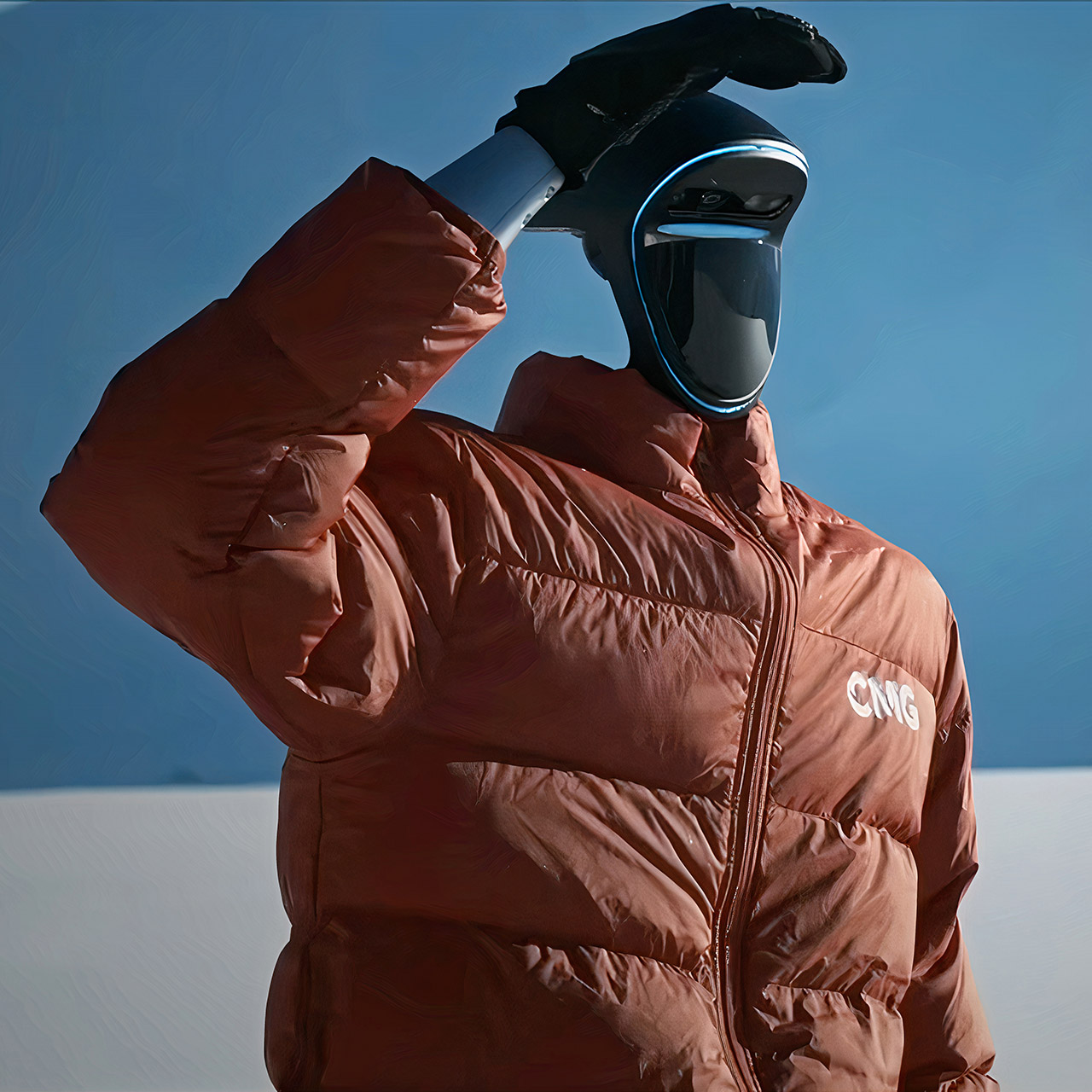
Unitree robots dispatched its G1 humanoid into the harsh cold of Xinjiang’s Altay area, where temperatures plunged to a mind-boggling -47.4°C (-53.3°F), where the robot struggled through heavy snow, racking up an incredible 130,000 steps, all without human intervention. Every movement was the result of the robot making its own decisions, guided by onboard systems that performed an excellent job of keeping it upright and stable on some of the most uneven terrain imaginable.
Engineers modified the G1 to better withstand the tough environment. They placed an insulated orange jacket around its frame and plastic covers around its lower legs to protect the joints, motors, and battery pack from freezing. You would assume that at those temperatures, most machines would shut down, but not this one. Its battery, which normally lasts approximately two hours, managed to last the entire period, albeit with a few re-charges along the route.

- Sleek & Durable Design: Standing at 132cm tall and weighing only approx. 35kg, the G1 is constructed with aerospace-grade aluminum alloy and carbon...
- High Flexibility & Safe Movement: Boasting 23 joint degrees of freedom (6 per leg, 5 per arm), it offers an extensive range of motion. For safety, it...
- Smart Interaction & Connectivity: Powered by an 8-core high-performance CPU and equipped with a depth camera and 3D LiDAR. It supports Wi-Fi 6 and...
The G1 used China’s Beidou satellite network to stay on track, with positional accuracy of about ten centimeters, and then used some rather adaptive algorithms to plot its route, taking into consideration how the snow and ice were shifting around it. All of this data came from a variety of sensors, including 3D LiDAR and depth cameras, which fed into Unitree’s unified AI model, which uses reinforcement learning to manage the robot in real time.
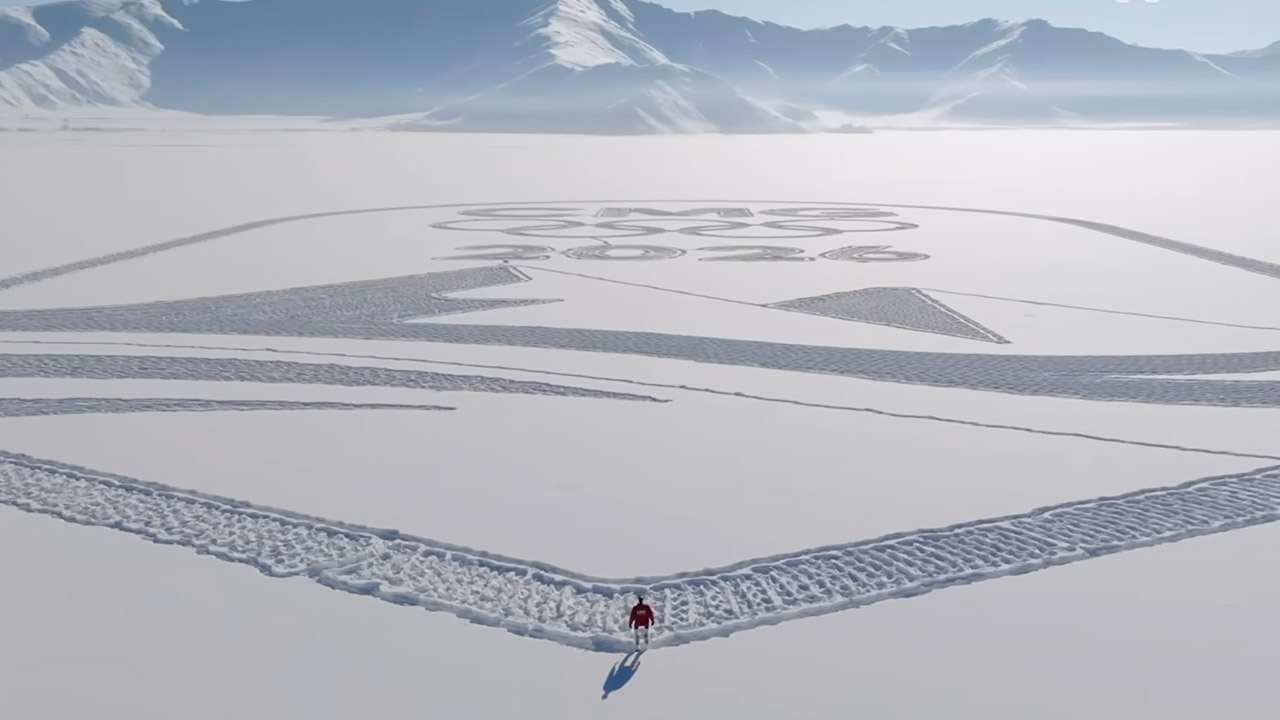
This wasn’t just about traveling from point A to point B; the G1 was tasked with tracing the outline of the Milano-Cortina 2026 Winter Olympics symbol, which is 186 meters long and 100 meters wide. The robot created a succession of footprints that formed the rings and accompanying shapes, which were visible from above once completed. The robot had no external marks or guides to follow; everything was pre-programmed, but it also had to adjust for the ever-changing terrain in real time.