Soviet engineers faced a constant uphill battle keeping pace with the rapid development of consumer electronics, working without access to foreign components or technical blueprints. Nowhere was that more apparent than in their approach to compact disc technology. Work on the Luch-001 prototype player wrapped up in 1979, but the result was a genuinely strange machine, reading data from glass discs using a helium-neon laser. Production didn’t take off because they couldn’t make enough, and red tape slowed things down for years.
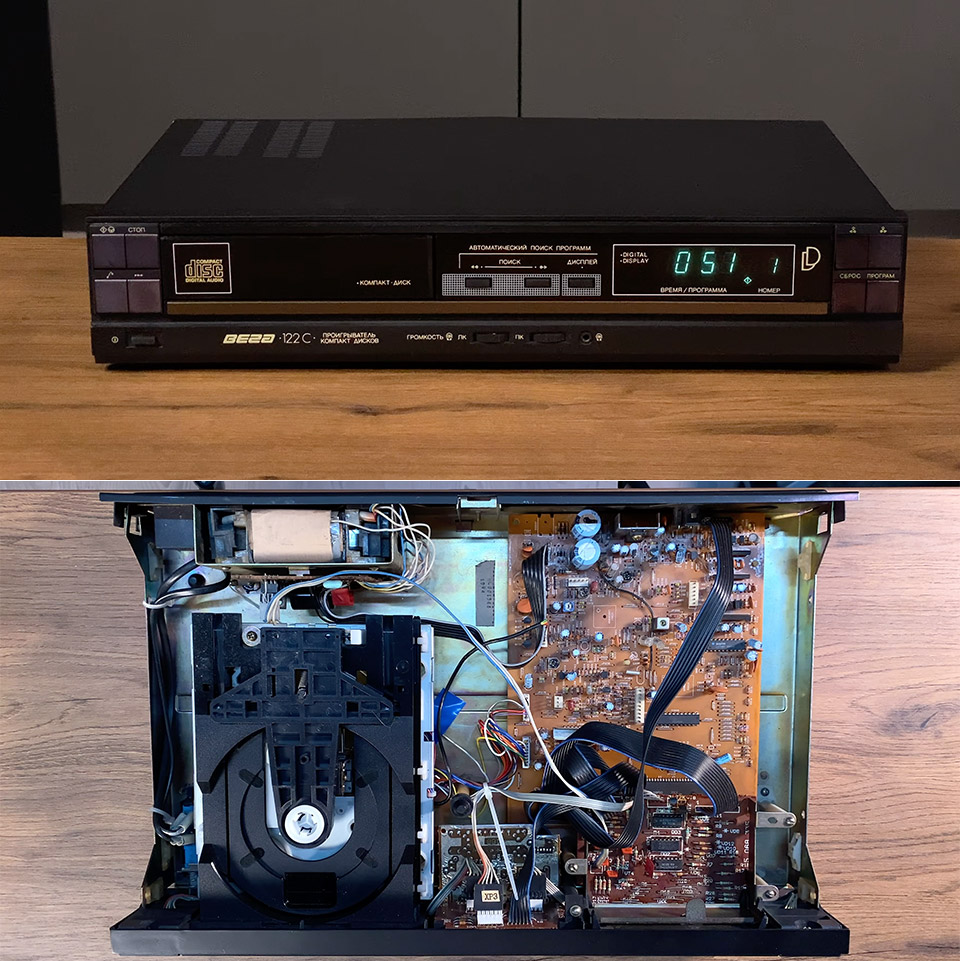
Small batches of CD players trickled out of Soviet Estonia during the 1980s, mostly assembled from Philips components with local modifications to work around whatever was available. Sanctions and trade barriers kept getting in the way of anything larger scale, and mass production did not meaningfully begin until the very end of the era. The Vega PKD-122, released in 1991, was the first proper Soviet CD player to reach the market, combining a Japanese Sanyo mechanism and digital to analog converter with locally made power supplies, TTL integrated circuits, and custom displays. Around the same time, factories in Moscow began pressing actual discs on West German equipment acquired in 1989.

- Retro Design with Portability: Classic retro boombox design featuring a convenient carrying handle for easy transport; perfect for bringing vintage...
- Versatile Audio Options: This boom box includes a CD player, FM/AM radio for local music and traffic updates, and a cassette player with recording...
- Exceptional Sound Performance: With dual 5.25" woofers and 1.2" tweeters, this boombox Bluetooth speaker delivers 40W of rich, balanced sound output...
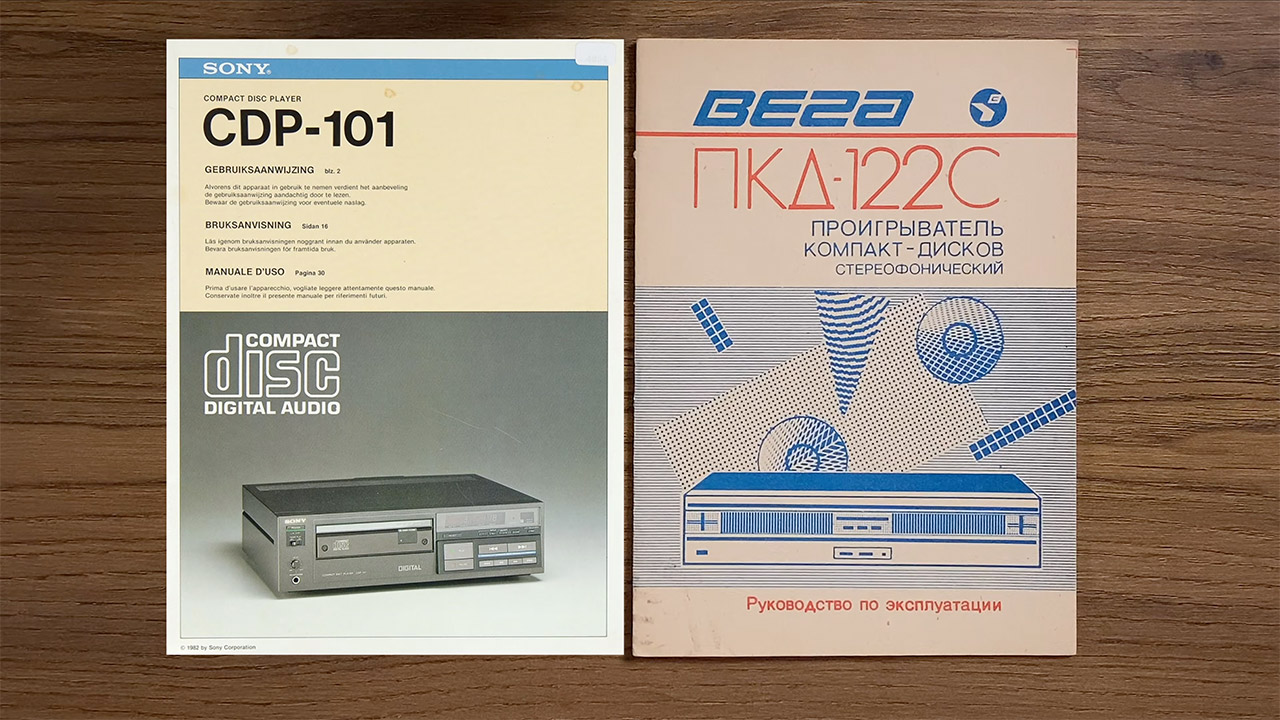
The design choices on the Vega PKD-122 reveal exactly what the engineers had to work with. Front panel buttons connected directly to the mainboard with no protection against static electricity, which was a serious problem in the dry winter conditions common across much of the country. The control symbols for play and pause were lifted straight from an international industrial automation standard because nobody involved had apparently ever laid eyes on a commercial CD player before. The result was a machine that looked unremarkable at first glance but gave itself away immediately to anyone who knew what they were looking at, Japanese reliability underneath with Soviet ingenuity holding it together. Even after the factory closed in 1995, leftover stock and spare parts kept circulating among enthusiasts drawn to its straightforward construction and sturdy build.
The theremin is another good example of Soviet ingenuity taking things in its own direction. Lev Termen invented the instrument in 1920, producing sound entirely through hand movements near a pair of antennas without any physical contact required. The result was an eerie, otherworldly tone unlike anything else being made at the time. Soviet labs continued refining the design for both musical and research applications, and the instrument eventually found its way into film scores and live performances around the world.
[Source]