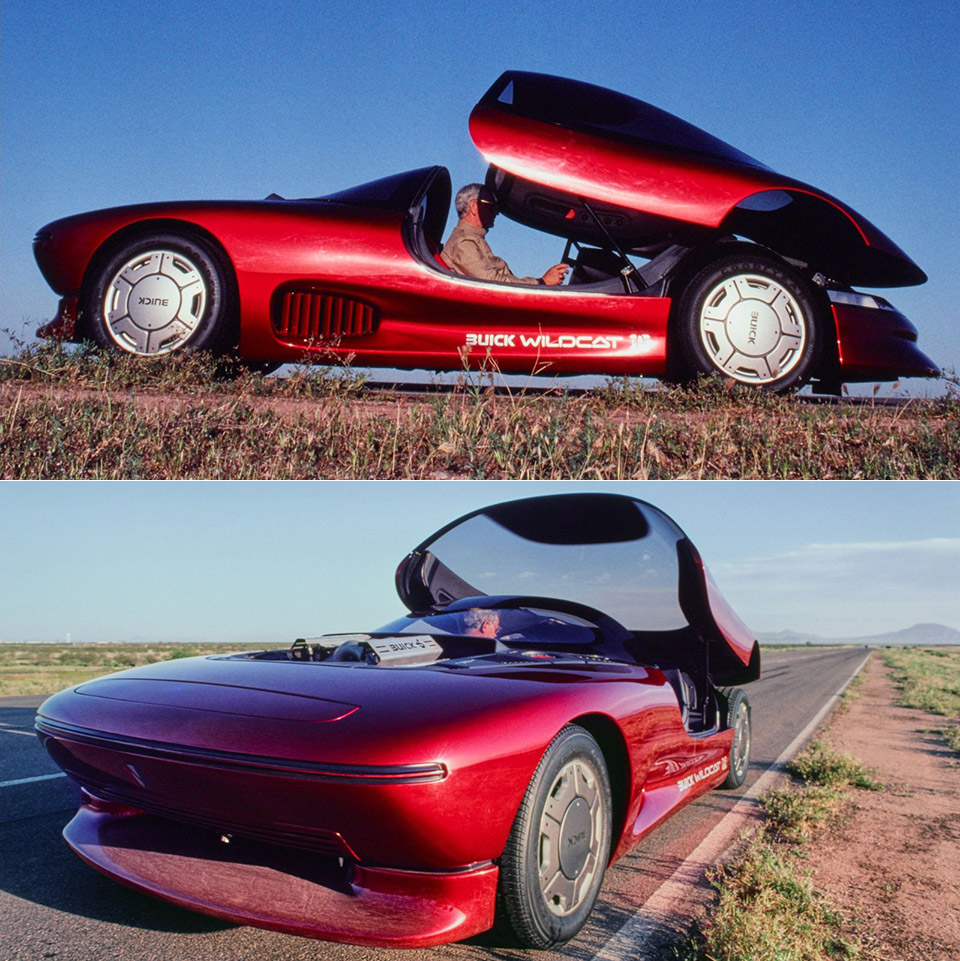
In 1985, Buick showed a concept car that looked like it had been ripped from the set of the Running Man. Displayed at the SEMA show in Las Vegas, the Wildcat was a radical departure from the brand’s reputation for building soft, boring sedans. Its sleek, aerodynamic body, all-wheel-drive and McLaren-tuned V6 engine made it a showstopper that could hang with the era’s most outlandish supercars.
Designed by David P. Rand, the Wildcat’s exterior was a lesson in how to defy convention. Its low, rounded shape and smooth curves were the opposite of the boxy cars that Buick was building. A tinted Plexiglas canopy was the roof, which swung up to reveal a two-seat cockpit, while the steering wheel tilted back to make entry easier. The back of the car showed off its mid-mounted 3.8-liter V6 engine, exposed through an open decklid like a trophy. Built with a carbon fiber and fiberglass composite body, the Wildcat weighed 2,910 pounds, a featherweight compared to Buick’s land yachts, while its 0.28 drag coefficient helped it slice through the air.

- REMOTE CONTROL TOY CAR – Builders ages 10+ can create a fully motorized LEGO Technic Lamborghini Revuelto supercar with authentic Italian styling...
- INTERACTIVE SUPERCAR MODEL – This car toy connects to the CONTROL+ app where drivers can steer the vehicle, activate lights, and monitor live...
- AUTHENTIC LAMBORGHINI FEATURES – The detailed car model includes glow-in-the-dark headlights, sleek aerodynamic body, and realistic proportions that...
Power came from a 3.8-liter V6, reworked by McLaren Engines of Livonia, Michigan. Far from the standard Buick engine, this mill had dual overhead camshafts, 24 valves and sequential-port fuel injection. Officially rated at 230 horsepower and 245 lb-ft to meet emissions standards, rumors said it could produce up to 360 horsepower and 398 lb-ft unrestricted. This power was sent to all four wheels through a four-speed automatic with manual shifting capability, via a transfer case that sent 35% of the torque forward and 65% to the rear. Buick claimed the Wildcat could hit 60 mph in 4.5 seconds and 180 mph top speed, numbers that put it in the same league as the Lamborghini Countach, the supercar of the era.
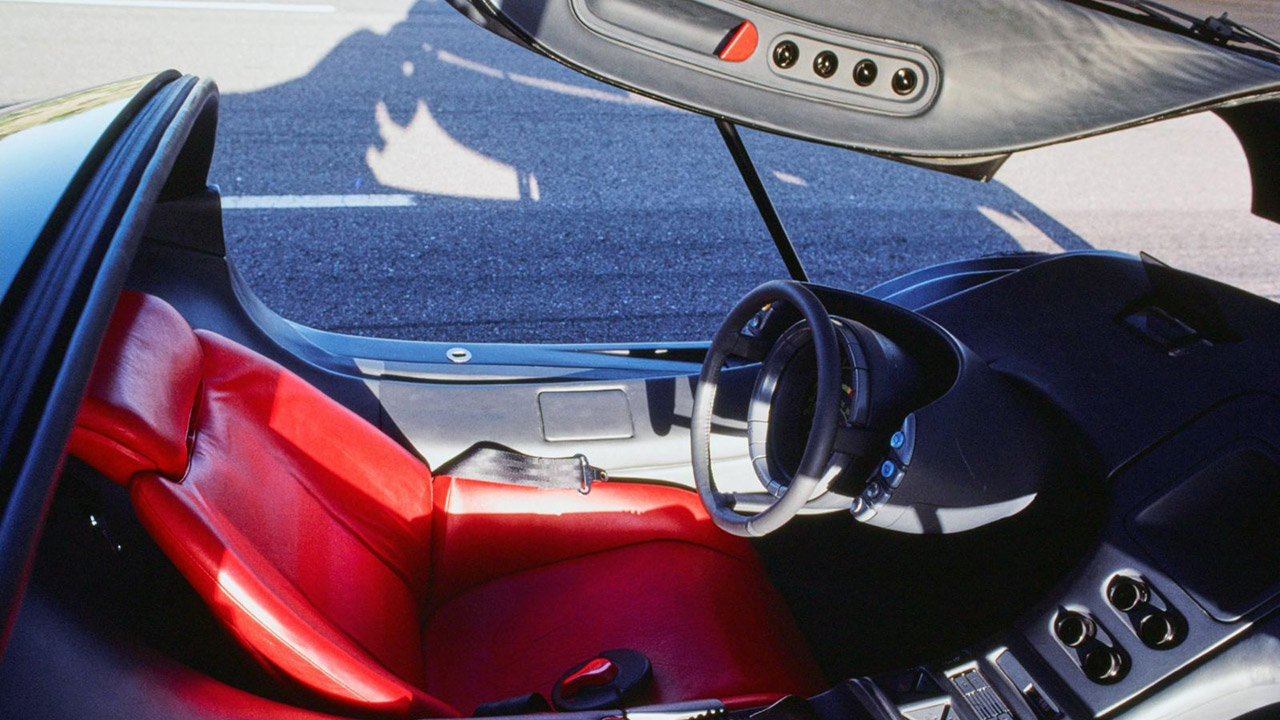
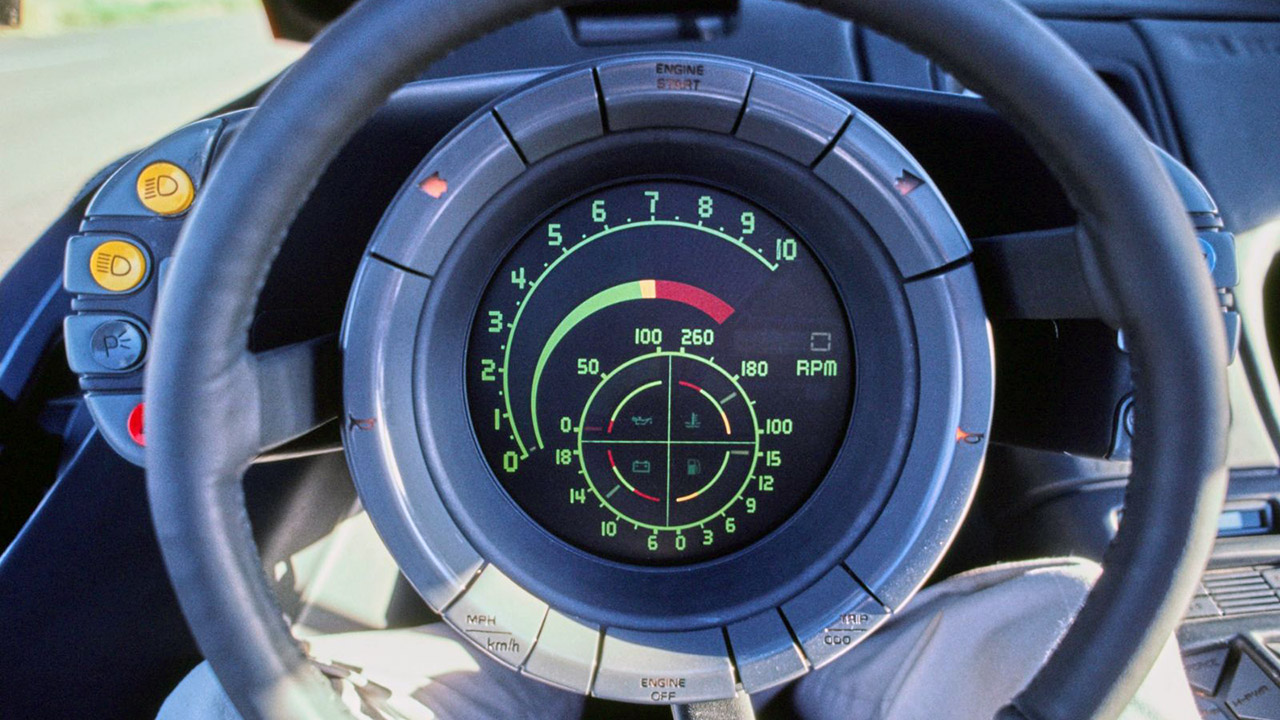
Inside, the Wildcat’s cockpit was a tech fest. A spokeless steering wheel, inspired by the 1972 Maserati Boomerang, held a fixed digital cluster showing engine vitals like RPM, temperature and voltage. A secondary screen on the center console showed G-forces, oil pressure and a digital compass, while a heads-up display projected speed and gear onto the canopy. Nellie Toledo’s interior design wrapped two bucket seats in red leather, making it feel like a spaceship not a car. Every detail, from the four-point racing harnesses to the push-button start, screamed big time, encouraging drivers to imagine a world where Buick could hang with Ferrari or Porsche.
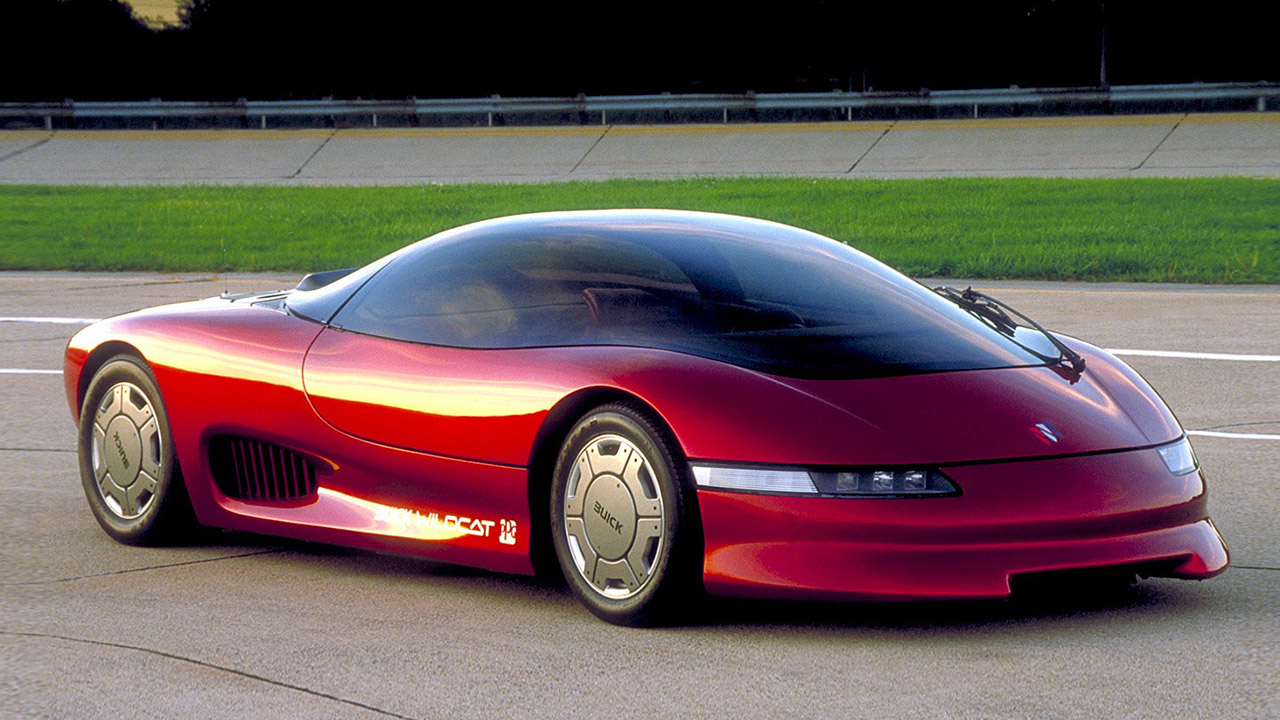
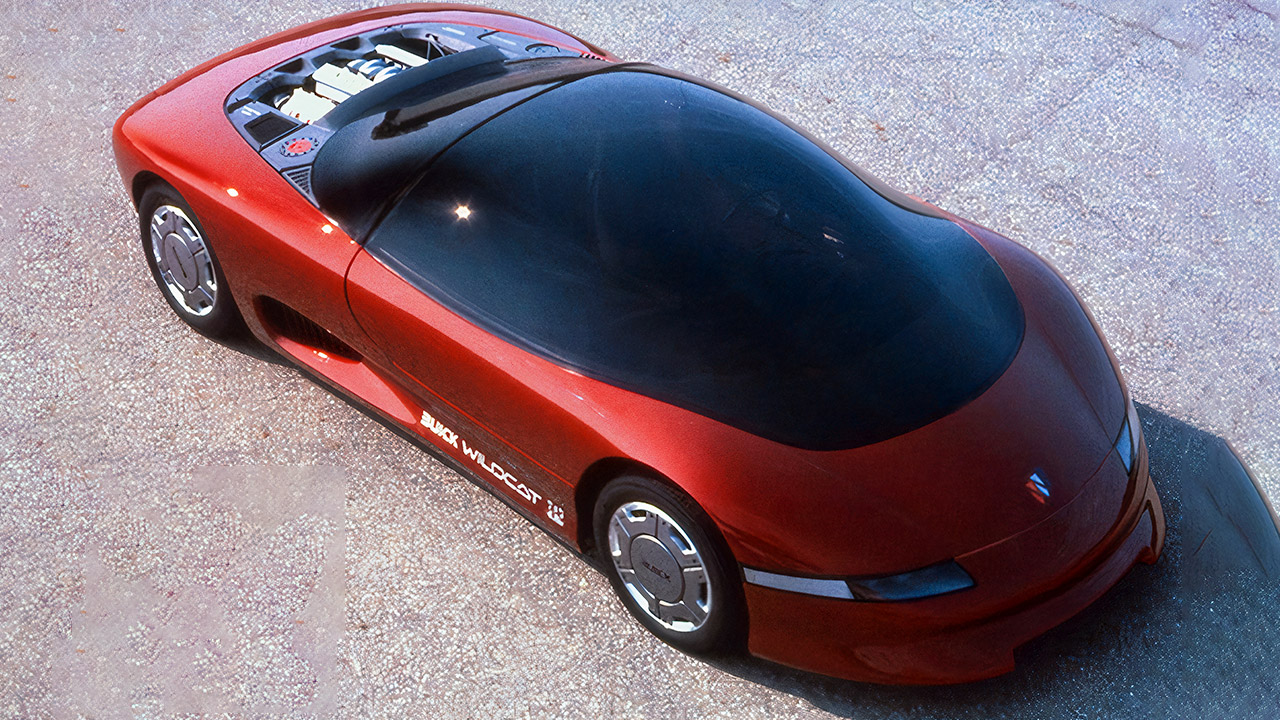
Buick chose to debut the Wildcat at SEMA, a show all about innovation, for a reason. The concept was a deliberate attempt to break the mold and show Buick could play in the high performance space. Unlike the wedge shaped supercars of the time like the Ferrari Testarossa, the Wildcat’s curves and exposed engine were inspired by motorcycles, raw mechanical beauty. Two were built, a non functional show car for SEMA and a fully functional car for engineering testing. The latter was used as a test bed for Buick’s ideas and proved the concept was more than just a pretty face. It even served as a pace car for the CART/Indy Car circuit, a role that proved its performance credentials.
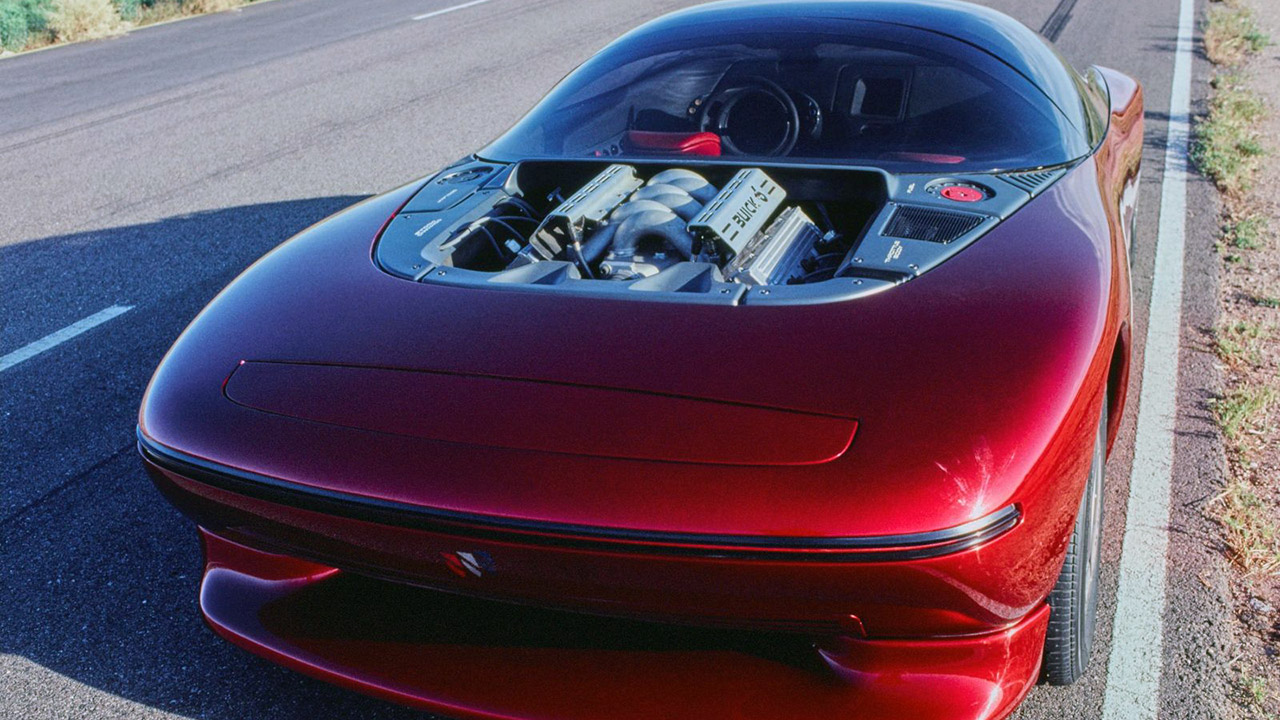
The Wildcat won the 1986 Car Design Award at the Turin Auto Show and got global recognition for its bold design and engineering, but it never went into production. The complexity of the carbon fiber construction, all wheel drive system and advanced electronics made it impractical for a brand focused on mass market luxury. The Wildcat’s influence however lived on. Its V6 technology led to the turbocharged engine in the 1987 Buick GNX, a muscle car that proved Buick could still deliver performance.
[Source]