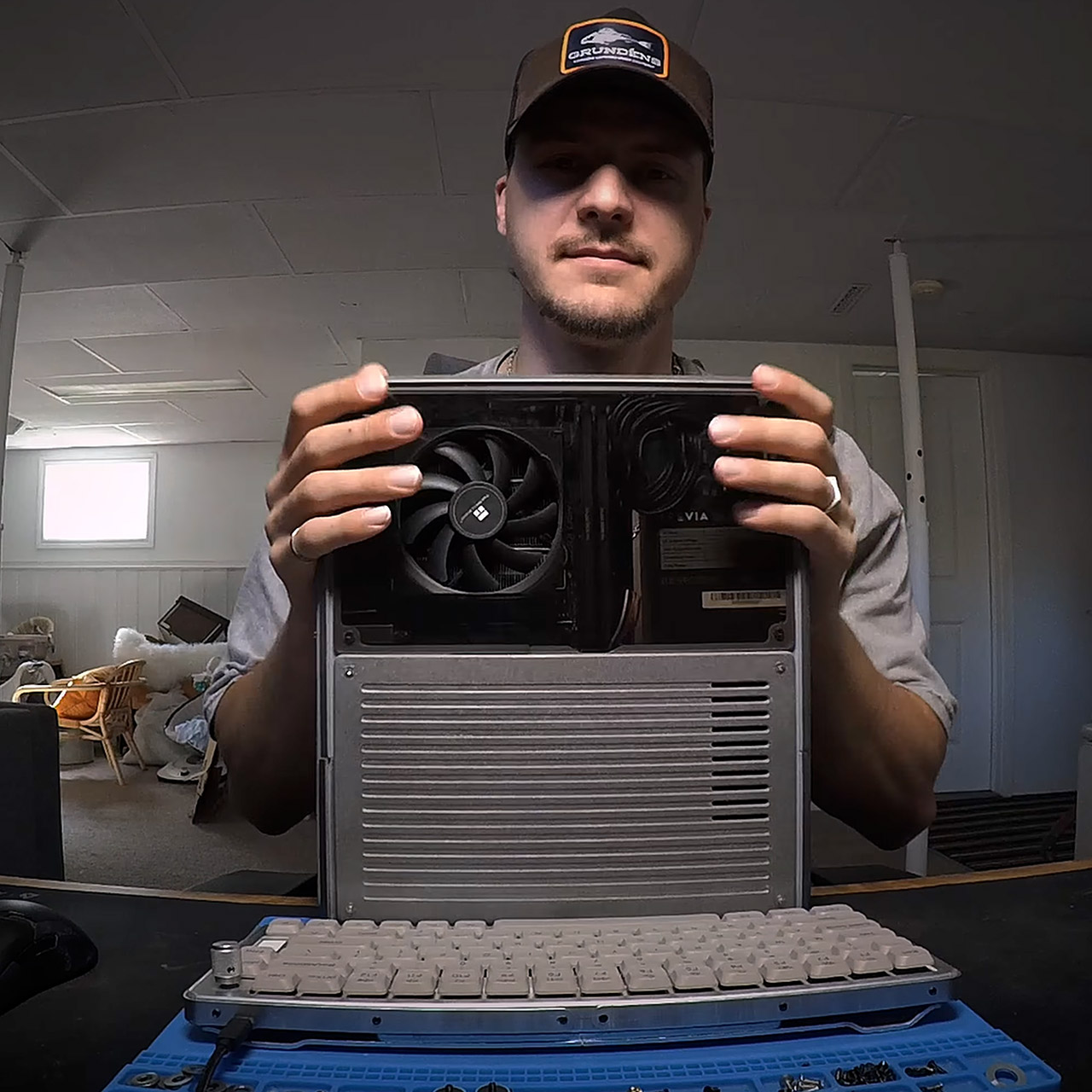
HobbyBoi wanted a machine that could handle CAD work, 3D rendering, video editing, coding, and occasional gaming without locking him into a sealed laptop. Commercial small form factor cases still felt too large or too expensive, so he designed one from scratch. The result is a custom 4.8 liter enclosure, printed in pieces, that slips into a laptop bag and runs a full desktop processor and graphics card for roughly one thousand dollars.
Part selection came first, and it was strictly budget-driven. He was able to purchase a secondhand AMD Ryzen 9 7900X for only $200, and it runs smoothly in its 105 watt eco mode with a small undervolt and an 85-degree temperature limit. An ASUS Phoenix GeForce RTX 3060 with 12 GB of memory cost 155 dollars used and received surgery: the back plate was cut, the front plate and fan shroud removed so the card would sit flat via a riser. An ASRock B650I Lightning WiFi Mini-ITX board, 32 GB of Crucial DDR5-6000, a 1 TB WD Black SN770 SSD, a Thermalright AXP90-X36 cooler, and a 500 watt Apevia Flex-ATX power supply completed the stack. Most of the money went into used or discounted parts so the total stayed under the self-imposed limit.

- High-Speed Precision: Experience unparalleled speed and precision with the Bambu Lab A1 3D Printer. With an impressive acceleration of 10,000 mm/s...
- Multi-Color Printing with AMS lite: Unlock your creativity with vibrant and multi-colored 3D prints. The Bambu Lab A1 3D printers make multi-color...
- Full-Auto Calibration: Say goodbye to manual calibration hassles. The A1 3D printer takes care of all the calibration processes automatically...
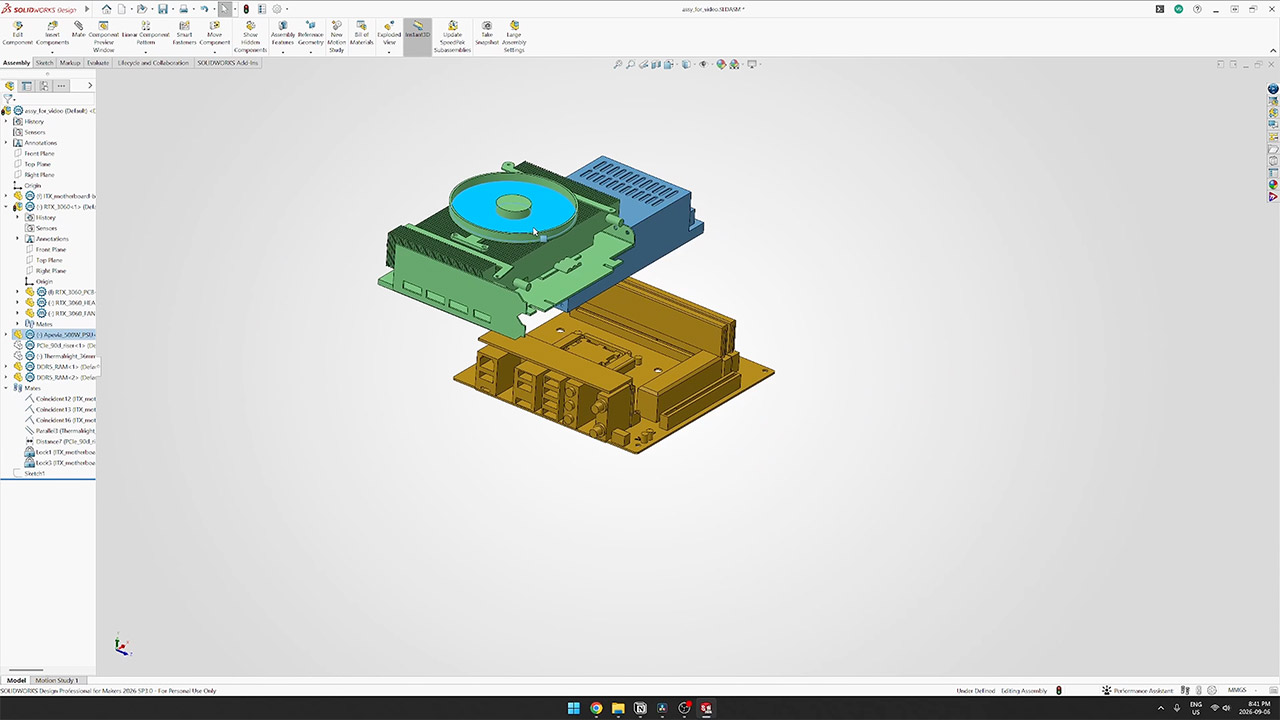
However, the later CAD design resulted in an interesting layout. The motherboard is on one side, and the graphics card and power supply are on the other, resulting in a slim, console-like profile with room for any wiring that may be required, as well as space for a future graphics card upgrade. Some clever structural bracing runs down the middle to give it some support, and he also included some mounting tabs to keep things clean. To add an edgy touch, some of the fasteners are exposed on the exterior.
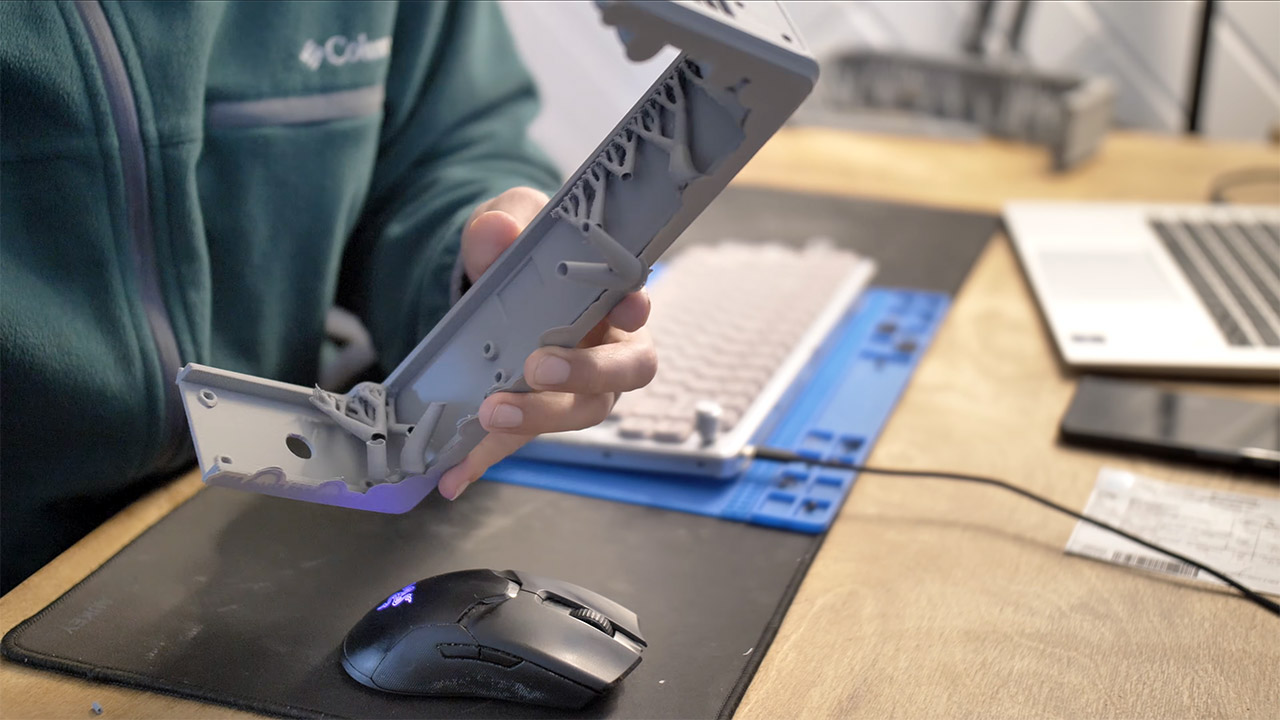
One challenge he had to deal with was that the printer bed couldn’t accommodate the complete case in one go, so he had to divide it into sections that could be printed separately: a front section, rear section, top section, and bottom section. He appreciated that the entire thing could be printed with high-temperature glass-filled PLA without warping. After building the model, he added a couple coats of primer and sanded the surfaces before applying soft iron spray paint to give them an aluminum appearance, which he believes went out nicely. Then he had to worry about the sides, so he chose some tinted acrylic panels that he could cut out with a router and a template, and they cover everything up, allowing the internals to be seen while looking nice and tidy.
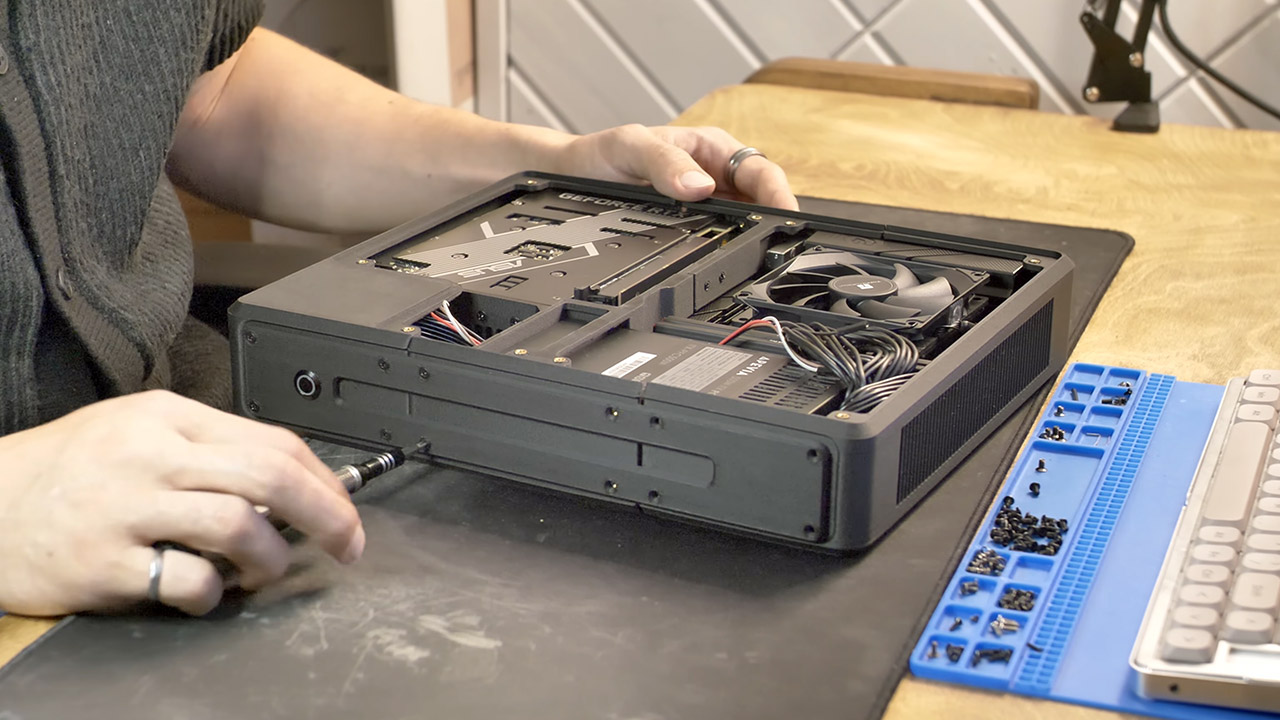
Assembly required a few more physical adjustments to fit everything inside the case’s tight interior. The motherboard’s aluminum I/O shroud was trimmed back somewhat, the 24-pin power connector was shortened, and the metal plates on the graphics card were adjusted to fit tightly together. To keep everything together, he utilized a combination of heat-set inserts and standard M3 screws to bolt the printed sections into place.
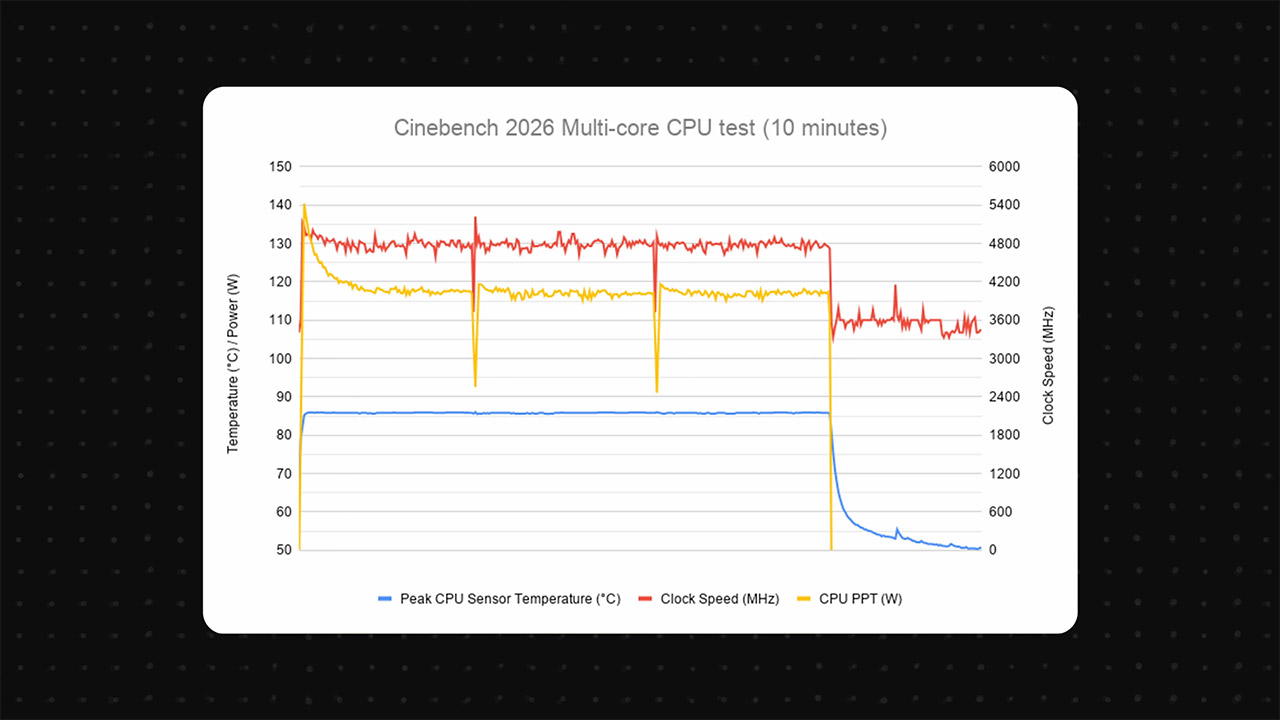
When he turned it on, the Ryzen 9 managed to maintain 4.8 Ghz in Cinebench multi-core mode while using only 117 watts and reaching a toasty 85 degrees. Meanwhile, the RTX 3060 held its own at approximately 1900 MHz, with a good huge hotspot of 90 degrees under load. In Fortnite at 4K with the settings turned all the way up, the machine was cranking out around 70 to 90 frames per second, but in Outer Wilds at the same resolution, it was a comfortable 45 to 50 fps per second. That’s more than enough to get some meaningful work done while also having fun, and the machine even accompanied him on a recent trip to Canada, where it just connected to the hotel television without issues.
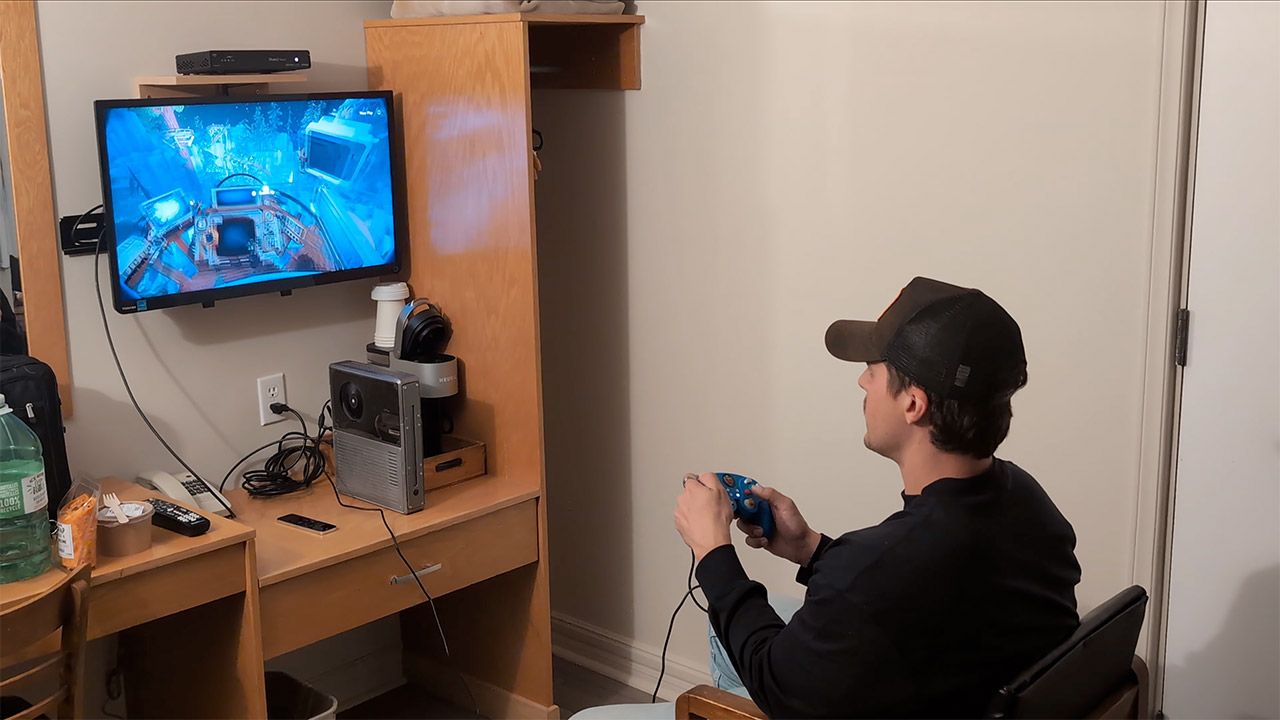
The finished case is half the size of a PlayStation 5 and easily fits into a standard laptop bag or backpack. The design files are available on Printables and MakerWorld, but please note that the geometry has been altered to work with this specific collection of parts, particularly the short RTX 3060. This was HobbyBoi’s first full attempt at creating a casing from scratch, and the result was a portable desktop that outperformed most laptops on multi-core tasks while still allowing lots of space for future improvements.