Photo credit: Aerovironment
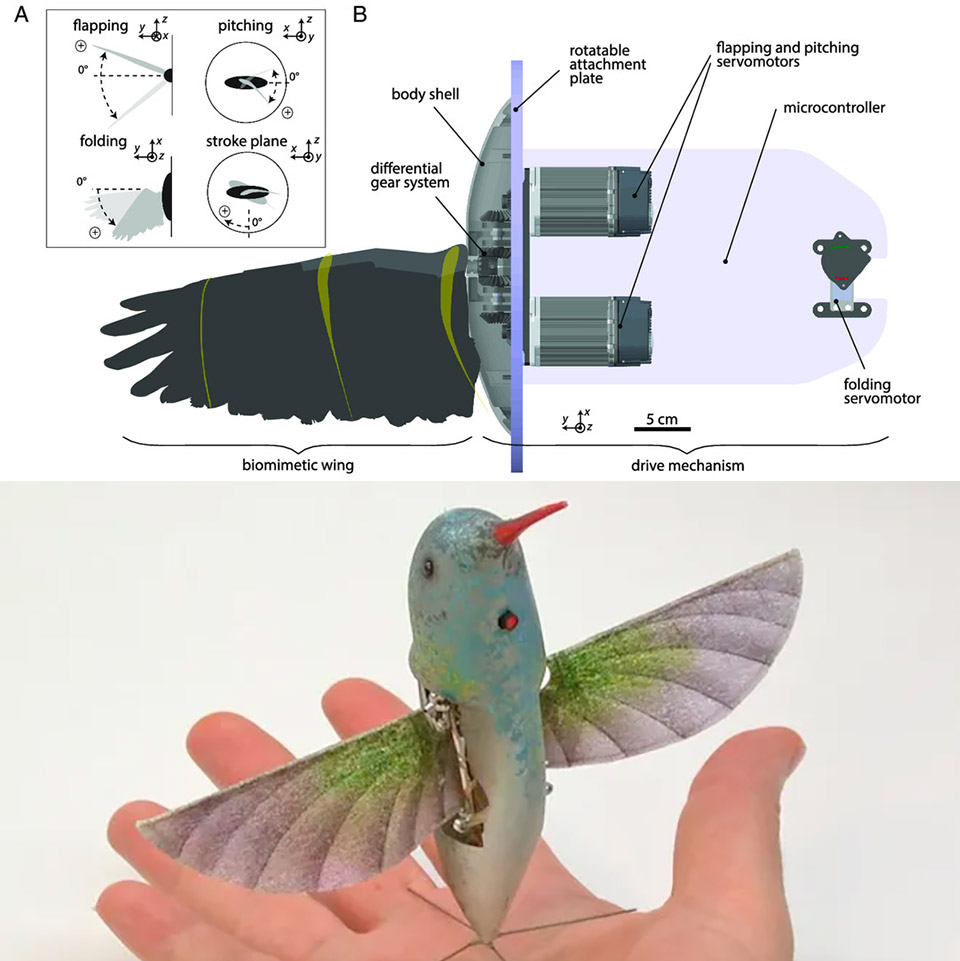
This innovative MEDUSA drone can fly and land on water, while future drones could have flapping wings, thanks to engineers at Lund University. They are developing a biohybrid robotic wing that is partly built from real feathers, with more advanced kinematic capabilities than previous robotic wings and similar to those of a real bird.

What they discovered was that the wing folding during an upstroke not only favors thrust production, but also reduces force-specific aerodynamic power. This indicates a strong selection pressure on proto-birds to evolve upstroke wing folding. The robotic wing could also be used to answer questions about bird flight that would be impossible simply by observing flying birds.

- No Registration Needed - Under 249 g, FAA Registration, and Remote ID are not required if you fly for recreational purposes.
- 4K UHD Stunning Imagery- Film in 4K HDR Video for crystal clear aerial shots. With Dual Native ISO Fusion, Mini 3 enables the capture of details in...
- Striking Vertical Videos are Ready to Share - With True Vertical Shooting, you can easily capture tall landmarks like skyscrapers and waterfalls.

It is also shown that thrust requirements likely dictate the wing’s stroke tilting. Overall, the proposed biohybrid robotic flapper can be used to answer many open questions about avian flapping flights that are impossible to address by observing free-flying birds,” said the researchers.