
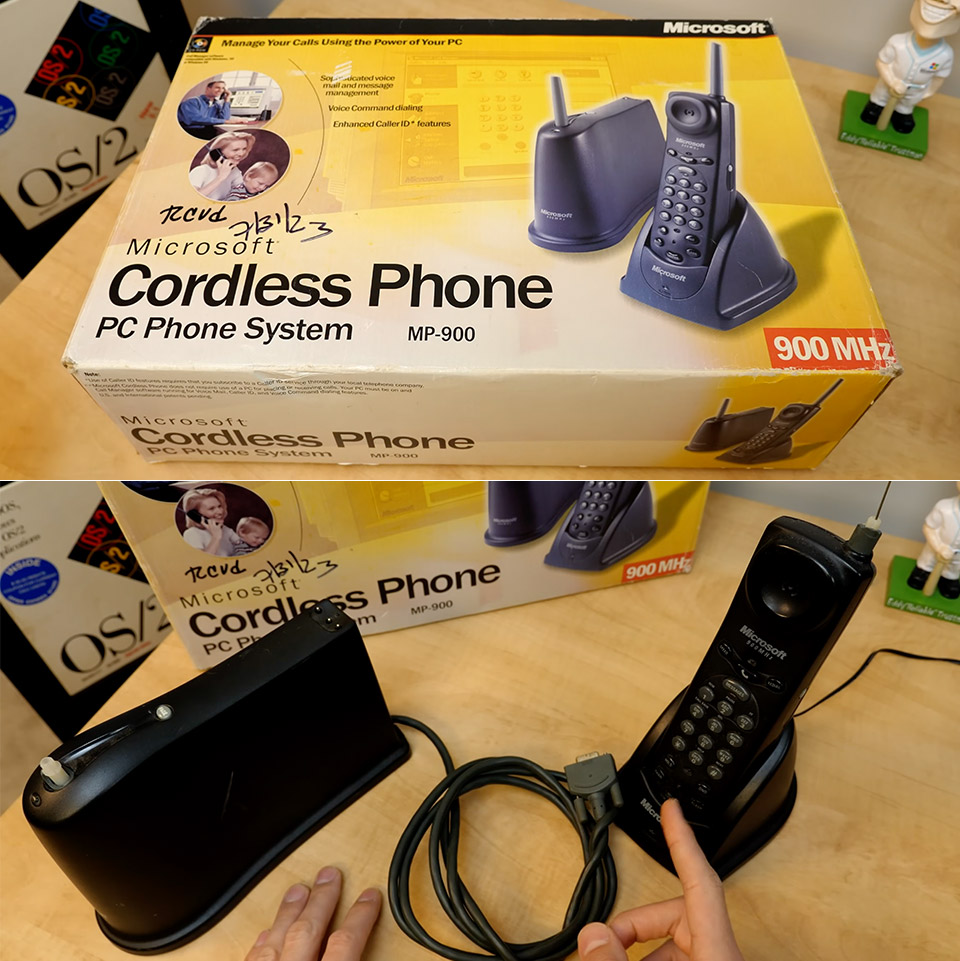
The Microsoft Cordless Phone System debuted quietly in late 1998, marking the company’s first move into hardware. It plugged directly into a Windows PC, aiming to combine ordinary calls with the power of home computers. This product was launched on October 6th, and by November, it was available in stores for an anticipated price of $199.95 ($395 today).
The system consisted of three major components: a 900MHz cordless handset, a base unit, and a separate charging dock. People would simply plop the dock down wherever they thought it most convenient. The base unit would simply plug into a conventional landline and communicate with the computer via a serial port. Without the computer, you’d just receive a standard cordless phone, good for basic calls, with respectable range, clear sound, and 40 interference-free channels. It included all of the normal functions you’d expect, such as a hold button, redial, volume control, out-of-range alerts, and low power notifications.

- XBOX EXPERIENCE BROUGHT TO LIFE BY ROG The Xbox gaming legacy meets ROG's decades of premium hardware design in the ROG Xbox Ally. Boot straight into...
- XBOX GAME BAR INTEGRATION Launch Game Bar with a tap of the Xbox button or play your favorite titles natively from platforms like Xbox Game Pass,...
- ALL YOUR GAMES, ALL YOUR PROGRESS Powered by Windows 11, the ROG Xbox Ally gives you access to your full library of PC games from Xbox and other game...
When it was connected to the PC, things became much more fascinating. Microsoft included Call Manager software that worked with Windows 95 and 98. The application requires a Pentium 90 or higher processor, at least 16MB of RAM (32MB was suggested), a sound card with a microphone and speakers, and an open serial connection. It wasn’t like you could just turn off the computer and let it do its thing; for complete functionality, the machine needed to be powered on with the program operating quietly in the background.
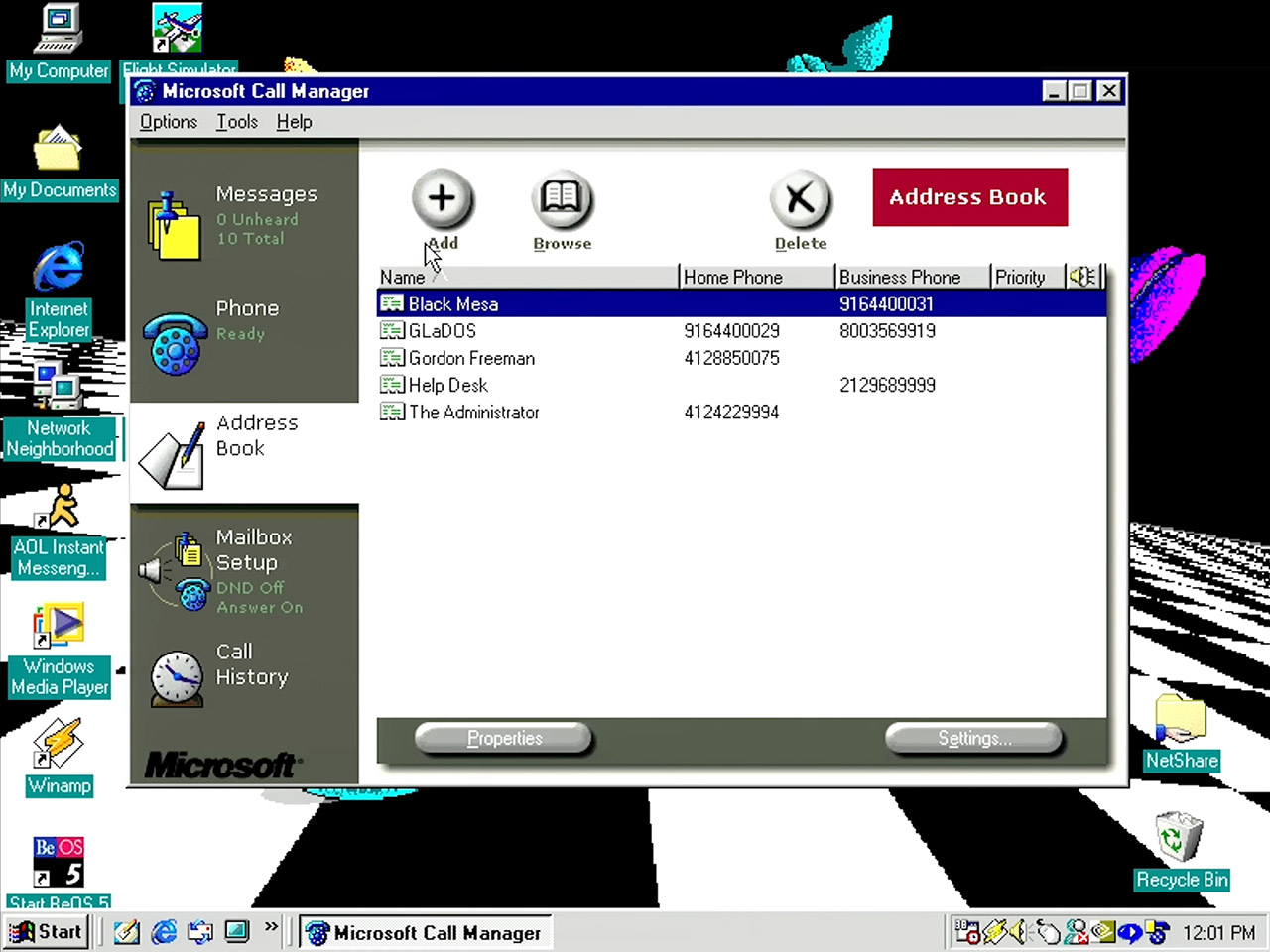
Call Manager was able to import contacts from the Windows address book, allowing you to manage phone numbers, set priorities, and even give personalized messages to certain callers. When you received an incoming call, the phone would read the caller’s name from the address book aloud if the Caller ID matched a contact, which could be useful for deciding whether to answer the phone right away.
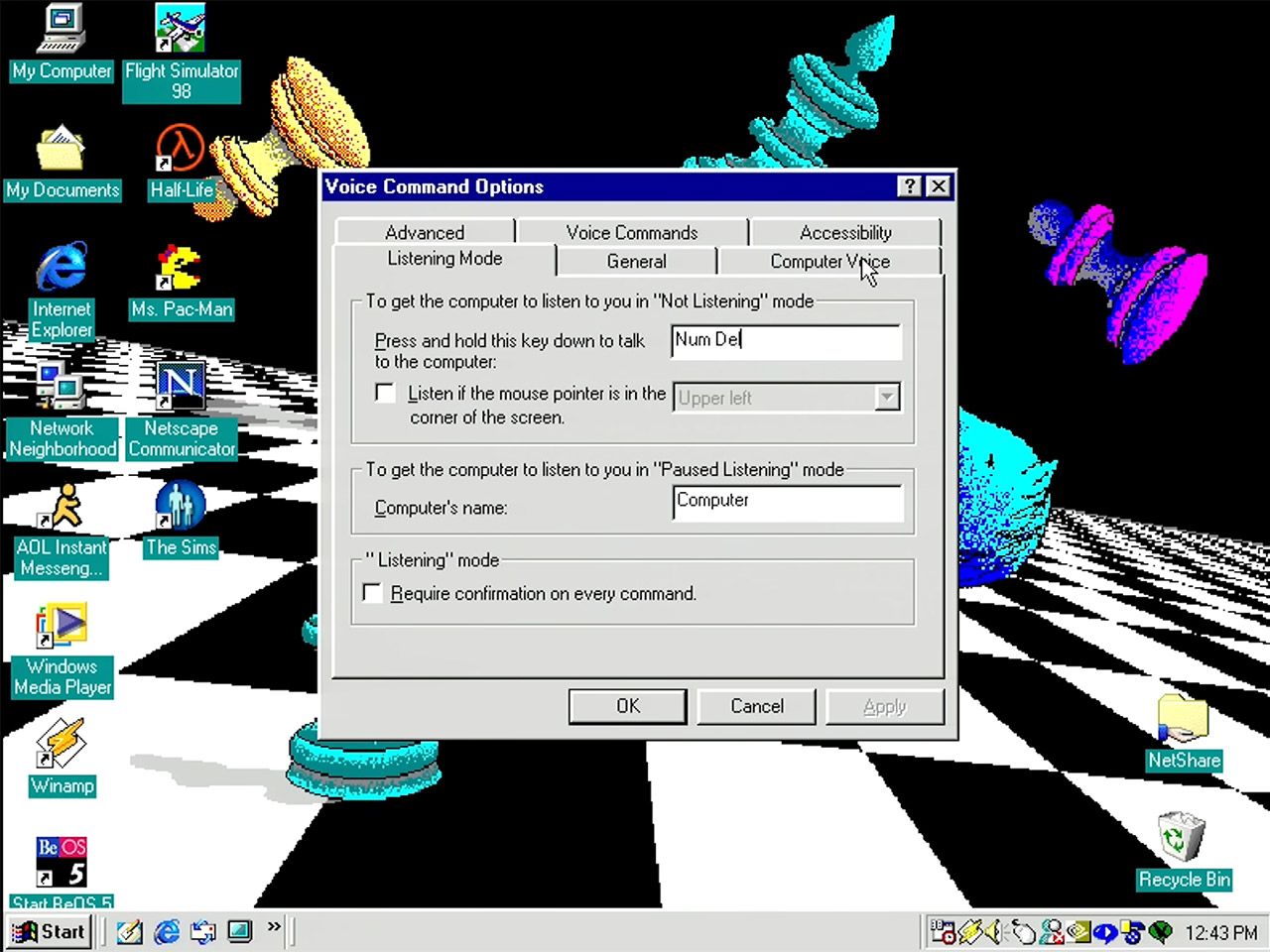
Voice commands stood, as you would click a button on the phone, wait for the tone, and then simply say, “Call Dad,” and it would dial the appropriate number. Similar actions, such as “call back” and “delete message,” allow you to manage communications. On the PC side, Microsoft had included Voice integration, which allowed you to select a number off the screen and dial it up with a single voice command.
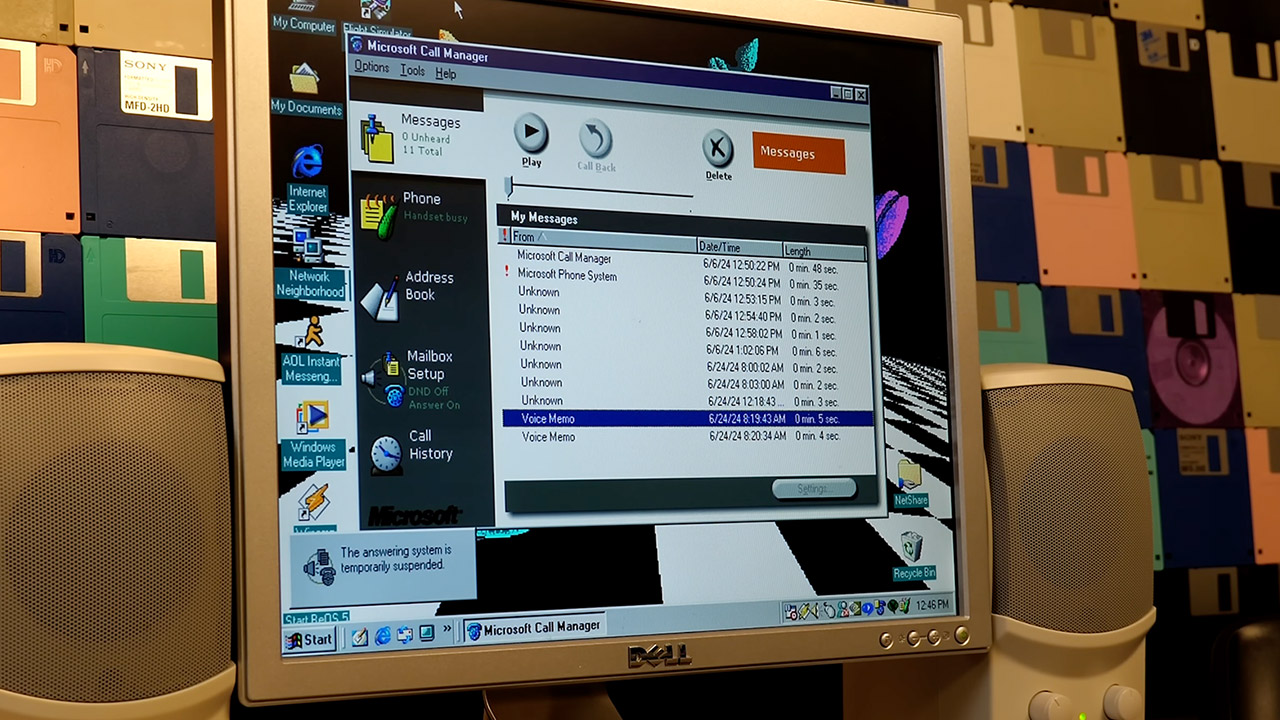
Voicemail has all the bells and whistles, with messages kept on the computer’s hard drive rather than a separate unit, and it could hold thousands of messages depending on how much space was available. You might create individual voicemail boxes for different members of your family or workplace, with bespoke greetings for each caller. Your top priority contacts would ring through, while others would be routed to voicemail or banned. Anyone could even access the messages remotely, which was quite handy. There’s your call log, which automatically records every incoming and outgoing call so you can readily review recent calls.
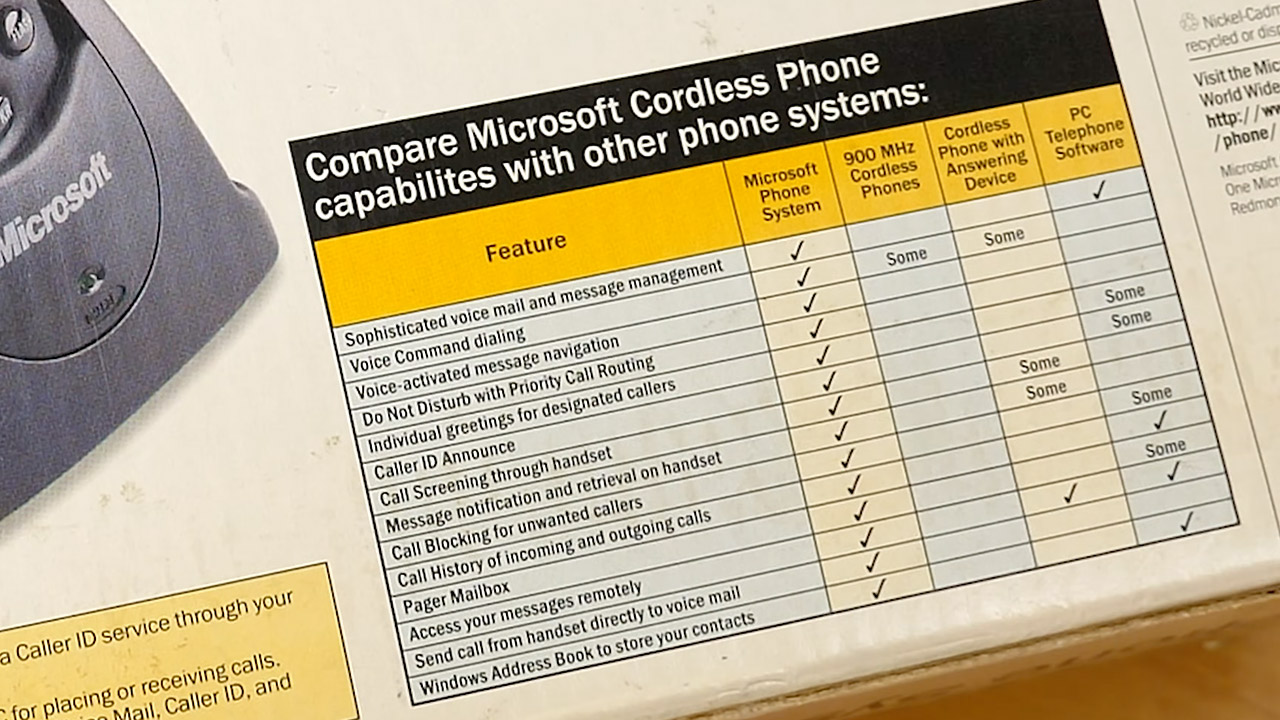
The package also included features like speed dial, do not disturb options, and voice notes. The phone was also capable of taking up calls on the handset and then routing them to the PC speakers. Sales, however, were more or less flat, since one of the most significant constraints was that in order to use it at all, you had to leave your Windows 9x system on all the time, which most people were not doing back in ’98, especially when they went to bed in the dark of night. Furthermore, it was more expensive than your average cordless phone, thus it only lasted a year or so on the market. After that, Microsoft largely abandoned the cordless phone concept and went on to other projects.