


Autonomous robots will soon take over mundane tasks, like setting tables, but that requires training. MIT researchers have designed a system that enables robots to learn complicated tasks using a new “Planning with Uncertain Specifications” (PUnS) system. This gives them humanlike planning ability to simultaneously weigh many ambiguous requirements to reach an end goal.
For this specific task, the research team compiled a dataset with information about how eight objects — a mug, glass, spoon, fork, knife, dinner plate, small plate, and bowl — could be placed on a table in various configurations. A robotic arm first observed randomly selected human demonstrations of setting the table with the objects and then the researchers tasked it with automatically setting a table in a specific configuration, in real-world experiments and in simulation, based on what it had seen.
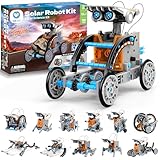
- 🎁 Ideal Gift for Kids & Teens: This STEM solar robot kit celebrates child’s growing skills and important milestones. Whether for birthdays...
- 📚 STEM Educational Toy: This solar educational toy brings science to life! The fun DIY building experience sparks children's curiosity in...
- ☀️ Powered by the Sun: Enjoy outdoor play with solar power or switch to a strong artificial light source indoors, such as a flashlight, ensuring...
The vision is to put programming in the hands of domain experts, who can program robots through intuitive ways, rather than describing orders to an engineer to add to their code. That way, robots won’t have to perform preprogrammed tasks anymore. Factory workers can teach a robot to do multiple complex assembly tasks. Domestic robots can learn how to stack cabinets, load the dishwasher, or set the table from people at home,” said Ankit Shah, araduate student in the Department of Aeronautics and Astronautics (AeroAstro).


