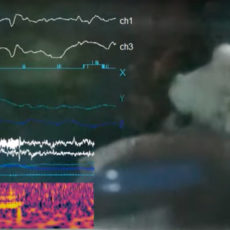
You’ve heard of a Pink Floyd song reconstructed from brain recordings, but now, researchers successfully used AI to reconstruct images from human brain waves with 75.6% accuracy. This new method leverages the Bayesian estimation framework while introducing the assistance of semantic information into it.
The framework managed to successfully reconstruct both seen images (i.e., those observed by the human eye) and imagined images from brain activity. How was this achieved? Test subjects viewed 1,200 various images while situated in a functional magnetic resonance imaging (fMRI) machine. They were shown an image different from the 1,200 viewed, and their brain activity was measured under the fMRI 30-60 minutes later while asked to imagine what kind of image they viewed. A generative AI program reconstructed the image, undergoing a 500-step revision process.

- Experience total immersion with 3D positional audio, hand tracking and easy-to-use controllers working together to make virtual worlds feel real.
- Explore an expanding universe of over 500 titles across gaming, fitness, social/multiplayer and entertainment, including exclusive releases and...
- Enjoy fast, smooth gameplay and immersive graphics as high-speed action unfolds around you with a fast processor and immersive graphics.

In contrast, the previous method could only identify seen images (seen: 64.3%, imagery: 50.4%). These results suggest that our framework would provide a unique tool for directly investigating the subjective contents of the brain such as illusions, hallucinations, and dreams,” said the researchers.