In Beijing’s Yizhuang Development Zone, four teams of humanoid robots duked it out in the world’s first fully autonomous 3-on-3 soccer (football) showdown, hosted by the ROBO League. Tsinghua University’s THU Robotics squad stole the show, outscoring China Agricultural University’s Mountain Sea team 5-3 in a final that was nothing short of a tech breakthrough.
Each side rolled out three humanoid robots, plus a backup, for a match split into two 10-minute halves with a quick five-minute breather. These weren’t remote-controlled gadgets but brainy machines, powered by algorithms cooked up by university teams from places like Tsinghua and Beijing Information Science and Technology University. With fancy visual sensors, the bots could spot the ball from 65 feet away with 90 percent accuracy, pick out goals, field lines, teammates, and rivals, and make split-second calls on the fly.

- 【Upgraded Johnny 5 Motor Driven Version】 This time, Johnny five robot has absorbed the power of electricity and technology, using a remote control...
- 【Classic Restored Figure】 Highly restored the Number 5 robotics figure in the movie, with classic electric drive tracks and laser weapons model...
- 【Robot Toy More Details】 Robot size: 18.5″H×13.3″W×6.4″L; two control methods: remote control (AA batteries*2, not included in the...
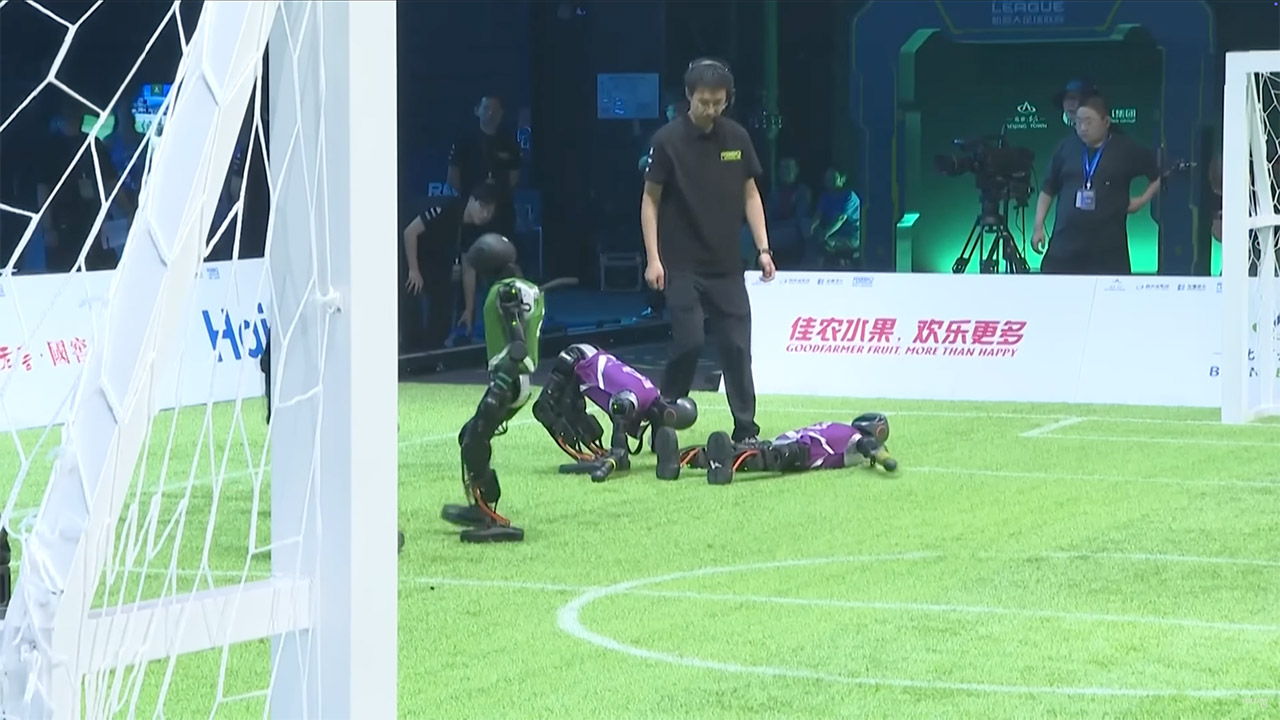
Cheng Hao, the big boss at Booster Robotics, which built the T1 robots, sees these matches as a goldmine for pushing humanoid tech forward. “Sports are the perfect playground for testing these robots,” he told the Global Times, hyping up their role in sharpening algorithms and syncing hardware with software.
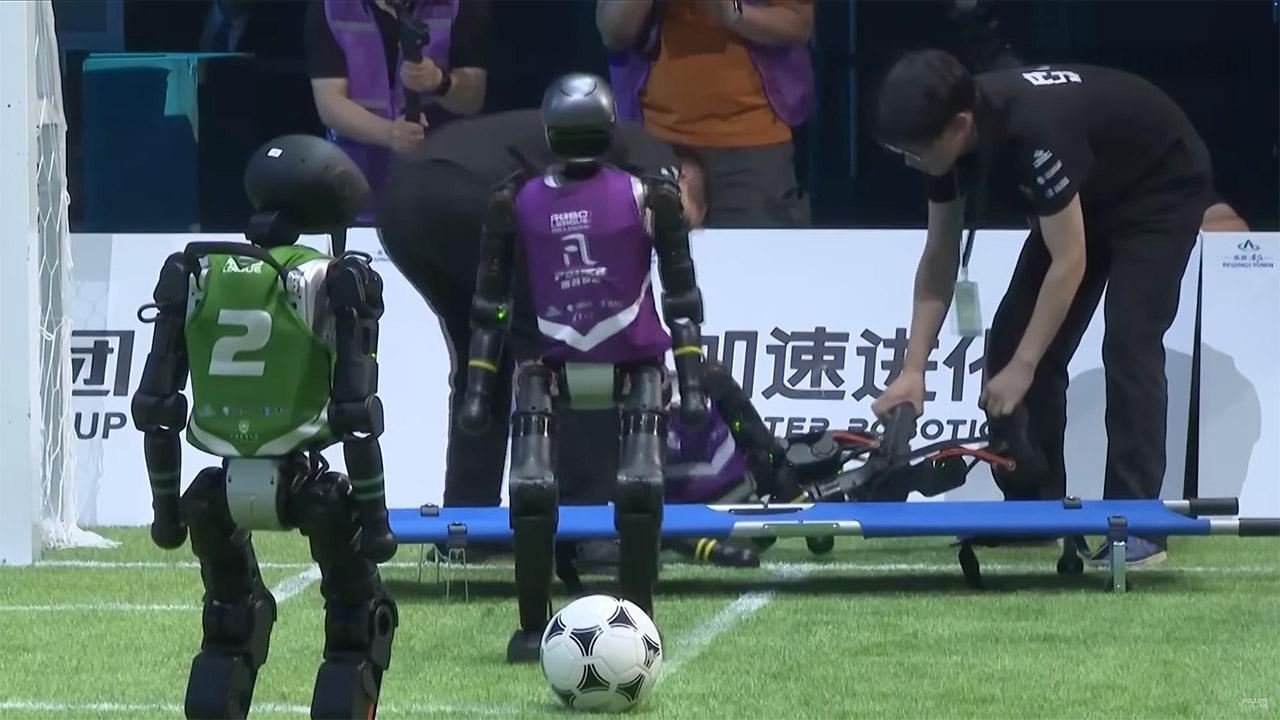
Sure, there were some funny fumbles, but the match was a huge leap forward. Cheng pointed out two big wins: full autonomy, including bots picking themselves up after a tumble, and a slick referee system that kept the game moving. “This is China’s first fully autonomous AI robot soccer match,” said Dou Jing, the tournament’s executive director, to the Global Times. “It’s tech innovation meeting real-world use, opening a door for robots to step into everyday life.”
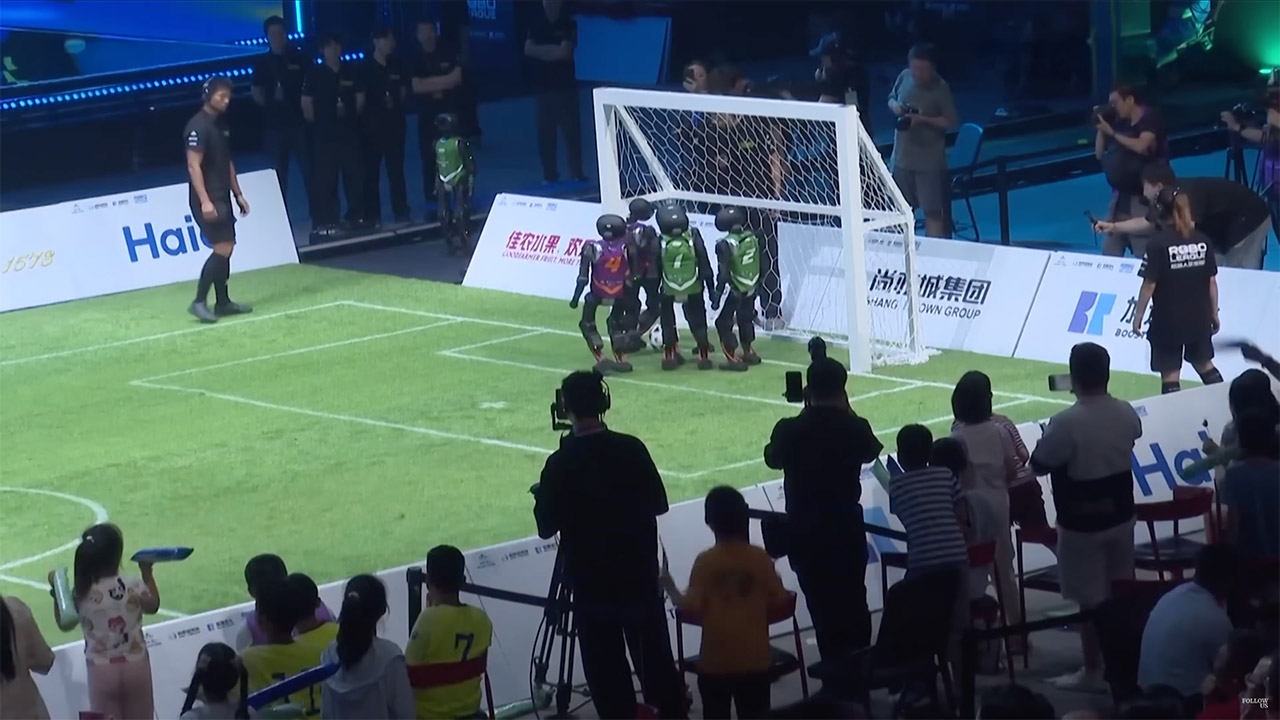
Subramanian Ramamoorthy, a robot learning expert at the University of Edinburgh, put the event in perspective alongside global efforts like RoboCup. “It’s wild to see how these robots keep getting better every year,” he said, giving props to their progress despite the occasional faceplant. Missed kicks, spotty defending, and ball-hogging quirks didn’t dim the shine of full autonomy—they just showed how tricky it is to mimic human moves like balancing while chasing a ball.
This match was a warm-up for the 2025 World Humanoid Robot Games, set for August 15–17 in Beijing, where 11 robot sports, from gymnastics to track, will light up venues like the Bird’s Nest. China’s all-in on robotics—its $47 billion market is expected to balloon to $108 billion by 2028, with 302.3 million humanoid robots projected by 2050, blowing past the U.S.’s 77.7 million. “China’s not just the biggest market—it’s the world’s hub for robotics innovation, driving costs down and tech forward,” Morgan Stanley analysts said.
Fans had a blast, even if the goals felt more like kids’ soccer than Messi magic. A Tsinghua fan summed it up: “Our team killed it, but Mountain Sea brought their A-game too.” The robots’ fist-pumping celebrations after scoring added a fun vibe, hinting they could win over more than just tech nerds.
[Source]