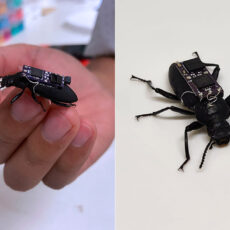
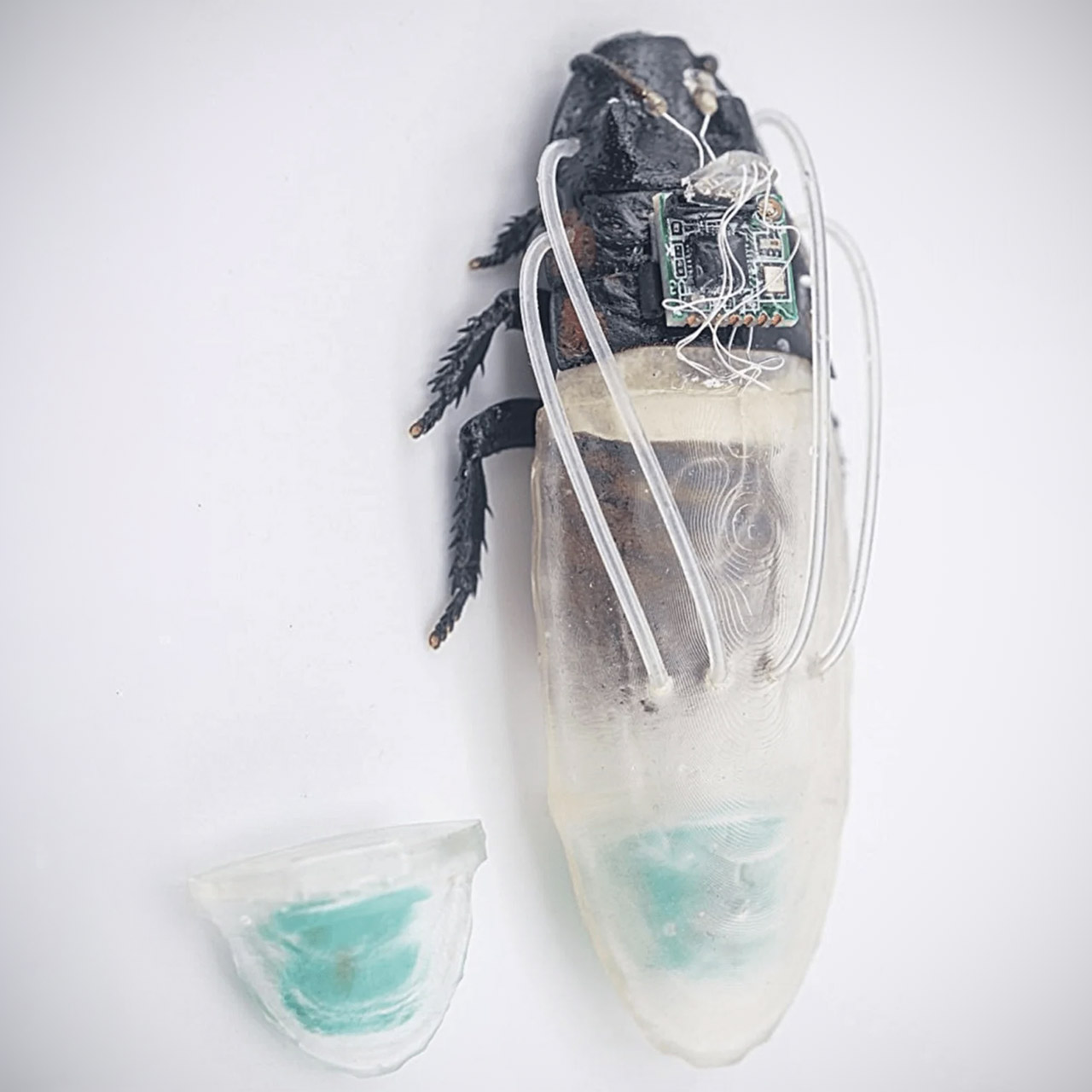
Engineers at Nanyang Technological University in Singapore, working with colleagues at Waseda University in Japan, have added a working underwater capability to remote-controlled cockroaches. The insects already carry small electronic packs that let operators steer them through rubble and tight spaces. A new 3D-printed attachment now supplies oxygen so the same insects can keep moving when those spaces fill with water.
Madagascar hissing cockroaches serve as the platform, as previous iterations of this technology proved effective after real disasters because the insects can fit through gaps too narrow for most robots and climb over uneven debris without requiring extensive programming. Operators transmit wireless impulses to electrodes on the antennas or surrounding nerves. Gentle pulses move the insect left or right while it maintains its own balance and obstacle avoidance.

- A1 mini + LED Lamp Kit for Creative Light Projects: Bring your ideas to life with the included LED Lamp Kit. Simply print compatible lamp models and...
- The Perfect 3D Printer for Beginners: A1 mini 3D Printer is designed to make 3D printing easy from day one with automatic calibration, simple setup...
- Experience the Bambu Lab Ecosystem: Access MakerWorld’s huge library of ready-to-print models, manage prints through the Bambu Handy app, and enjoy...
Water always halted the earlier systems because cockroaches draw air in through tiny openings called spiracles on the sides of their bodies. Once submerged, the holes fill and the insect runs out of air in minutes. The new component overcomes this limitation by incorporating a tiny chemical oxygen generator into a 3D-printed backpack. The primary housing is approximately 10 by 10 millimeters and sits on the insect’s back. Inside, there is a sponge coated with manganese dioxide. When a small amount of liquid hydrogen peroxide enters the chamber, the catalyst degrades the liquid and produces oxygen gas. Four flexible silicone tubes deliver the gas directly to the cockroach’s thoracic spiracles. A flexible waterproof casing composed of printed resin closes the area and creates a pocket of breathable air around the ventilation openings.
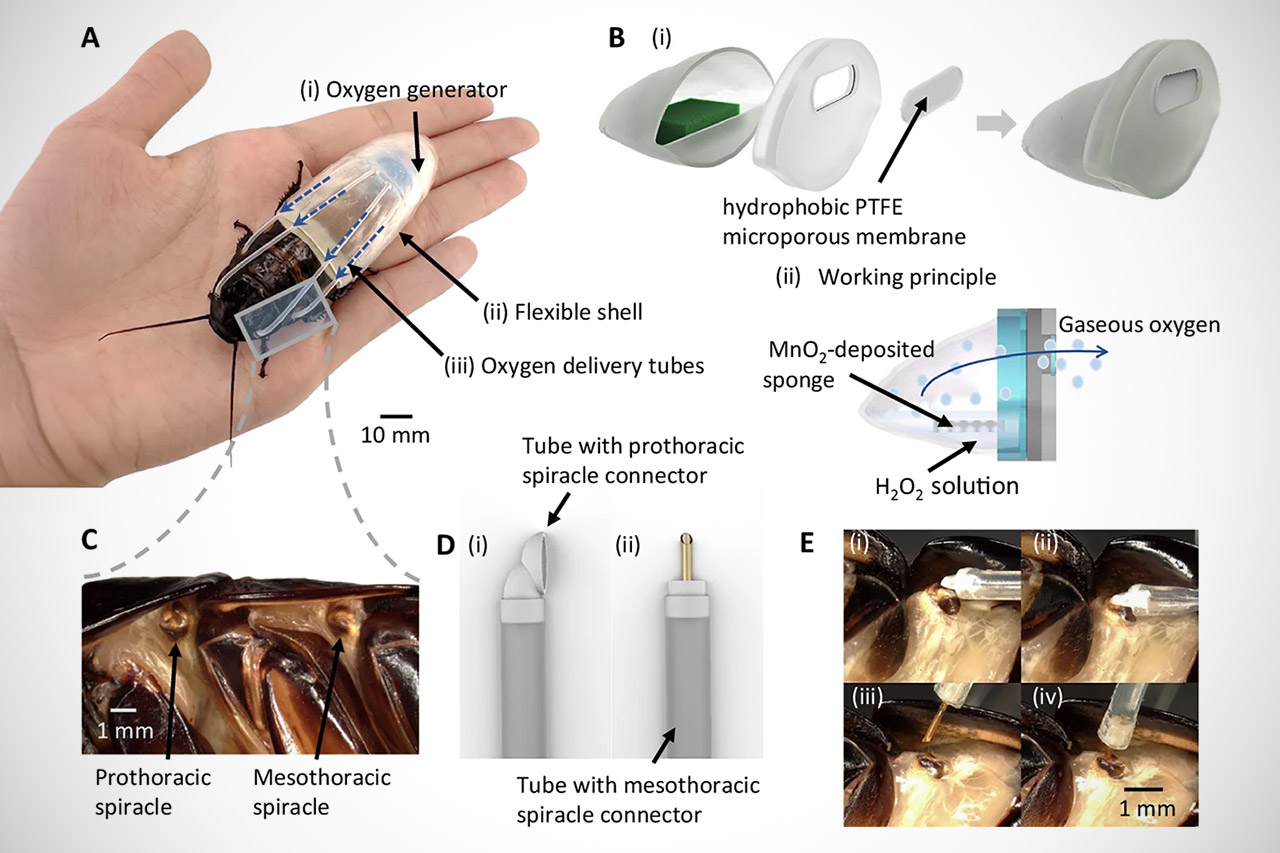
The entire structure is light and flexible enough that the insect’s usual walk remains nearly intact. Early versions put additional mass on top, causing the cockroach to flip over underwater. Moving the generator and adjusting the shell shape resolved the stability issue. The equipped insects were tested in water-filled tubes and bespoke 3D-printed obstacle courses that simulated flooded pipes or collapsed building portions. Without the oxygen module, the roaches went inactive in minutes. It allowed them to remain responsive and mobile for up to three hours. On dry surfaces, they traveled at about 87 millimeters per second. As they went down the bottom and through submerged channels, their pace fell just slightly to around 78 millimeters per second.
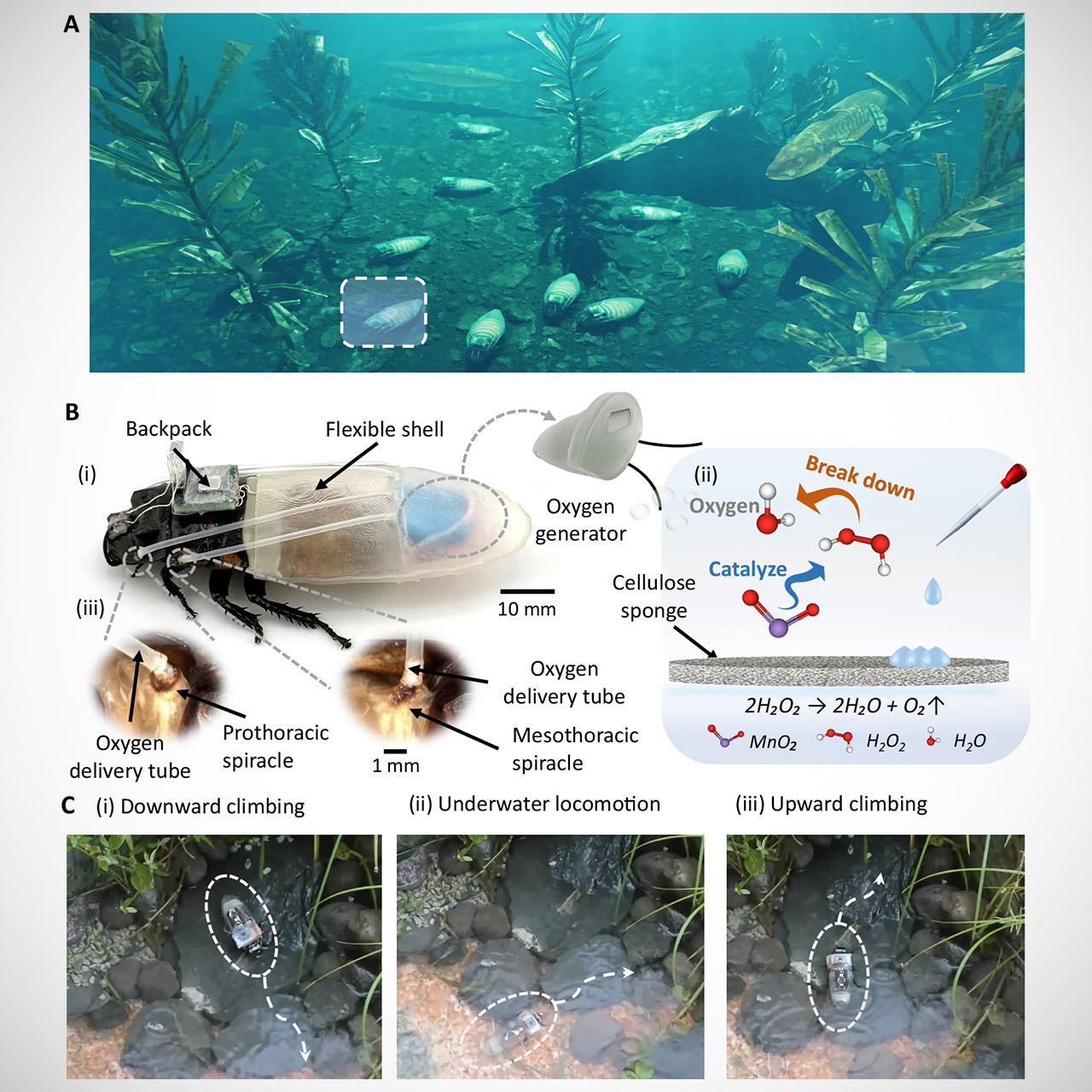
The project builds on years of work by the same research groups. Previously, cyborg cockroaches helped with search efforts following a severe earthquake in Myanmar, reaching locations where human teams and conventional machines couldn’t. Adding reliable underwater operation allows for similar access to areas where flooding has obstructed typical pathways, such as storm sewers, half-submerged basements, or earthquake rubble drenched by burst pipes.
[Source]