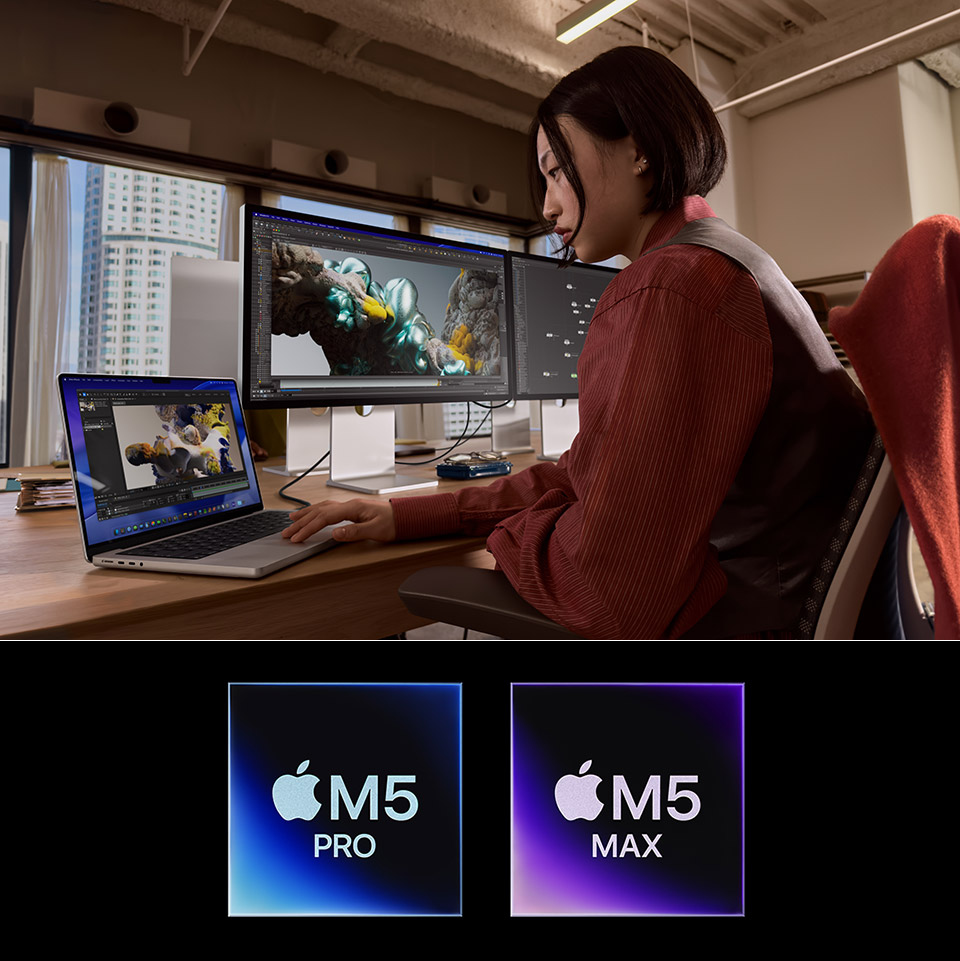
Apple just revealed its latest MacBook Pros, which are powered by the M5 Pro and M5 Max CPUs. Engineers crafted the M5 Pro and M5 Max around a new Fusion Architecture. Separate dies combine into one seamless system-on-a-chip, optimized entirely for AI workloads alongside traditional computing demands.
This beast is powered by an 18-core CPU, with six of its cores being the absolute fastest out there – we’re talking the fastest single cores ever – and the other 12 designed to handle the long haul of multiple threads running at the same time. When it comes to CPU-intensive lift jobs, performance has increased by a solid 30% over previous versions.
Sale

Apple 2025 MacBook Pro Laptop with M5 chip with 10‑core CPU and 10‑core GPU: Built for Apple...
- SUPERCHARGED BY M5 — The 14-inch MacBook Pro with M5 brings next-generation speed and powerful on-device AI to personal, professional, and creative...
- HAPPILY EVER FASTER — Along with its faster CPU and unified memory, M5 features a more powerful GPU with a Neural Accelerator built into each core...
- BUILT FOR APPLE INTELLIGENCE — Apple Intelligence is the personal intelligence system that helps you write, express yourself, and get things done...
The graphics side of things has also seen a significant improvement, with each core now having its own dedicated Neural Accelerator. The M5 Pro has a memory bandwidth of 307GB/s, which doubles to 614GB/s on the M5 Max. The M5 Pro can have up to 64GB of unified memory, while the M5 Max can have up to 128GB. Apple claims up to four times the AI performance of the previous generation and eight times faster overall than the outdated M1-era machines.
Developers will appreciate the improvement, since they can now work with large language model prompts four times faster than on a MacBook Pro with an M4 Pro or Max CPU. They can also generate photographs 8 times faster than the previous M1 Pro and Max sets. Graphics users will be pleased to know that graphics workloads have improved by 50% over the old M4 counterpart. In other tests, 3D rendering in Redshift was 1.4 times faster on the M5 Pro, while video effects in DaVinci Resolve were three times faster on the M5 Max.
Storage performance has been improved significantly, with read and write rates of up to 14.5GB/s, which is twice as fast as previous models. If you require tons of capacity, you’ll be glad to know that base configurations have increased: the M5 Pro starts at 1TB and the M5 Max at 2TB, all without additional expense.

The battery life appears to be very respectable, lasting up to 24 hours whether plugged in or on the road. Charging is very speedy, reaching 50% in 30 minutes if you use a 96W or greater charger. The Liquid Retina XDR display still offers 1600 nits of peak HDR and 1000 nits for normal screens, with the option of nano-texture to reduce glare. You have the same 12MP Center Stage camera that allows those on video calls to see you, as well as Desk View, video studio-quality mics, and a six-speaker system with Spatial Audio for a great media experience.
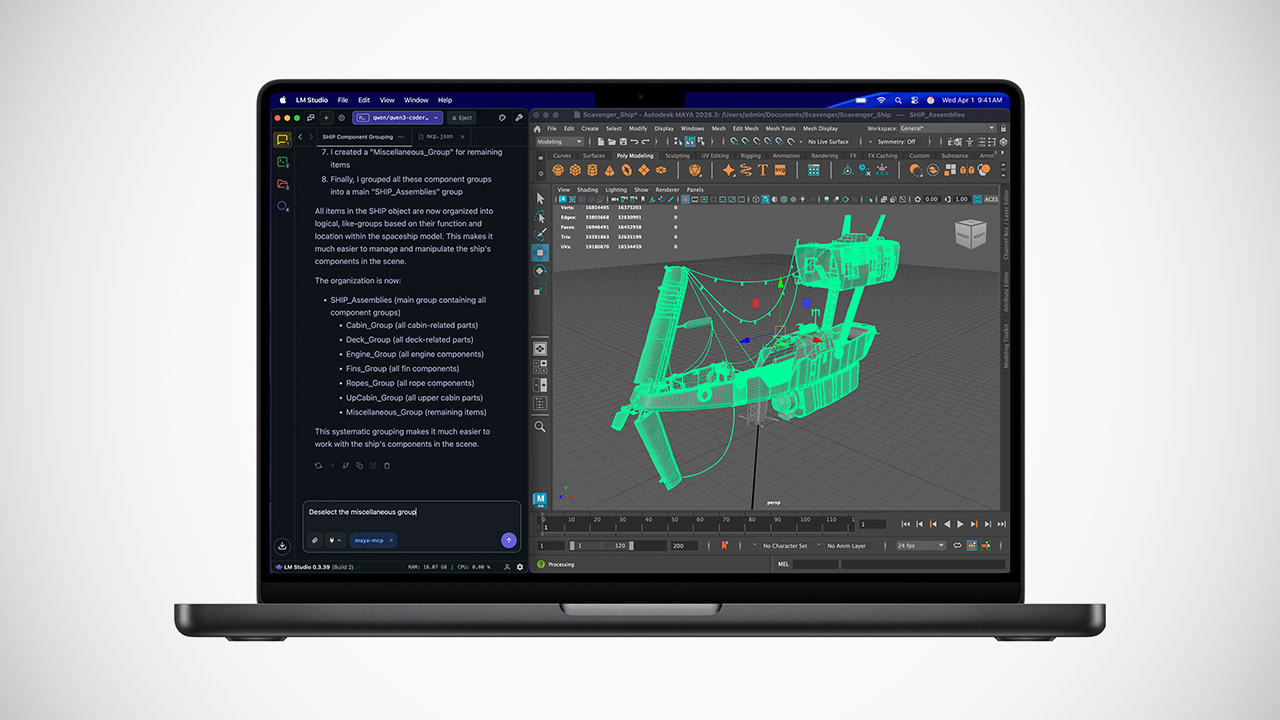
Connectivity options include three Thunderbolt 5 ports, HDMI with up to 8K output, an SDXC slot, and, of course, MagSafe 3. The M5 Pro can function with two external high-resolution screens, while the M5 Max can support four. Apple’s N1 wireless processor, which includes Wi-Fi 7 and Bluetooth 6, provides even better, more stable wireless communication.
As you might have expected, costs have risen to match the increased power and storage. The 14-inch MacBook Pro with M5 Pro costs $2,199 ($2,049 education pricing), while the 16-inch version starts at $2,699 ($2,499 education). M5 Max models, on the other hand, begin at $3,599 for the 14-inch model and $3,899 for the 16-inch model ($3,299 and $3,599 education, respectively). Both space black and silver finishes are offered. Pre-orders will be accepted starting March 4, with delivery beginning March 11.