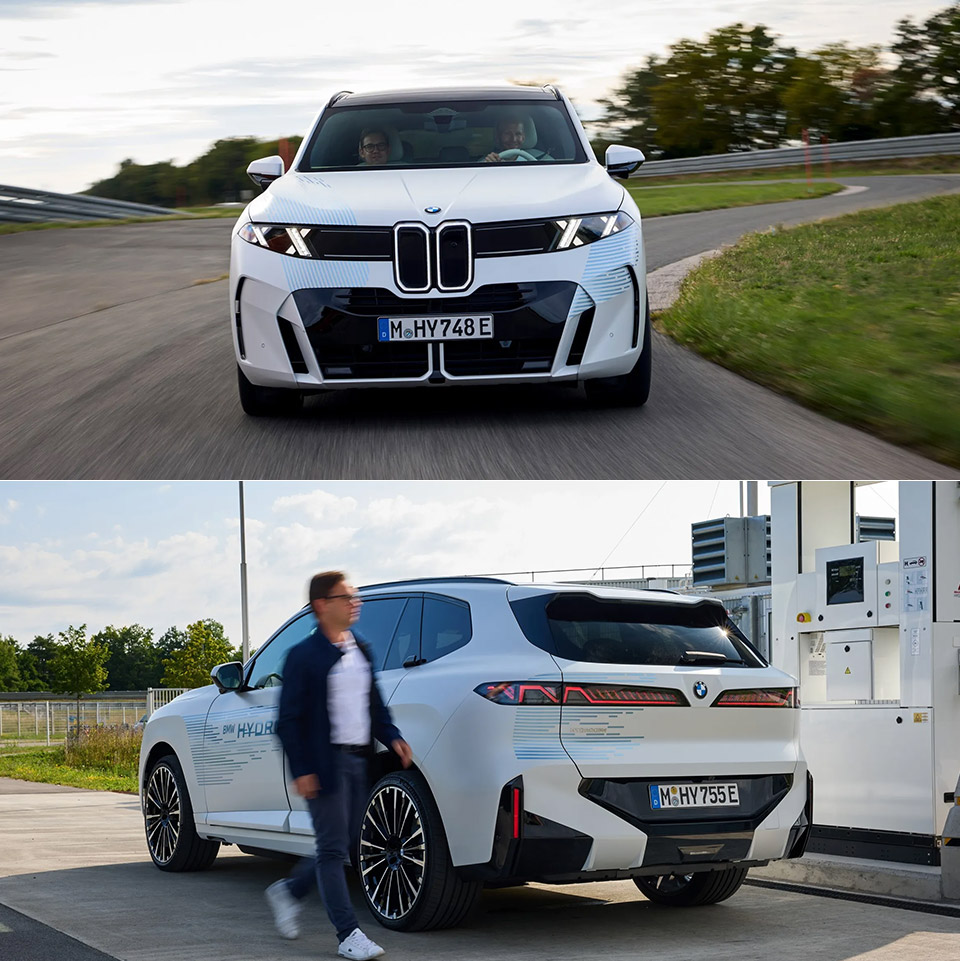
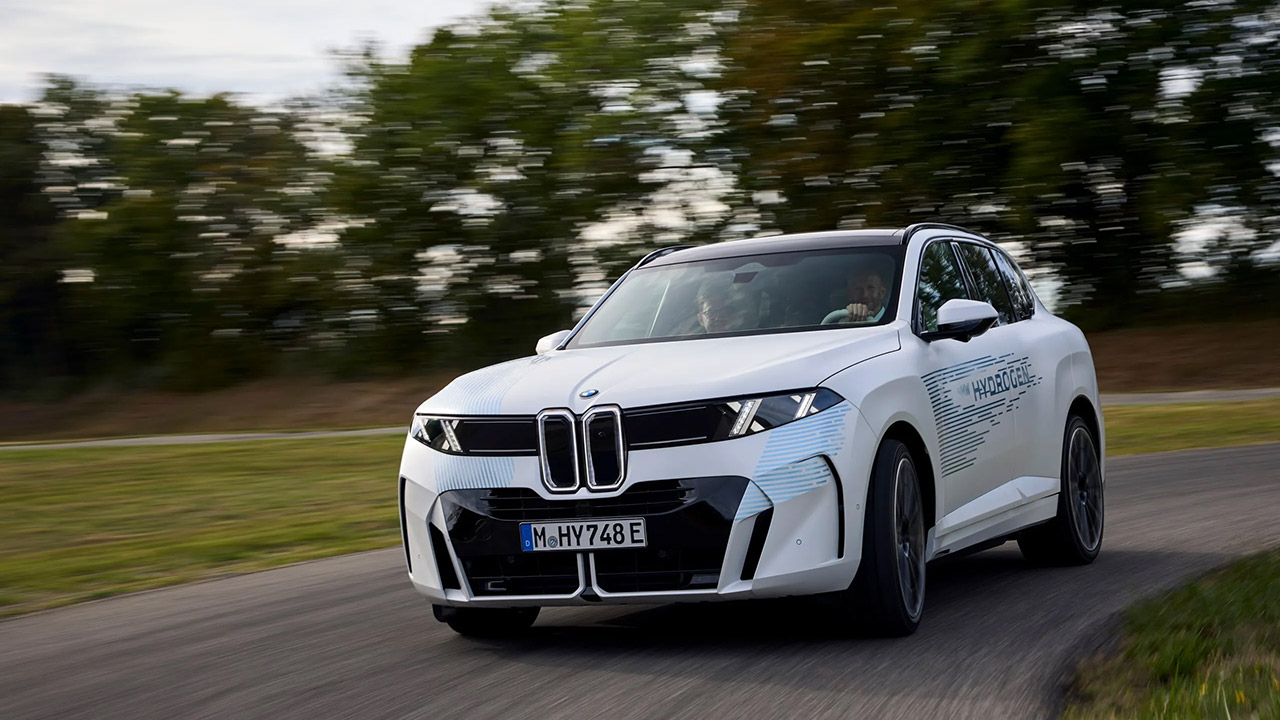
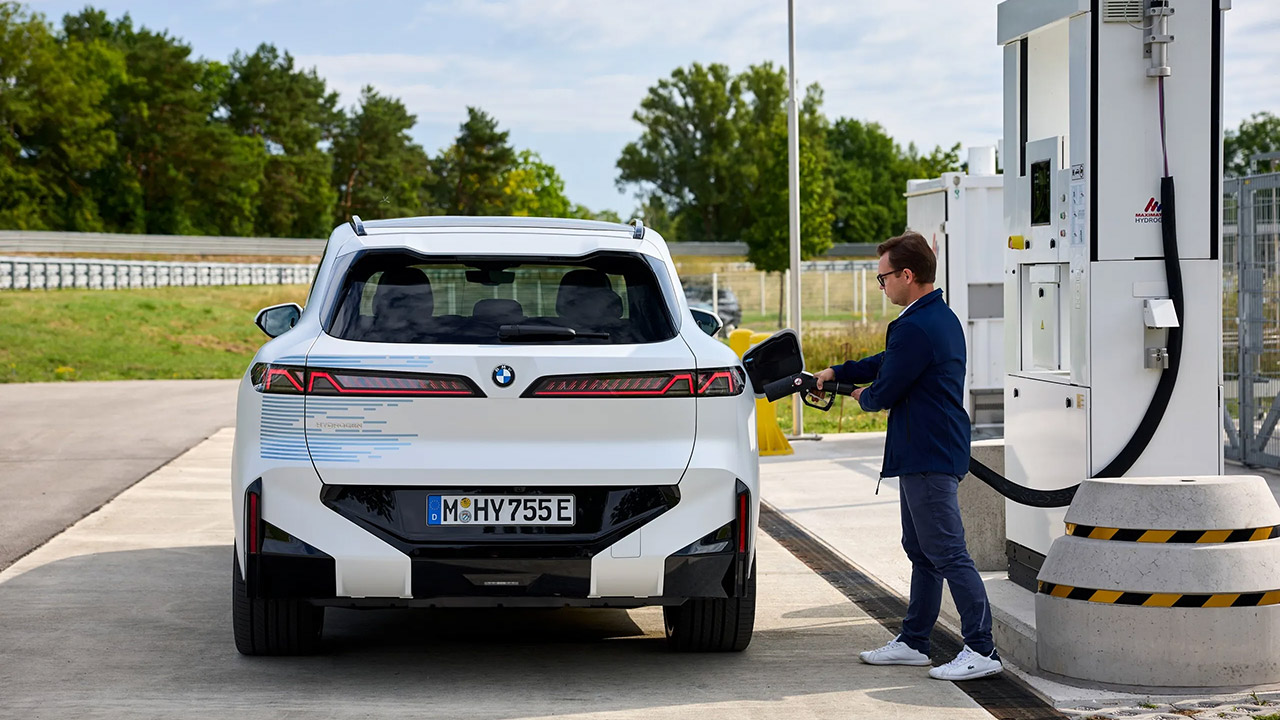
BMW rolled uncamouflaged iX5 Hydrogen prototypes into public view this month and followed them with a new video of the hardware, a pairing that finally makes the project look like a car headed for customers instead of another closed-door experiment. Officials in Munich said the current fleet is running a full validation program while the third-generation fuel cell system enters a fresh assembly phase, and Plant Steyr in Austria is already taking delivery of test benches and production gear. Those three tracks running at once is the point. BMW wants the first hydrogen model it will actually sell to leave the development loop with factory processes already practiced, not invented after the last prototype is signed off.
Josef Hochreiter, the company’s head of hydrogen cars, put it simply: a true BMW with the same driving experience that customers expect is only possible if the fuel cell, high-voltage battery, and electric motors all operate together seamlessly rather than as three independent entities. To do this, engineers are currently stressing the components in the works with heat, cold, altitude, and heavy loads on the proving grounds in Aschheim near Munich and Miramas, France. Recuperation is also possible. What they’re attempting to do is create a small high-voltage pack and an in-house Energy Master control unit to take a bite out of the energy when traveling down a hill or driving in heavy traffic, so the fuel cell doesn’t have to do all the hard work on its own.

- BMW MODEL CAR KIT – Racing enthusiasts can fuel their imaginations with the LEGO Technic BMW M4 GT3 EVO Race Car (42226) building set for boys and...
- AUTHENTIC DETAILS – This race car playset features iconic BMW detailing and is equipped with a working steering function, a detailed 6-cylinder...
- BUILD, PLAY & DISPLAY – Kids can enjoy assembling their model car and racing it down an imaginary track, then display it on a shelf or table to...
BMW claims a range of up to 750 kilometers (466 miles) on a WLTP cycle for the production car. Filling up at a 700-bar station should take no more than five minutes. They’re aiming for an acceleration time of less than 5 seconds to 62 mph, which is comparable to the battery iX5, which will share the same body as the next X5. That is why BMW is keeping this program going while many of its competitors have abandoned hydrogen vehicles for passenger cars. They’re talking about extended drives without having to stop for hours and a sprint that doesn’t feel like a science experiment on the highway, which are the two most common complaints people have about battery SUVs.
BMW refers to this configuration as Hydrogen Flat Storage since it crams seven carbon fiber tanks into the same space as a 141kWh battery. Each vessel holds fuel at 700 bar, and they are all connected in parallel inside a metal frame with a single central valve to manage everything. All of this translates to a combined capacity of at least seven kilograms of hydrogen. None of that extra space is taken up because the tanks were intended to fit within the same geometric envelope as the sixth generation battery pack, allowing the hydrogen model to be constructed alongside the petrol, diesel, plug-in hybrid, and completely electric models.
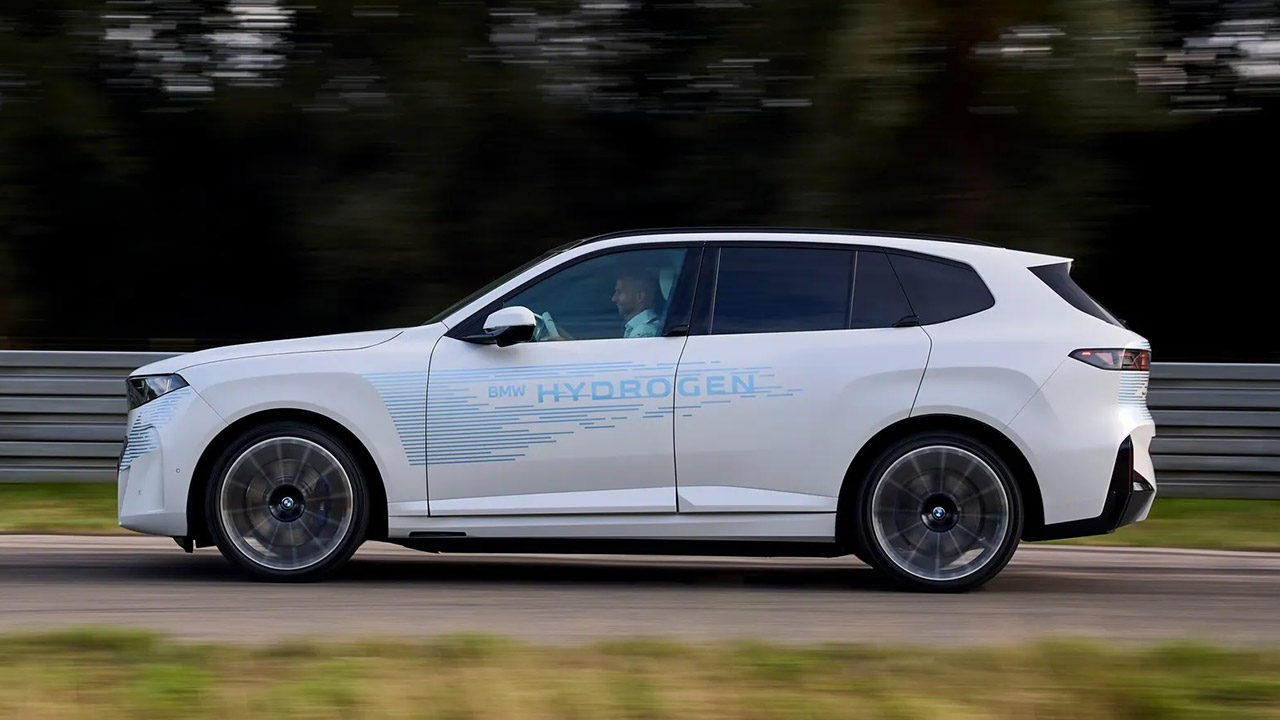
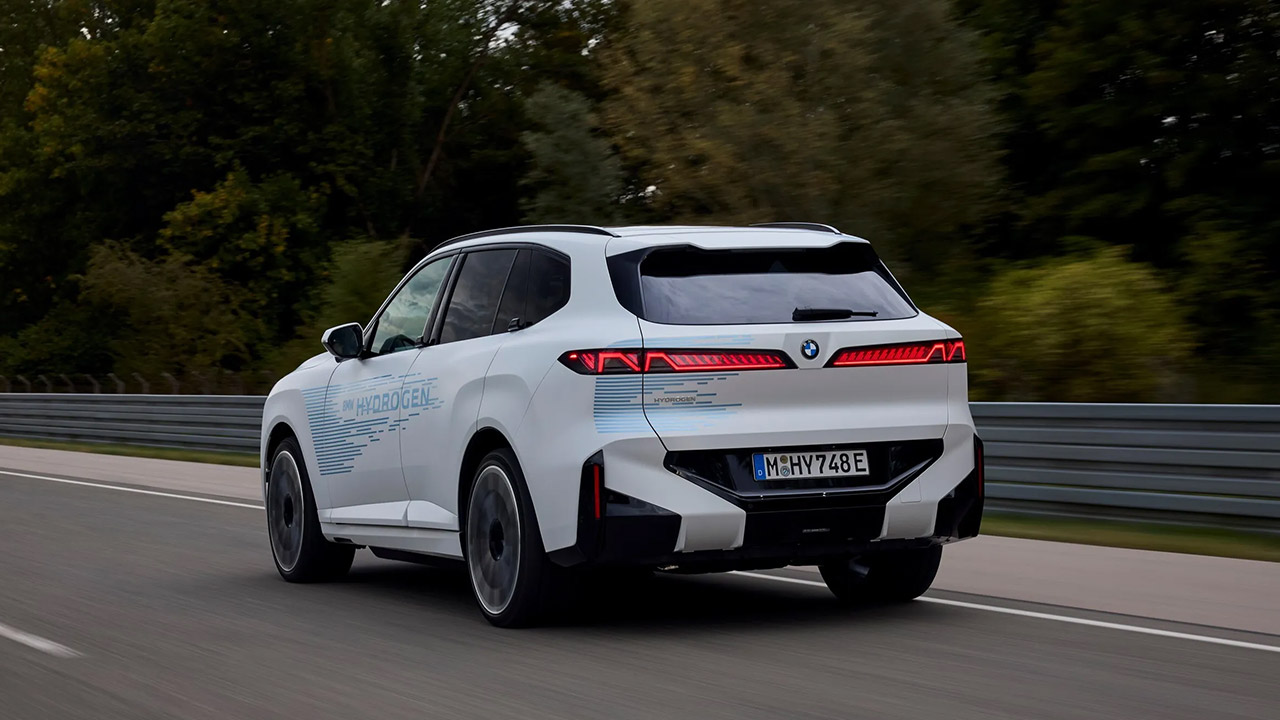
All-wheel drive is standard, with two electric motors, and as you might expect, there is no combustion engine in the loop because the exhaust is water. The present prototypes have the blue Hydrogen livery to help cameras identify them, but production cars are planned to look like any other X5 of this generation, with no special bumpers or novelty wheels. BMW has already stated that this will not be a volume seller, since it is an additional powerplant for buyers who require a long range and a short stop more than they do to plug in. Markets, pricing, and availability in North America remain to be confirmed.
The industrial story is Plant Steyr, which closed its V8 manufacturing line last year. They are currently gutting the old facility and rebuilding it for fuel-cell drivetrains, with a lot of new equipment and trolleys replacing the old engine line. They estimate that approximately fifty workers will be directly involved in the production process. There is already a core of personnel in Munich being educated in the new technology, and they are talking about starting production on the hydrogen systems in 2027, followed by series output in 2028. Landshut is also getting in on the act, building the Energy Master in-house for the first time, and, surprise, surprise, they already have some pre-series units rolling off the assembly line. Claudia Stephan, who supervises the fuel-cell prototype assembly, is pretty down to earth about the present phase; it’s all about getting some hands-on experience and transferring information to Austria rather than producing a bunch of one-offs.
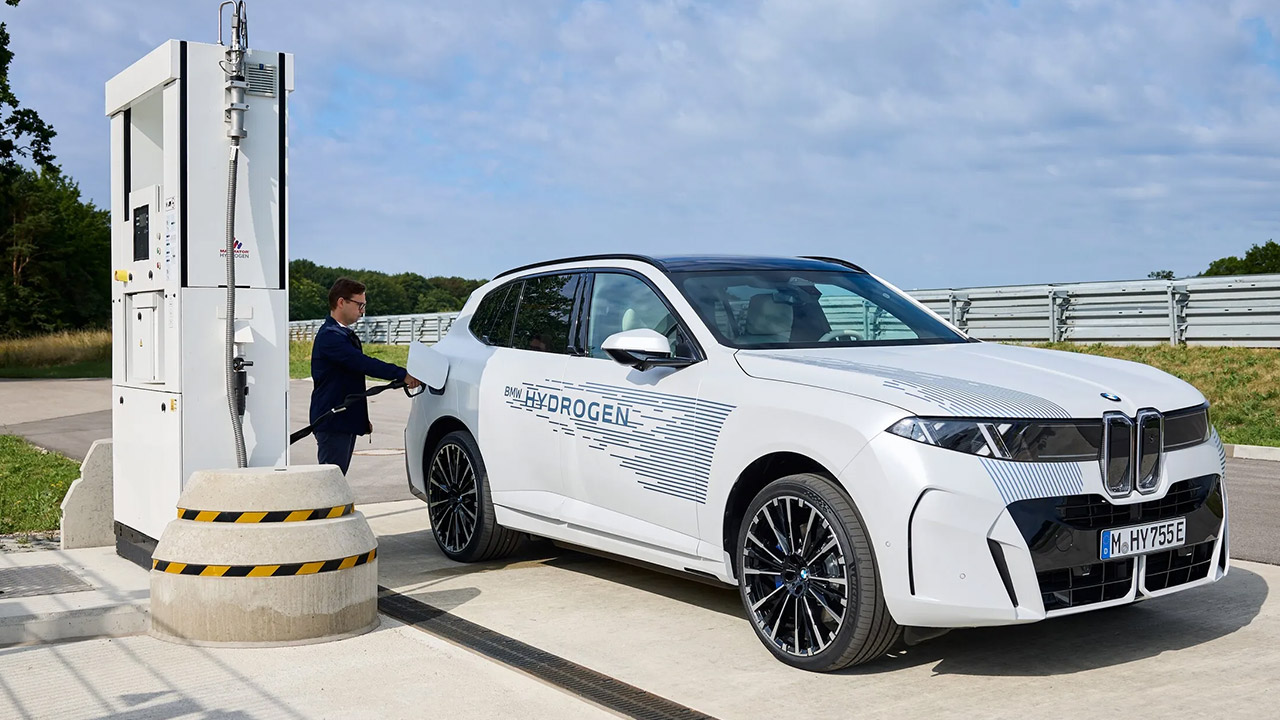
Toyota remains a partner in the third-generation stack, with funding coming from two sources: the German government’s HyPowerDrive project, which is worth around 191 million euros, and Bavaria, which is worth 82 million euros and will cover engine and tank development. BMW is attempting to develop hydrogen as a battery backup for usage in scenarios where refueling in five minutes and having 466 miles of range is more critical than charging speed. The main issue here will be the pump network. The 700-bar refueling infrastructure in Europe remains limited, and the number of German filling stations has actually decreased since the early pilot fleets were introduced. So, ultimately, the question is whether there will be enough pumps in the correct areas for the new hydrogen X5s when they go on the market.
The new X5s won’t be available in showrooms until 2028, after the rest of the new X5 range has gone into production. Spartanburg is expected to begin work on the next X5 family, including the battery-powered iX5, by the end of this year. Hydrogen will follow as soon as Steyr can begin producing stacks of series quality. The official fuel consumption data are still prototypes, so they will not be released anytime soon. What we do have is the car itself, no longer disguised as a prototype, the factory putting in the finishing touches, and some very clear targets: 466 miles on a full tank, five minutes to fill up, under five seconds to reach 62 mph, and a cabin that looks and feels exactly like the electric twin, bar none. Finally, the great question is whether there will be enough filling stations to match demand once the first customers begin taking deliveries.