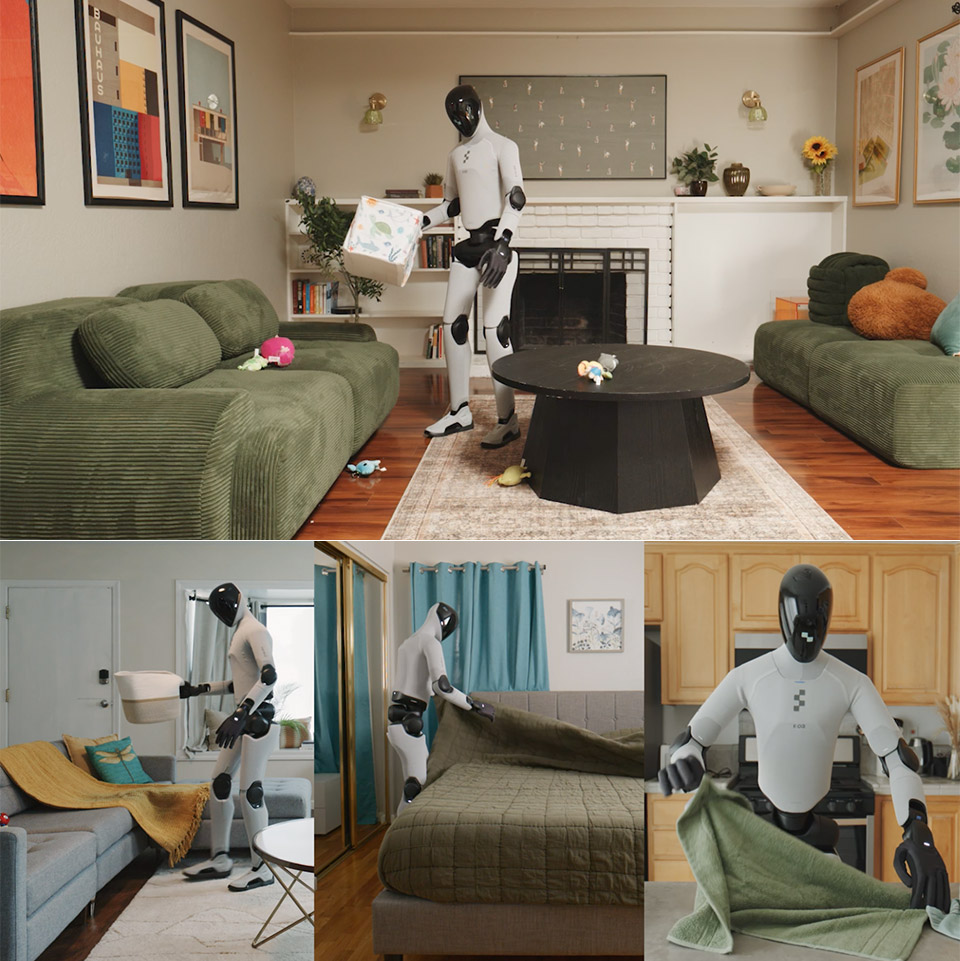
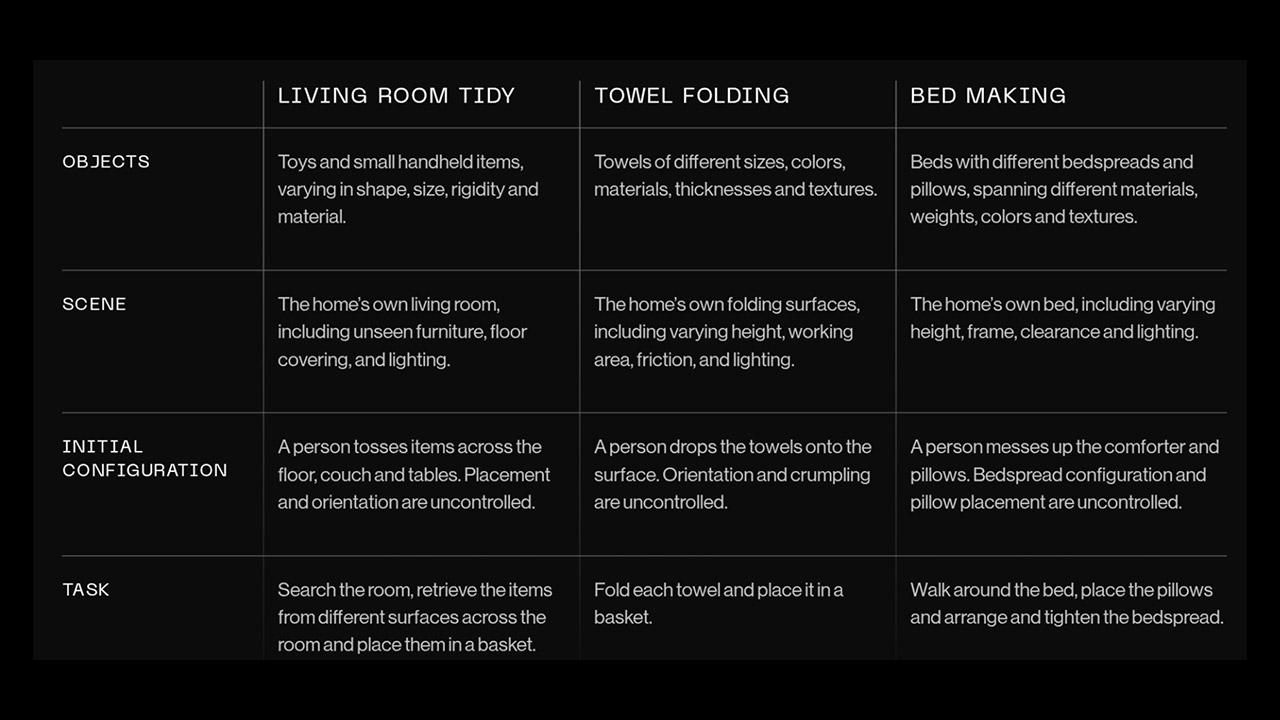
Figure rented thirty Bay Area houses, reset the rooms, and sent in a humanoid that had never walked those floors. Helix 2.5, the newest neural network from the company, arrived with no extra practice on those couches, those beds, or those towels. Staff left living rooms scattered with toys, towels in a heap, and beds undone, then asked the robot to finish three jobs on its own: gather every toy into a basket, fold towels and put them away, and make the bed.
Helix 2.5, a software update rather than a new body, is the most recent version running on Figure 03 and pulling from Index, the company’s growing collection of movements captured from real humans. One of the models was changed and utilized to build the three whole-body routines, but the task data came from a different set of toys, towels, and bedding than the ones used to test it. Instead, the robot used whatever was available in each residence, such as a sofa, bed, or folding surface.

- Three models, one lightweight platform R1 Air (20 DOF, monocular camera), R1 (26 DOF, binocular camera, head+waist joints), and R1 Edu (26 DOF...
- Easy setup – no coding required for basic use Unbox, power on, and start. Manual teaching feature: physically pose the robot, and it replays the...
- More DOF = more expressive movement 26‑DOF models (R1 / R1 Edu) add head and waist articulation for smoother dance and running. For safety reasons...
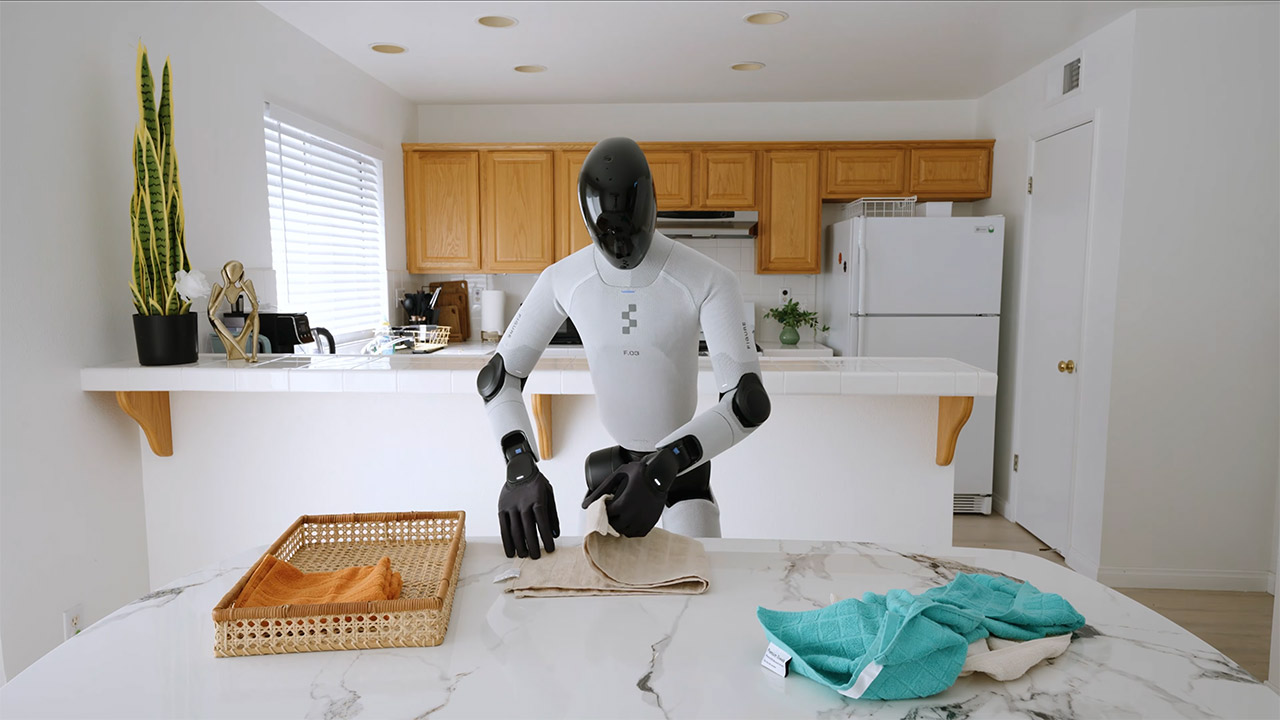
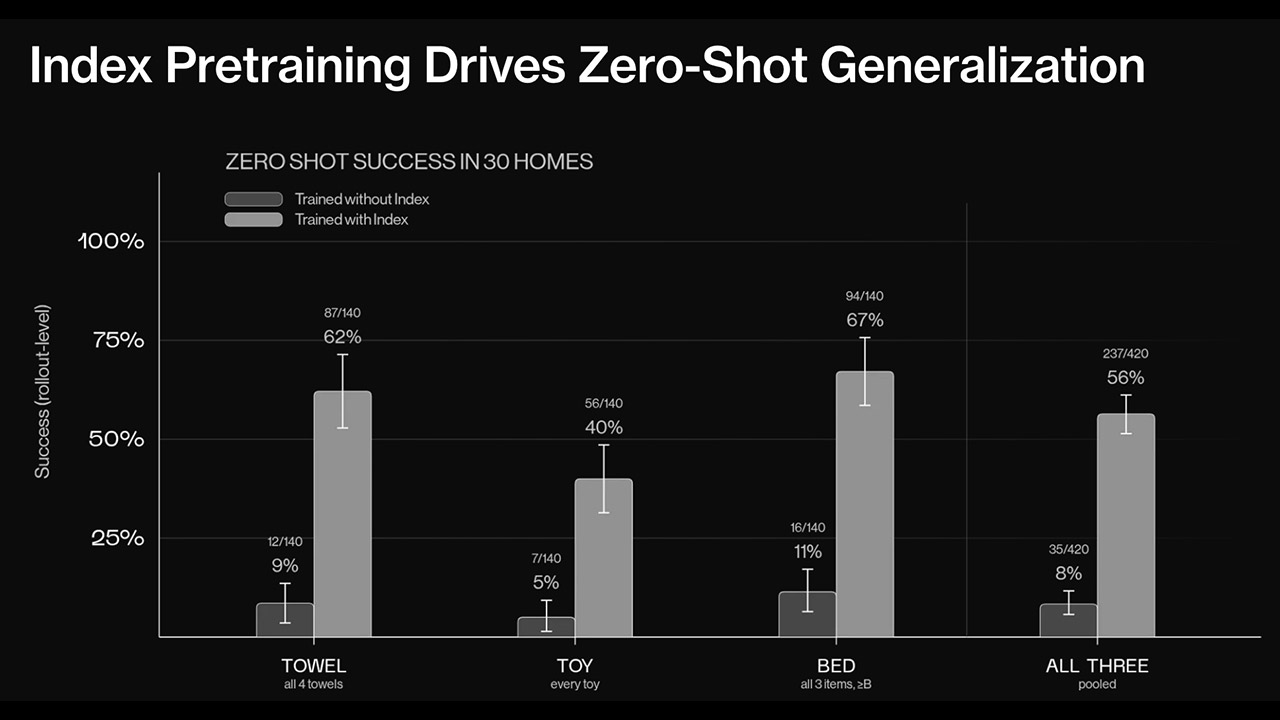
Index handled the majority of the heavy lifting here. When additional training, model changes, and scoring were all left unchanged, a replica of the model created from scratch only completed roughly 9% of full trials. The Index-pretrained copy, on the other hand, finished 56 percent, which is approximately six times more frequently. Some independent sources of the same announcement cite 420 scored efforts, 140 each for the work, 94 with the bed, 87 with the towels, and 56 with the toys, for a total of 237 completed jobs. The figure indicates that the robot ran successfully in each residence, but this does not imply that it ran flawlessly throughout the nite; any safety shutdown was considered a failure.
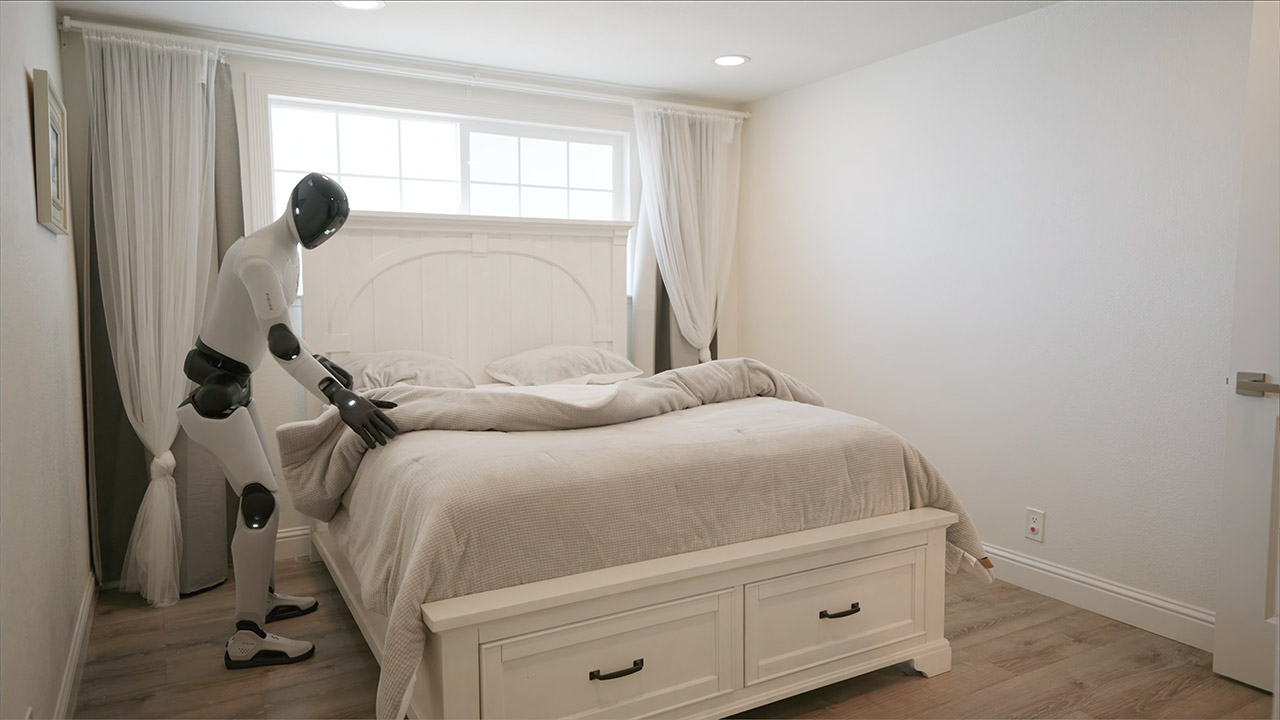
However, the grading system did not allow for any wriggle space. The living rooms were crammed with 13 to 15 toys, all of which had to end up in the basket. The towels had to be picked up, folded, and stored in the linen closet, with any unfolded corners written down. Beds had to have the pillows and comforter corners smoothed over or it was considered a failure. Time constraints were also strictly enforced, with one minute allotted to each toy, three minutes for each towel, and one minute every piece of bedding. If you missed the clock, the trial ended.
Then there was Helix 02, which could at least unload a dishwasher and stay running for quite some time, even in the warehouse, but it had all been trained in the same rooms previously. Helix 2.5 managed to match Helix 02’s success rate while using just around half the data, as it was a lot cheaper approach to get a behavior operating, and it was now used in new locations.
Some of the runs were saved by recovery, since when the robot ‘lost’ its hold, it would back off a little, change its stance to reach a hard area, look again when something was out of sight, or even take a walk around the bed to smooth out the blanket. That is some long-recovery stuff; even in familiar rooms, solo work this long is still uncommon. Figure claims that this is the first time it has displayed whole-body work in unusual houses with novel items, which is a fairly big deal.