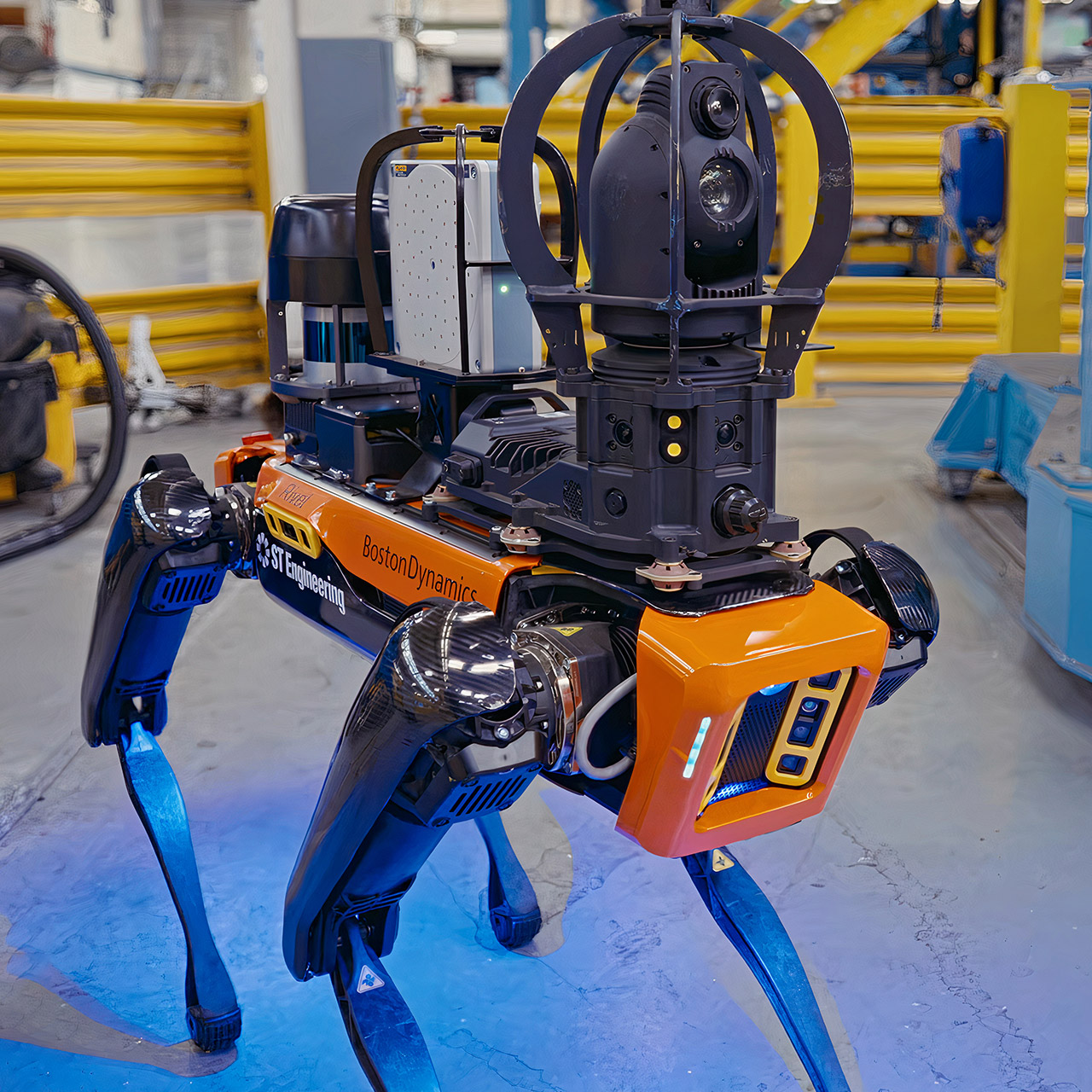
In a large aerospace plant where massive jet engine components are assembled, a four-legged robot named Spot has nearly become a necessary fixture. ST Engineering MRAS, a 1.5 million-square-foot plant in Maryland, manufactures thrust reversers and nacelle systems to help planes regulate their thrust and noise levels. You must maintain a close eye on hundreds of machinery and systems here; many of them are running hot and high voltage, which is where spot comes in.
The engineers here set Spot loose on a timetable, and it wanders about the plant on its own, traversing the aisles, stairs, and uneven surfaces without the assistance of a person. When Spot does its rounds, it checks on the high-priority gear. It has a thermal camera attached to its body that allows it to detect unusual heat in motors or electrical panels, which is normally a warning sign that something is about to go wrong before it does. It also has a sensor for capturing acoustic pictures, listening for things like air line leaks or bearings about to fail, and that data is sent into the records used by maintenance crews to detect these issues before they become major problems.

- 【Next-Generation Robotic Companion: Meet the Unitree Go2 Robotic Dog】 The Unitree Go2 Pro is a powerful and intelligent quadruped robot designed...
- 【Intelligent Navigation with 3D LiDAR & Obstacle Avoidance】 Featuring ultra-wide 3D LiDAR with 360°x96° perception, the Go2 Pro detects...
- 【High-Definition Vision & Seamless App Integration】 A front HD camera streams 1280x720 video to the app. Control the robot, view real-time data...
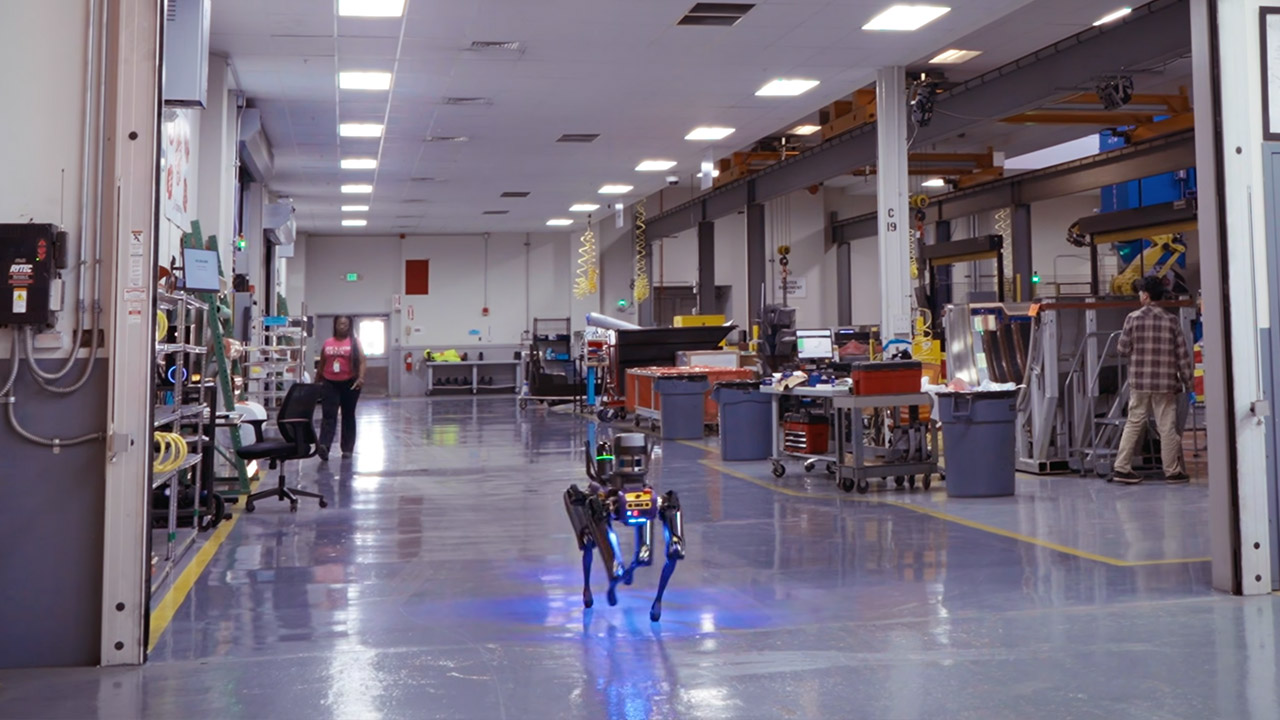
Spot pays close attention to autoclaves since these large pressurized containers are used to cure composite materials in harsh conditions, and if anything goes wrong, it can be expensive or even dangerous. Spot is despatched to check on them on a regular basis and collects readings that a human might miss during a hectic shift. If the crews need to rush off for an emergency repair, the site will simply continue to operate, which was previously a concern because inspections were being neglected, allowing problems to accumulate over time. Now, spot takes up the slack.
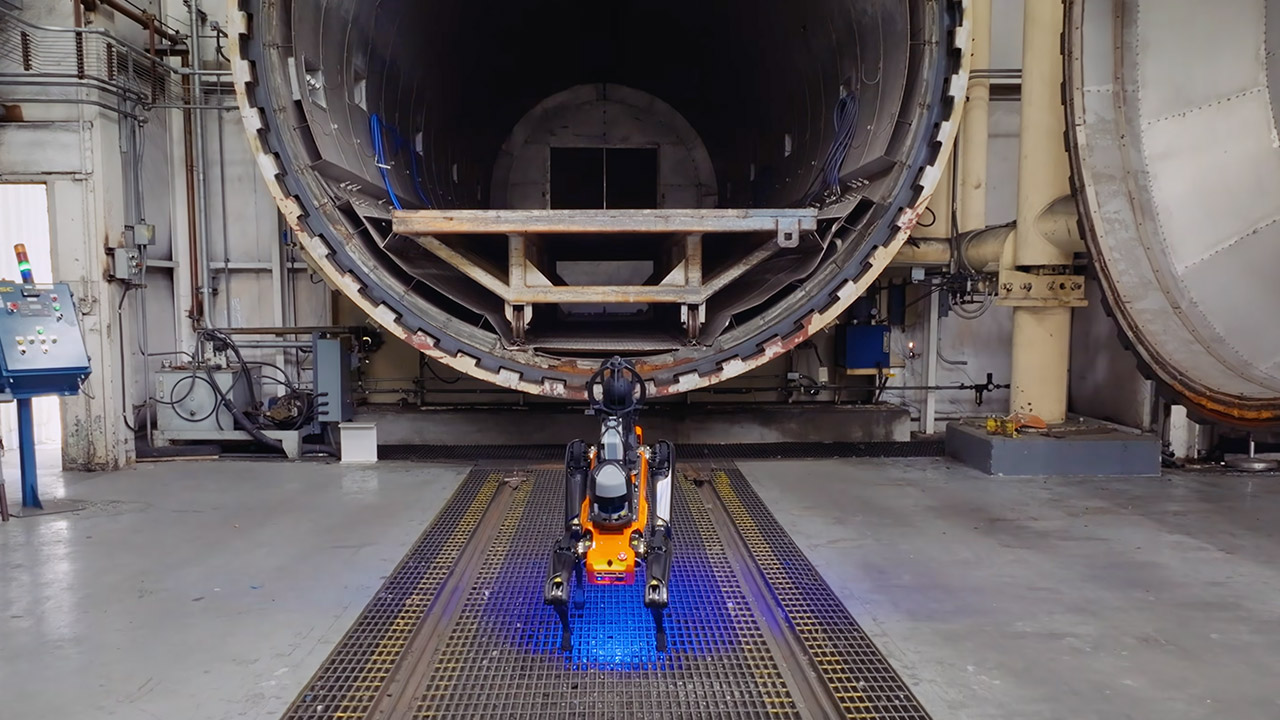
They have some new technology that allows them to combine Spot with the Leica BLK ARC scanner, which captures incredibly exact 3D point clouds as Spot walks around. It generates a highly detailed digital map of the entire facility, which is far more precise than the old plans from long ago, and updates automatically whenever spot performs one of its quarterly or weekly runs. Engineers can now see what has changed since the prior time, which previously took weeks to complete manually.