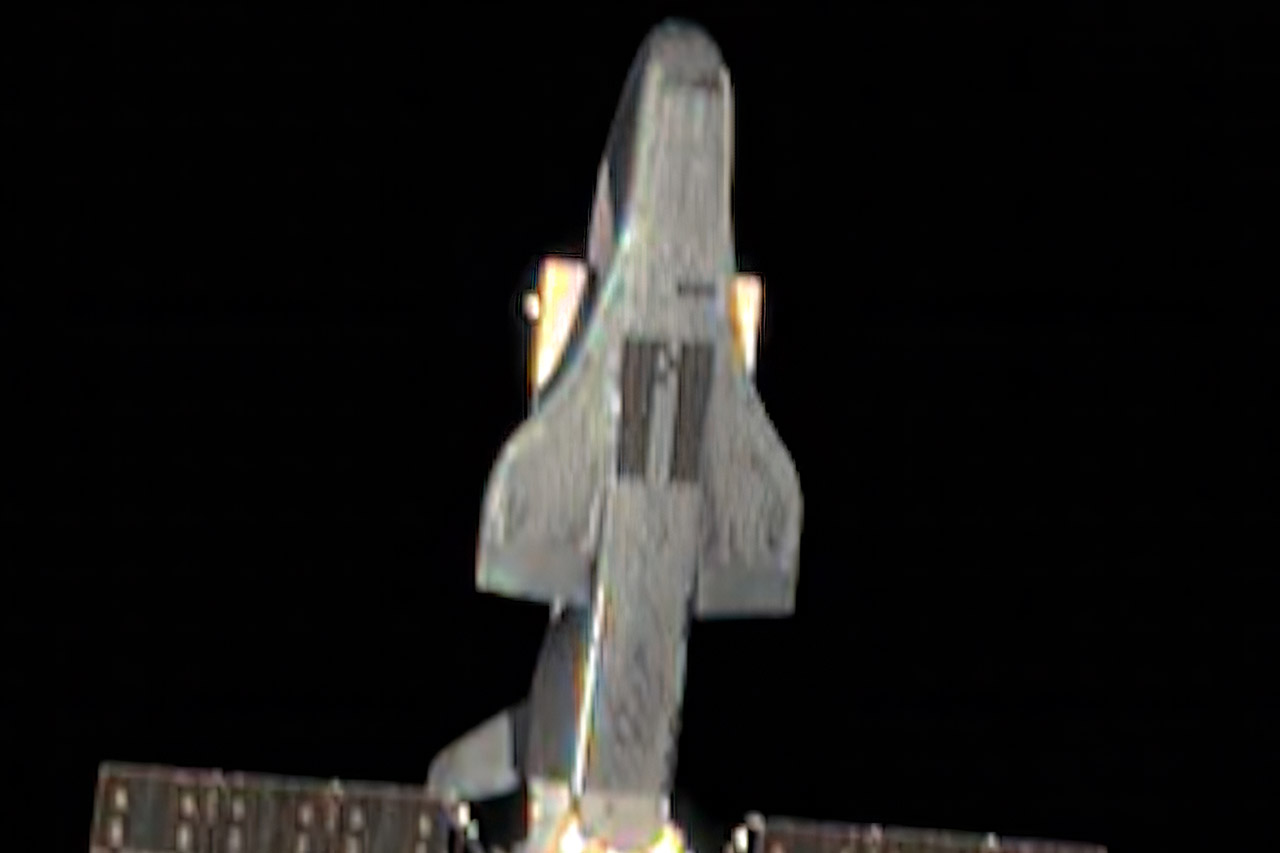
Photo credit: Maxar Technologies | DIA
A commercial imaging satellite snapped China’s secretive reusable spaceplane from about 56 miles away in 2024, and the Defense Intelligence Agency included that view in an unclassified report released late last month. The picture shows a compact winged vehicle with its payload bay doors open and solar arrays stretched out from a rear service module, the whole assembly hanging against the black of space. Resolution reaches roughly 1.8 inches per pixel, clear enough to resolve panel lines and the shape of the delta wings. Earlier public images had been grainy telescope shots or brief lower-resolution frames; this one gives the first detailed public look at the underside and how the power systems are arranged.
For years, people have referred to the spacecraft as Shenlong, or Divine Dragon, despite the fact that China only calls it as a reusable, experimental vehicle testing technology that allows for easier and less expensive return journeys into space. They launch it from Jiuquan on a Long March 2F rocket, then it separates in orbit and returns on its own to land on a desolate airport near Lop Nur, as there is a runway in the desert. The first flight took place in September 2020, and it confirmed that their basic recuperation mechanism worked after two days. They launched another one in mid-August 2022 for 276 days, releasing at least one item and maybe others that were not tracked. Then, in December 2023, they launched one that lasted approximately 268 days until landing in September 2024; the new photo was taken at some point during that time and shows the DIA noting that the vehicle released some sort of object and interacted with it while in orbit.

- 2 AVIATION LEGENDS, 1 BUILD – Recreate the iconic Boeing 747 and NASA Space Shuttle Enterprise with the LEGO Icons Shuttle Carrier Aircraft...
- DEPLOY LANDING GEAR – Turn the dial to extend the massive 18-wheel landing system on your airplane model, just like real flight operations
- AUTHENTIC FEATURES & DETAILS – Remove the tail cone, engines, and landing gear from the NASA shuttle and stow them in the cargo bay during flight
The fourth mission launched in early February 2026 and is still in space as of late October. According to tracking data, this one has launched some small things and even shortened the distance between them, sometimes approaching within a few hundred meters. When examining at the orbital record, including Jonathan McDowell, there are indications that the craft has performed multiple release and recapture procedures and may have a robotic arm. China has disclosed very little about what is going on here, except that they are testing reusable systems for peaceful purposes. The DIA report cites station-keeping at 1 kilometer distances and closer approaches, but it doesn’t say much about potential weapon uses.
For those who have been following this story, you’ll notice that the Chinese vehicle bears some striking similarities to the US Space Force X-37B; both are unmanned, launch vertically, operate for months with an open bay, and then return to land on the runway. The Chinese craft has solar panels on the back of the aft module rather than the top, and its wings are somewhat longer from leading to trailing edge. The DIA identifies both Shenlong and Tengyun as Chinese spaceplane models, but they are unable to determine which is the one in the 2024 photograph. According to previous reports, the vehicle will be little more than 29 feet long with a wingspan of around 15 feet, making it large enough to carry tiny satellites or experiment packages that can be released and recovered.
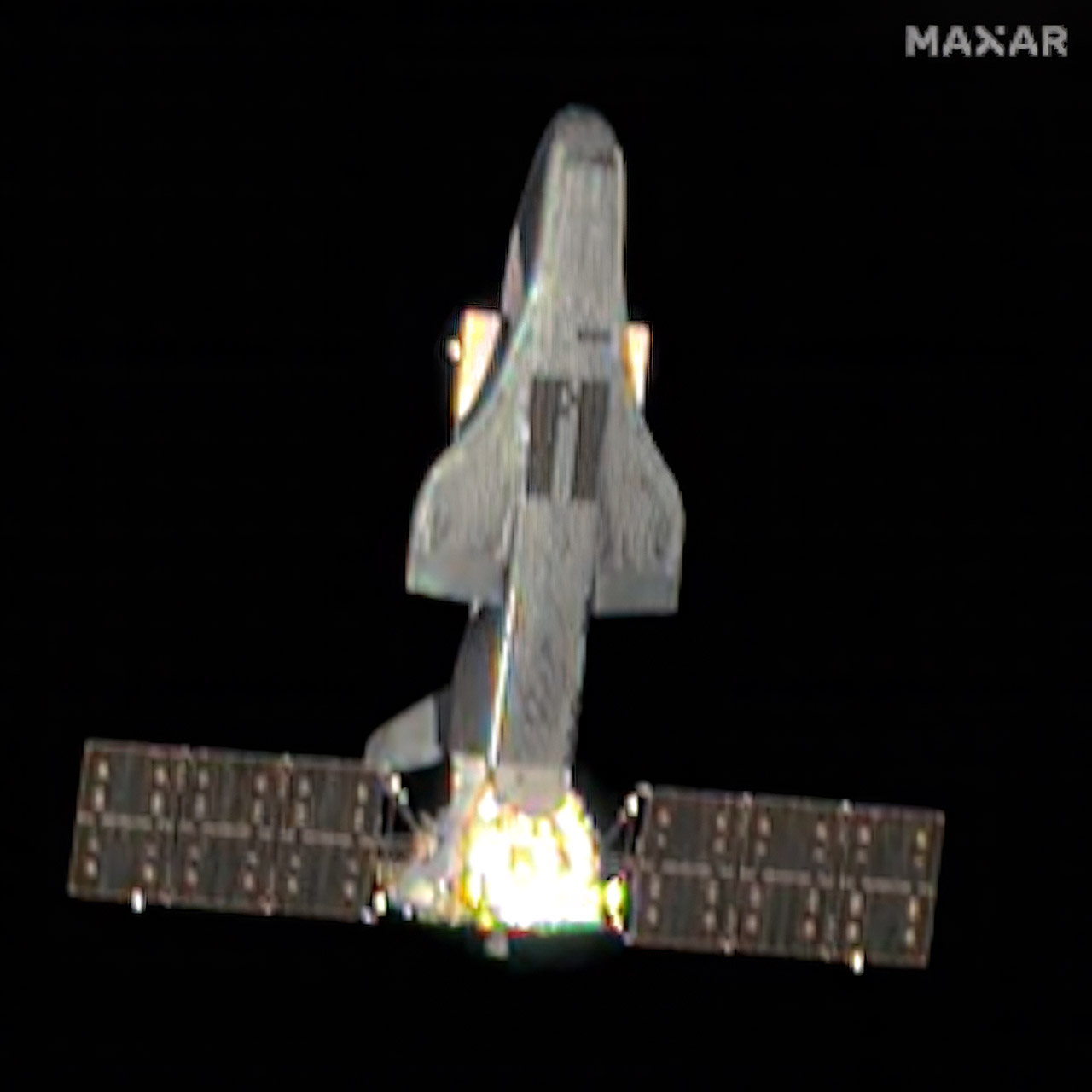
Low Earth orbit isn’t the best spot for privacy, since once you have a series of commercial satellites shooting sideways images, it’s difficult to keep anything secret. When objects cross paths in orbit, the WorldView-3, which is now part of Vantor, can detect a wide range of small details. Ground-based fans have attempted to photograph the object before, and a US Space Force officer even mentioned it at a 2024 conference in South Korea, but the full resolution image remained concealed inside the DIA until it was included in the public report on page 53. Beijing remains tight-lipped about this, so the best perspective we have is still from an American commercial satellite.
[Source]