

Mars has long captivated our curiosity, a distant world painted in rust and mystery. Recent findings from Brown University offer a fresh perspective on one of the planet’s most puzzling features: dark streaks that appear and vanish like seasonal brushstrokes. These streaks, known as recurring slope lineae (RSL), have sparked debate for years, with scientists wondering if they signal water, geological quirks, or something else entirely.
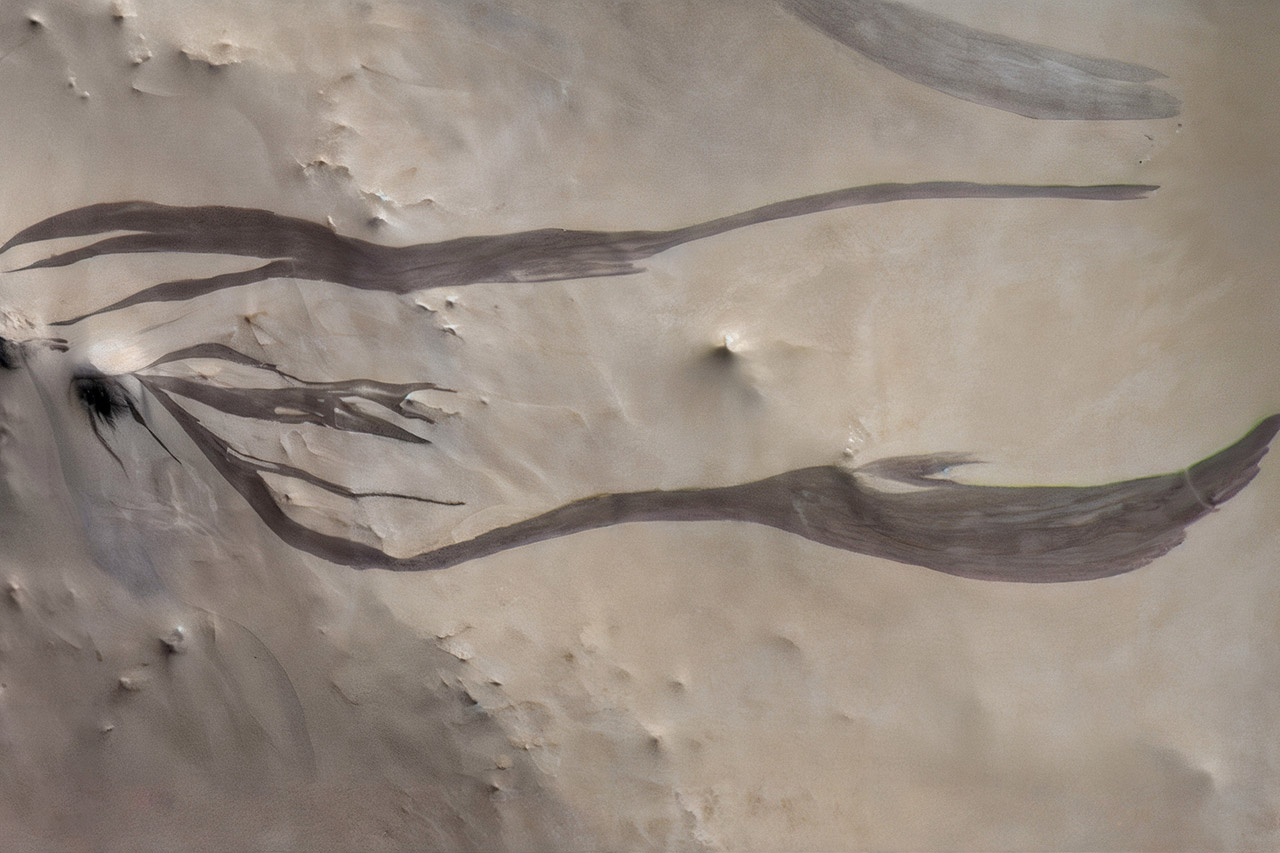
A new study led by Brown researchers, including graduate student Emily Fischer and planetary scientist Jack Mustard, leans toward a surprising explanation—one that could reshape how we prepare for human exploration. RSL are dark, finger-like markings that emerge on Martian slopes, often in warm seasons, stretching down like slow-moving shadows before fading away. First spotted in 2011 by NASA’s Mars Reconnaissance Orbiter, they’ve fueled speculation about liquid water, a tantalizing prospect for life beyond Earth. Fischer and Mustard’s team, however, proposes a different story: these streaks may be the result of tiny landslides, not flowing water.

- Feed a passion for science and technology – Kids can learn more about the challenges of space exploration with this LEGO Technic NASA Mars Rover...
- Conduct a test flight – This advanced building kit for kids ages 10 and up includes a buildable toy version of NASA’s Ingenuity helicopter, which...
- AR brings the mission to life – The accompanying augmented reality app experience lets kids dive into the details of the rover and its mission
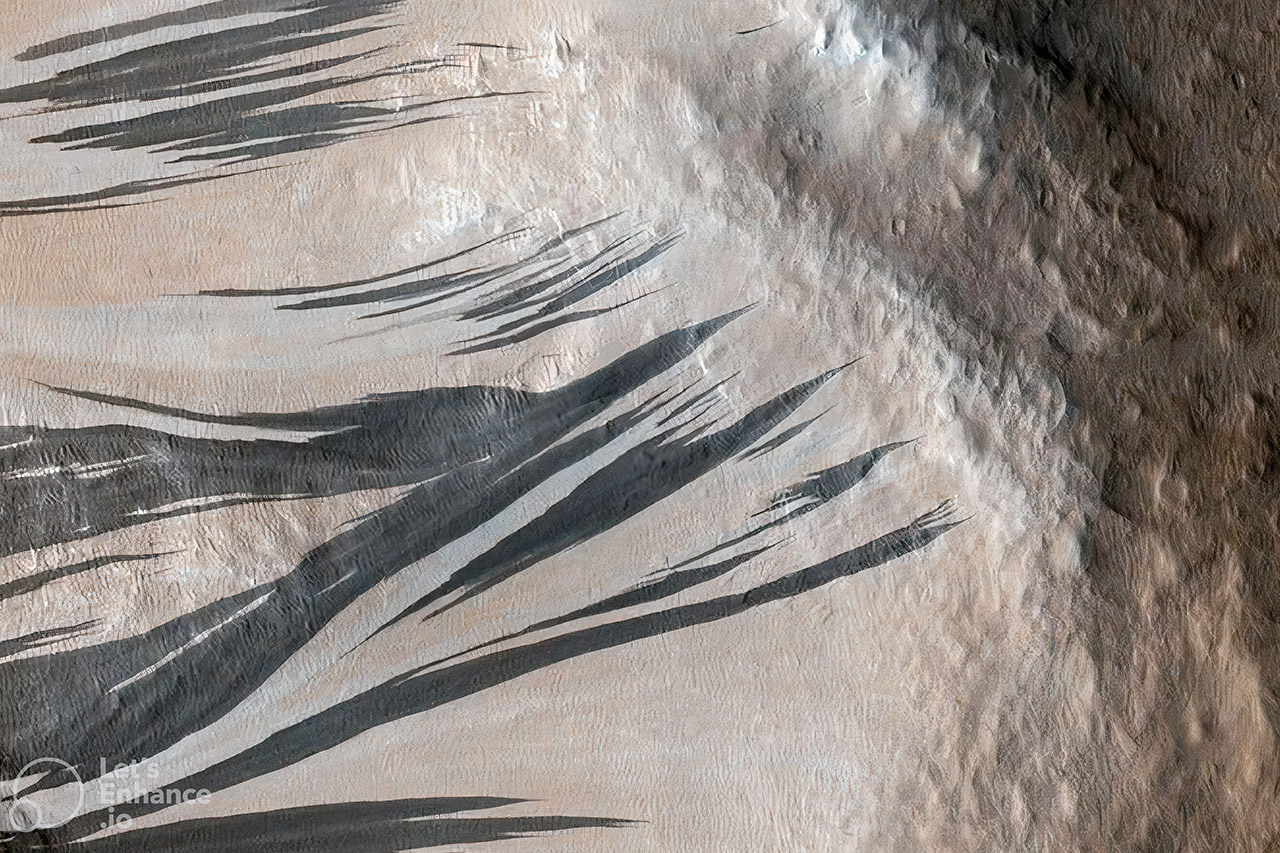
Their work, detailed in Geophysical Research Letters, suggests dry granular flows—like sand cascading down a dune—could explain the phenomenon. “We’ve been looking at these streaks for years, trying to pin down their origin,” Fischer says. “The more we studied them, the more it felt like gravity and loose sediment were the real drivers.”
To crack the case, the researchers turned to a Martian playground called Cerberus Fossae, a region scarred by fissures and steep slopes. Using high-resolution images from the Mars Reconnaissance Orbiter’s HiRISE camera, they mapped 41 RSL sites, analyzing terrain, slope angles, and seasonal patterns. Their findings revealed a pattern: streaks appeared on slopes steeper than 27 degrees, where loose material could easily tumble. “The steepness is key,” Mustard explains. “It’s like a tipping point where sediment just can’t hold on anymore.” Unlike water-driven flows, which might leave broader, more eroded channels, these streaks were narrow and confined, consistent with dry slides.
Liquid water would need specific conditions—salty brines to stay fluid in Mars’ frigid climate, for instance. Yet the team found RSL in areas where water should be scarce, like sun-facing slopes baked dry by intense heat. They also noticed that streaks didn’t always align with seasonal warmth, as you’d expect if water were involved. “We kept asking, ‘Where’s the water?’” Fischer says. “The data kept pointing us away from it.” Instead, their computer models showed that small disturbances—like a pebble falling or a gust of wind—could trigger cascades of dust and sand, creating the streaks we see.
This dry-flow theory isn’t just a scientific pivot; it has big implications for SpaceX’s looming Mars missions. Water on Mars could be a game-changer, providing resources for drinking, fuel, or even agriculture. If RSL are just sliding dirt, explorers will need to look elsewhere for liquid. “It’s a bit of a reality check,” Mustard notes. “We’re not saying there’s no water on Mars, but these streaks probably aren’t the place to find it.” Still, the study doesn’t close the book. The team plans to refine their models, incorporating wind patterns and subsurface ice, to see if other triggers might play a role.
RSL is almost like Mars’ way of doodling on its own surface—temporary sketches that appear and vanish with the seasons. Fischer’s enthusiasm is infectious: “It’s like Mars is showing us how it works, one slope at a time.” The findings also highlight the Red Planet’s dynamic nature. As SpaceX gears up to send humans to Mars, possibly within this decade, understanding these processes helps map out where to land, what to bring, and what challenges await.
The Brown study doesn’t just demystify a Martian puzzle; it pulls us deeper into the planet’s story. Each streak is a clue, a snapshot of a world that’s both alien and familiar. “Mars keeps surprising us,” Mustard says. “Every time we think we’ve got it figured out, it gives us something new to chew on.” For now, those dark streaks are less about water and more about the restless geology of a planet waiting for its first human visitors. As we edge closer to that historic landing, studies like this remind us: Mars is ready to share its secrets, one slide at a time.