
Mahdi has finished a working forearm and hand that runs on eighteen separate motors while the parts stay under three hundred dollars. Nearly every motor sits inside the forearm, and thin steel ropes carry the motion out to the fingers. Those ropes replace the usual synthetic lines that force builders to tie tiny knots in tight spaces. Metal sleeves simply crimp onto each end, so the tension can be set once and left alone.
Each finger can spread out sideways and bend in two places independently. It is operated by three motors: one for left and right motion, another for the bottom joint, and a third that powers both the center and tip. This design comes close to replicating the roughly two dozen separate movements that a human hand can perform without overloading the fingers with motors. Every steel cable is packed into a PTFE tube, reducing friction as the rope glides back and forth.

- ACTION-PACKED FUN TIME: Bring out your inner super hero with this exciting mechanical machine. Our step-by-step instructional manual ensures a deeply...
- DEVELOPS KEY SKILLS: Reduce screen time and boost confidence and creativity with 100% screen-free engagement. As kids build their own toys, they learn...
- FREE PARTS LIFETIME: Enjoy hassle free fun with all parts included, plus a lifetime supply of replacement parts. Easy-to-follow instructions make...
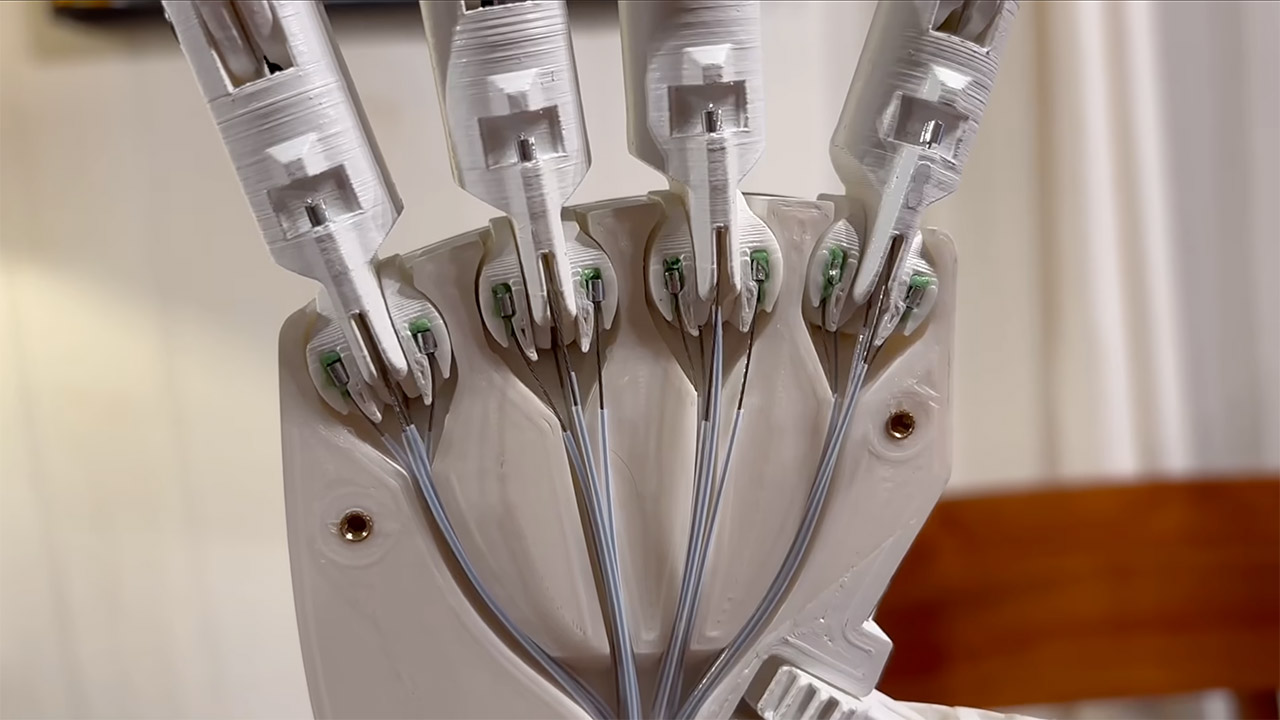
Every tendon runs directly down the center of each joint. So, when a joint bends, the cable length remains constant, ensuring that the motors are never subjected to additional strain simply because another joint has moved. This same concept extends to the wrist, where two axis that cross allow the hand to tilt and spin while the finger wires pass via a central tunnel that always remains the same length. The thumb is the only one that requires a short small gear piece at the base due to limited space, but it returns to the typical tendon layout after the cables clear the palm.
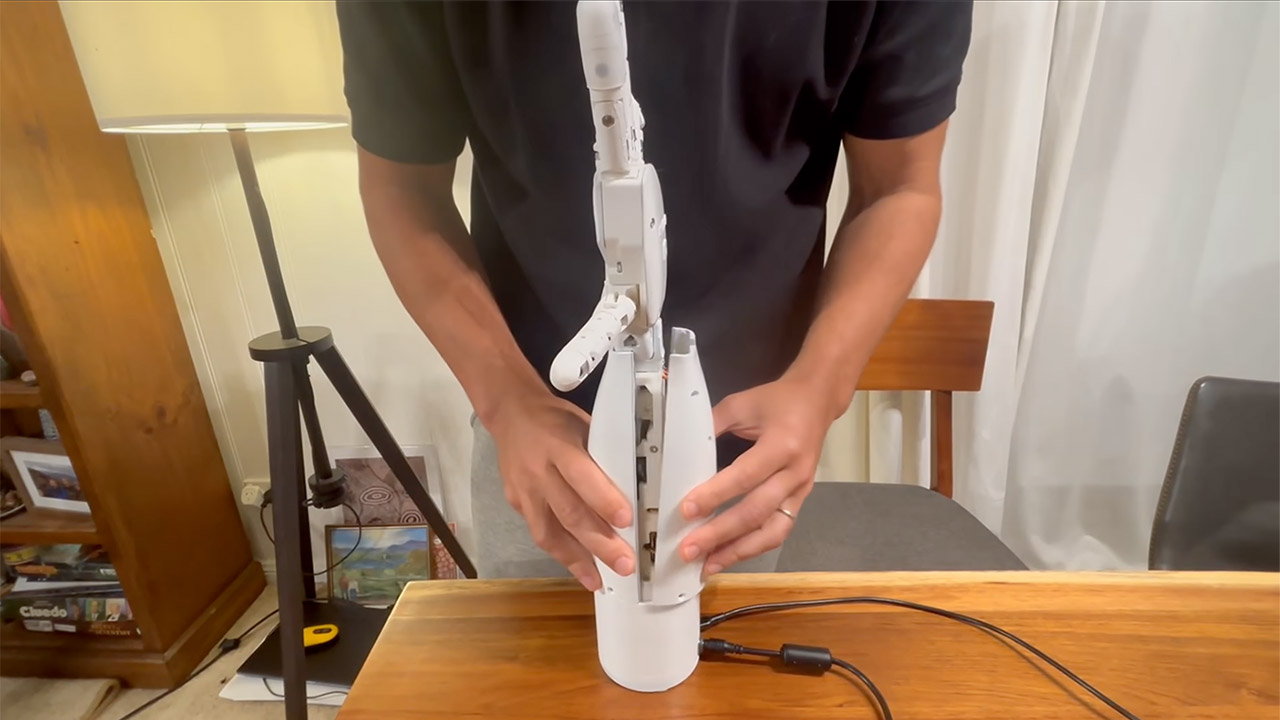
The rotation at the bottom of the forearm allows them to avoid utilizing an expensive slip ring there. Instead, they use a coil of flat ribbon wire that simply tightens or loosens as the joint revolves, guided by a printed track that prevents the cable from kinking. This cable has enough power to run all of the motors and costs less than a true rotary connector. They have an Arduino board lower in the arm that can communicate with a smaller driver board higher up, and a simple screen at the top that allows you to control the motors, string together brief sequences, and even check out a basic camera view that mimics hand gestures via a webcam.
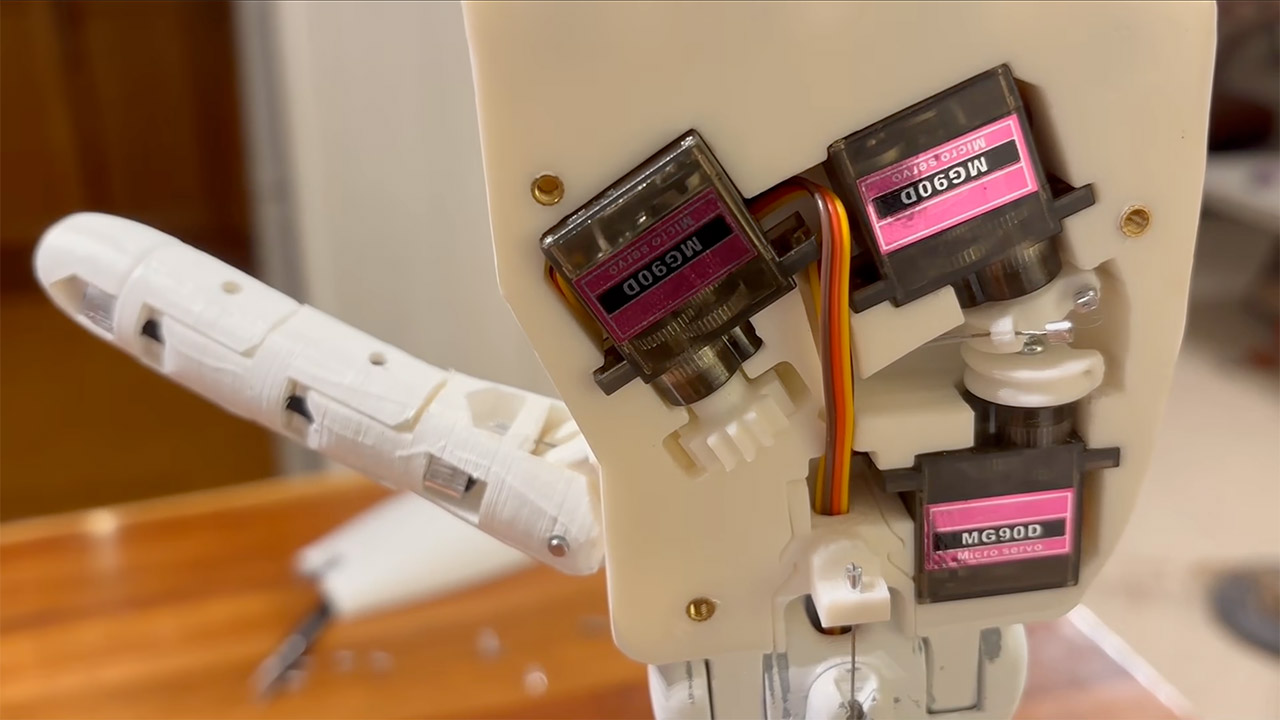 The forearm covers come off, leaving the tendons and motors exposed and easily tweaked as needed. Every part is a normal servo or a length of steel rope that can be purchased from any typical online parts seller. It already opens and shuts at a fairly natural pace while sitting on a home workbench, and it is being built to take alternative motors and even manufacturing methods in the future. Mahdi intends to release all of the files, a parts list, and a step-by-step build guide so that anybody may build one with a printer and some patience, or at least that’s the goal.
[Source]