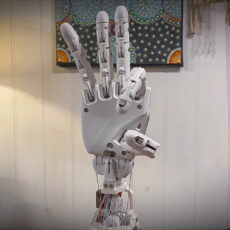
Michael Rechtin observed airplane propellers stay stubbornly subsonic while jet engines raced ahead, and he decided to find out whether that boundary still holds when someone tries to push past it in a backyard. A full-time aerospace engineer who fills his off hours with 3D printers, load cells, and high-speed motors, he set out to spin a propeller tip faster than sound and measure what happens. Inspiration came from the Republic XF-84H Thunderscreech, a 1950s experimental turboprop whose 12-foot propeller tips already reached roughly Mach 1.18 even at idle, producing continuous sonic booms loud enough to make ground crews physically ill and earning the aircraft its name.
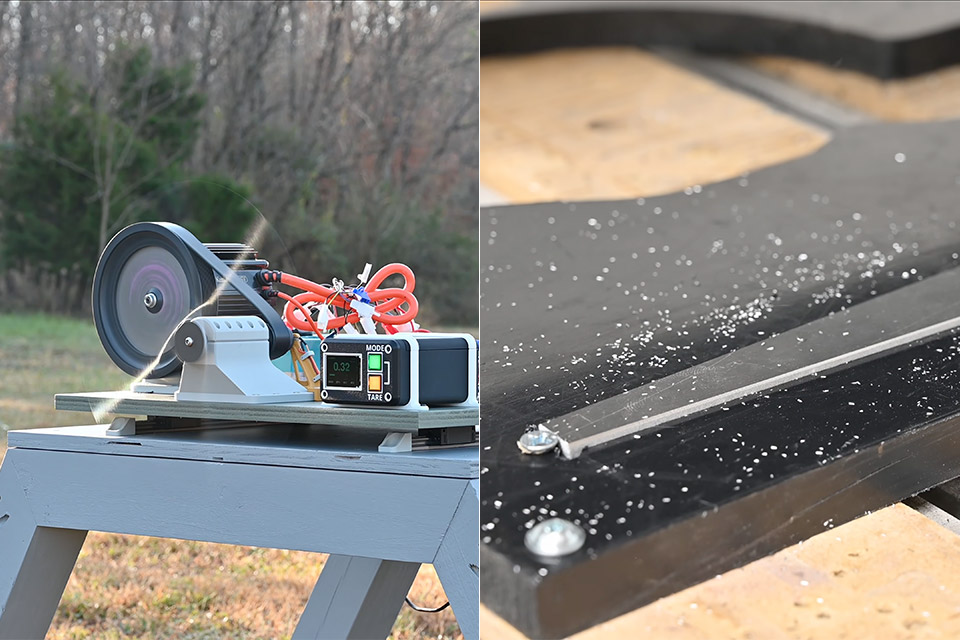
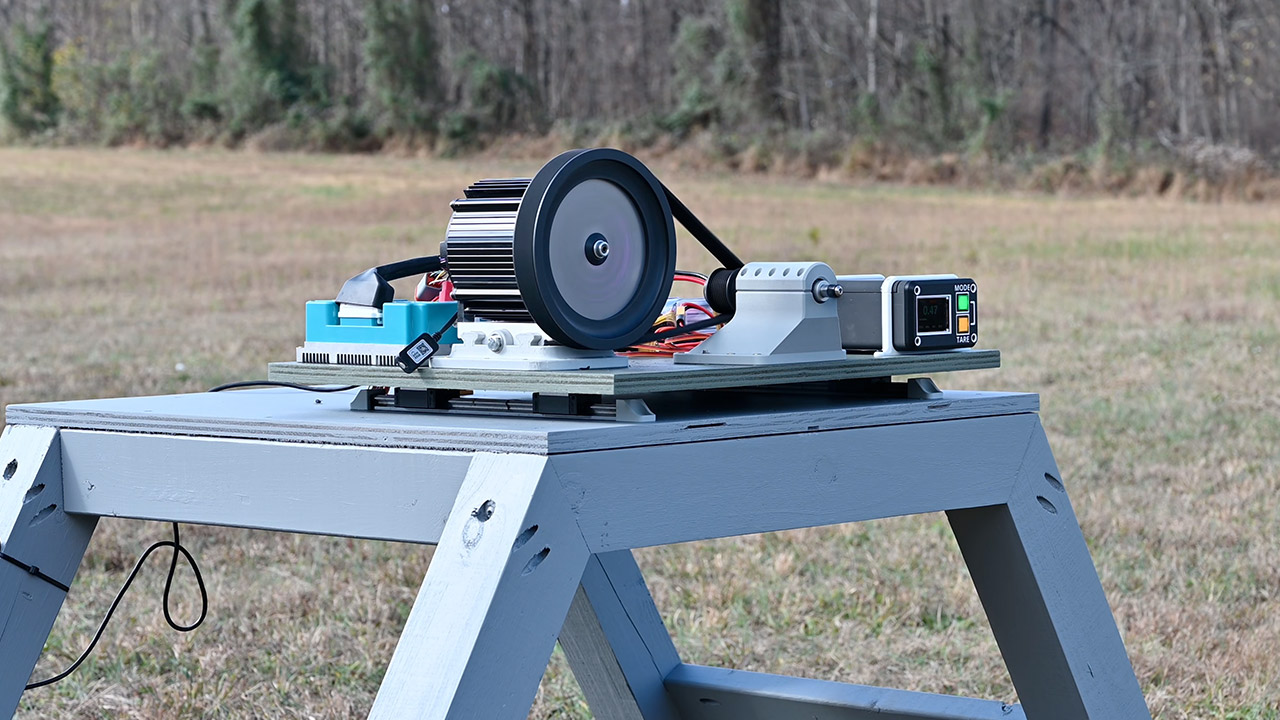
Rechtin decided it was time to make a practical choice for his attempt. He mounted a 5-kilowatt brushless motor originally designed for go-karts on an improvised test stand constructed of 4×4 and 2×4 beams, a plywood top, and some linear rails to which he could attach a load cell to measure thrust. Because the motor peaked out at roughly 6,000 rpm, he devised a belt-and-pulley system that effectively increased the shaft’s speed by five times.

- A1 mini + LED Lamp Kit for Creative Light Projects: Bring your ideas to life with the included LED Lamp Kit. Simply print compatible lamp models and...
- The Perfect 3D Printer for Beginners: A1 mini 3D Printer is designed to make 3D printing easy from day one with automatic calibration, simple setup...
- Experience the Bambu Lab Ecosystem: Access MakerWorld’s huge library of ready-to-print models, manage prints through the Bambu Handy app, and enjoy...
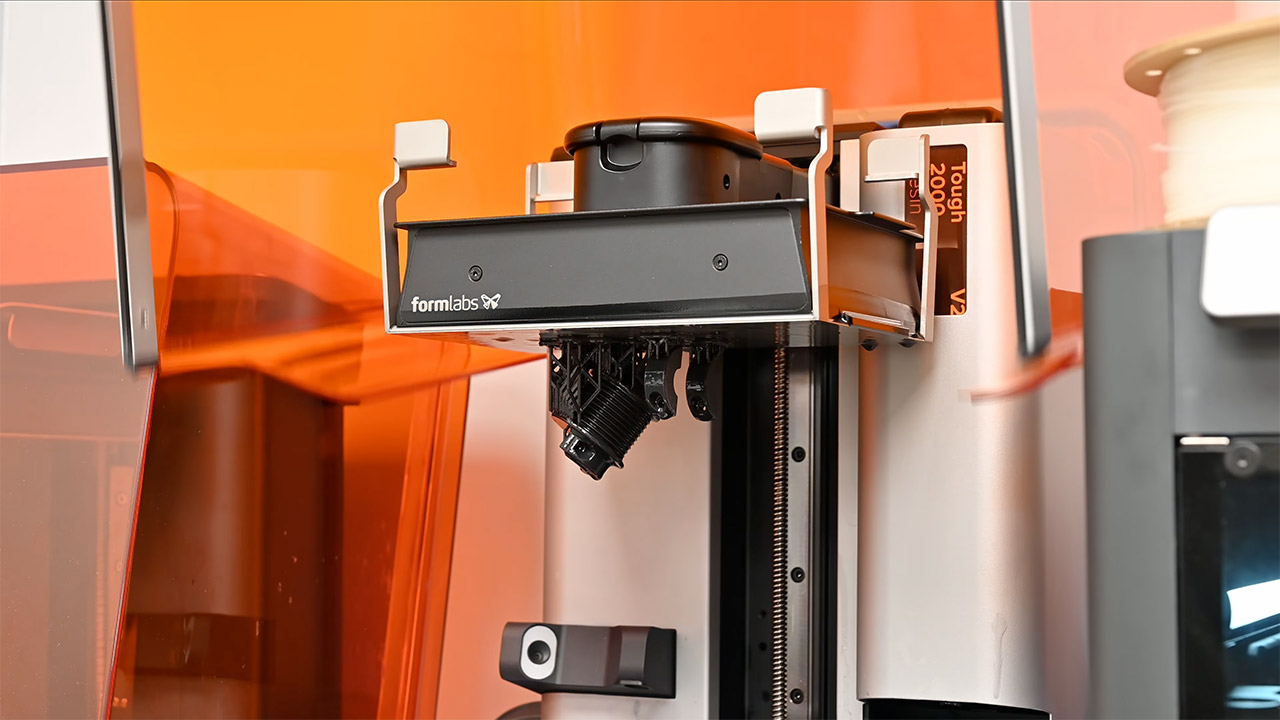
The small pulley on the propeller shaft was 3D printed out of durable resin, with an aluminum center cut out of a piece of solid aluminum on a waterjet, and the propeller itself was a 14-inch aluminum 7075 fan that was also waterjet cut, though to be honest, the propeller was really just used as a sound generator rather than a proper thrust producer, as all aluminum versions simply flew apart as soon as speeds climbed past a certain level. To measure the speed, some magnets were balanced on the shaft so that a Hall sensor could report the rpm, and an ESP32S3 microcontroller logged the current, thrust, and speed and displayed the numbers on a TFT screen housed inside a fancy multi-colored 3D printed enclosure he had created on MakerWorld.
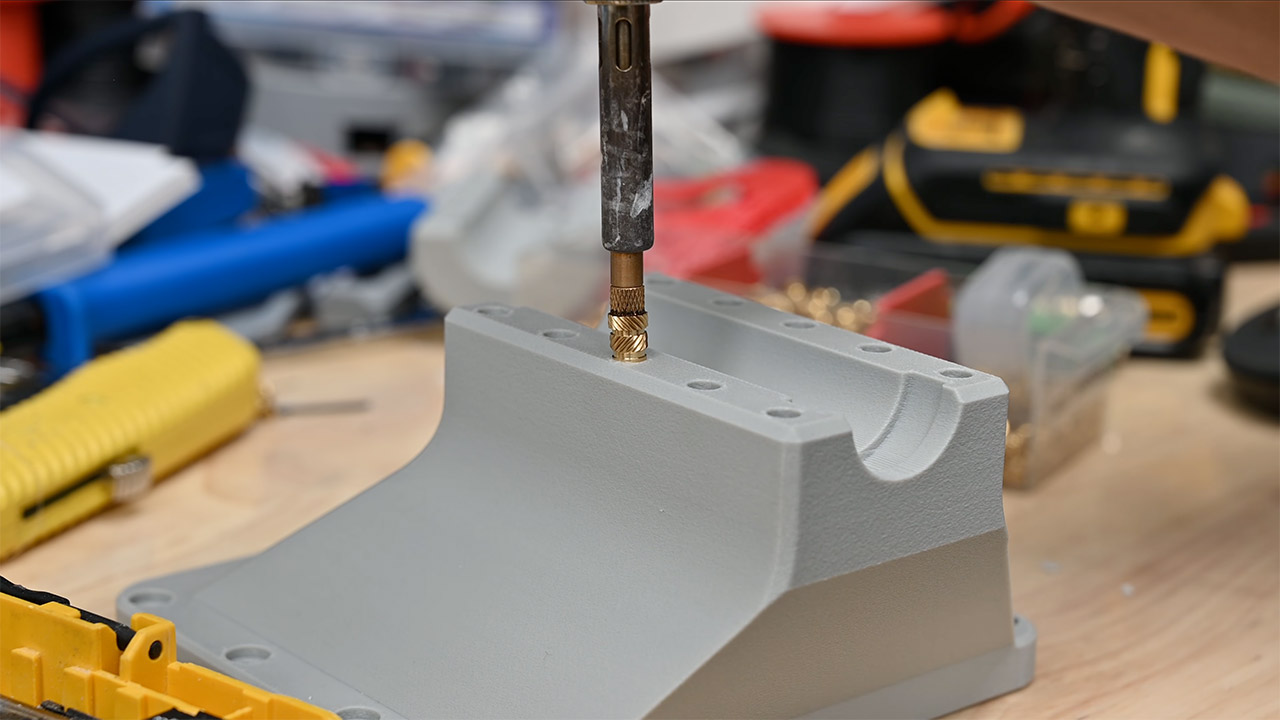
The initial runs, however, quickly revealed the first practical problems. The ceramic bearings simply deformed under stress and had to be replaced with metal ones. Belt friction and the occasional slip provided additional burning power. Then there was the voltage sag, and the most serious issue, a signal mismatch between the controller and the motor, which limited the current to roughly 85 amps.
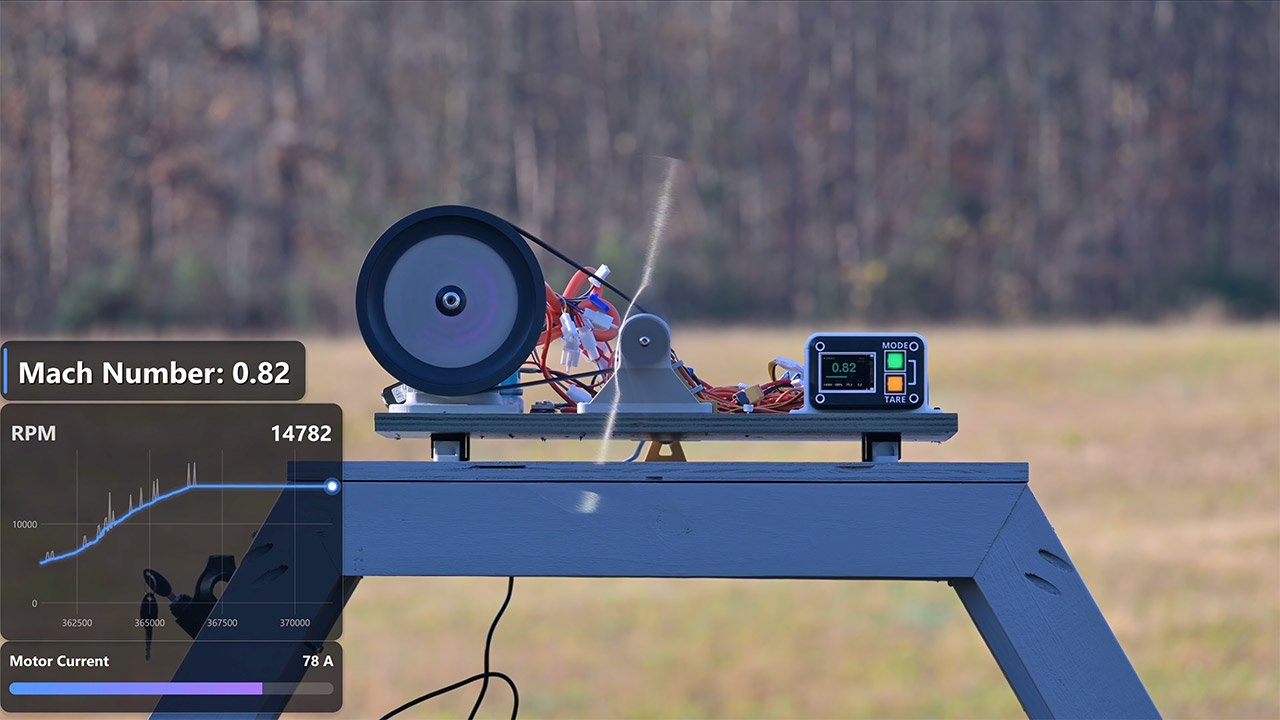
Even with all of those fixes in place, tip-speed stalled at around Mach 0.88, at which point the power required skyrocketed because aerodynamic drag begins to climb with the cube of velocity, and then shock waves began to form on the blades at around Mach 0.85, resulting in some unexpected, large forces that your average materials simply cannot withstand. One plastic propeller even exploded during a high-speed run, indicating a structural defect. Rechtin also stated that a direct drive and a higher-voltage battery pack would certainly be beneficial, as would a thinner and sharper blade profile, but the overall energy cost would stay the same.
However, historical programs faced similar obstacles at full scale. The NACA wind tunnel tests, as well as flight tests on aircraft such as the XF-88B and Thunderscreech, all demonstrated that with careful design and very thin blades, you could achieve nearly 75% efficiency at high subsonic speeds, but the noise, vibration, and structural demands were extremely high. Then, in the late 1940s, jet engines advanced so quickly that future propeller development lost momentum and funding since it was no longer worthwhile. Modern exceptions, such as the Tu-95 Bear, can tolerate tip speeds approaching supersonic levels and simply live with the noise, but those planes have big powerplants and well-built blades that few other designs can match.