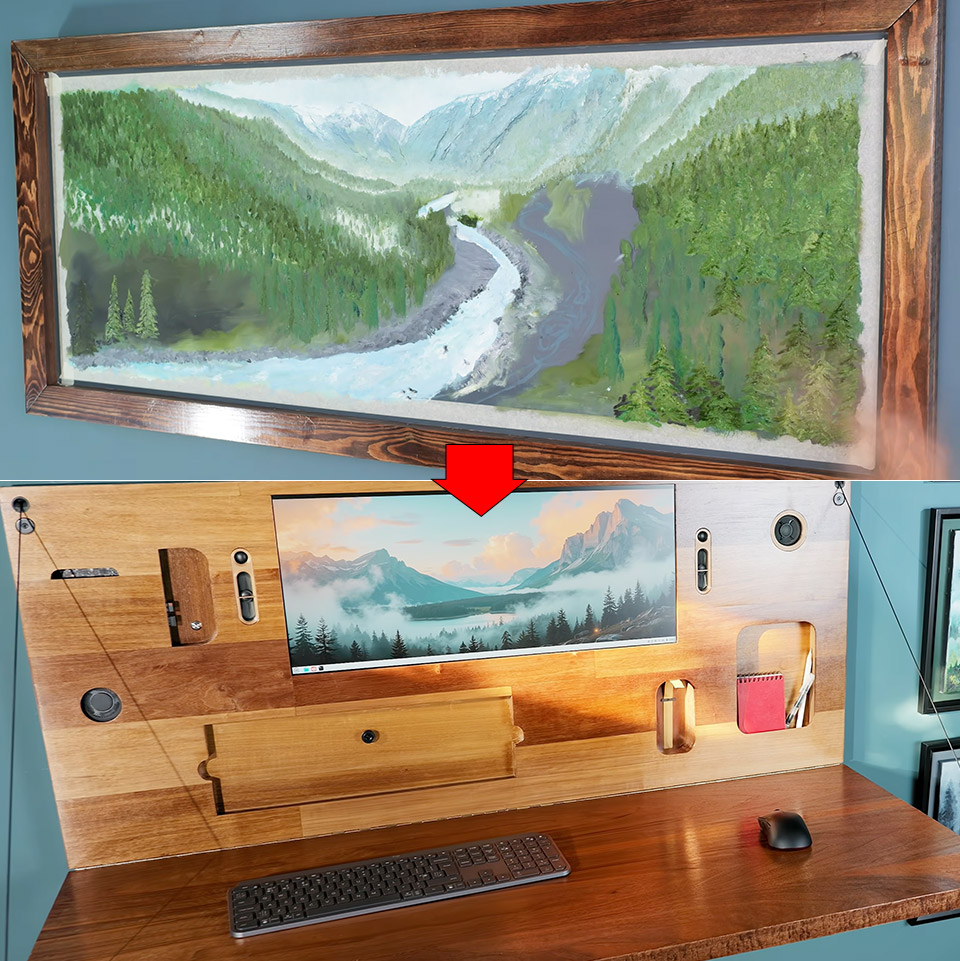
Most visitors would pass the frame of Matthew Perks’ new invisible PC without a second glance. A mountain valley fills the canvas, river through the center, pines and rock along the banks, a small steam engine lost in the mist. Real paintings hang on either side, and the arrangement reads as ordinary wall art. A pull on the top edge breaks a pair of magnets. Piano hinges carry the panel down until Dyneema cord, running through a small roller, stops the swing at a right angle and keeps the line clear of the work surface once the panel is shut again. A finished desk is now in front of you.
Construction began with gluing pine strips around the rim of a thin sheet of MDF to prevent the panel from flexing under a keyboard. Then a solid wood veneer was applied to the face that would become the tabletop, followed by a coat or two of oil until the grain appeared to have been finished by a professional in a shop. A thicker sheet of the same size rests behind it, with cutouts for a small ultrawide display, two old television speakers, the monitor board, a keyboard, and mouse. Perks successfully removed the original bezel from the screen, allowing the stack to remain slim. Then they inserted the naked panel into the opening and ran a very low-profile HDMI wire into a side pocket where the controls are located. A flexible walnut edge strip, ironed on and then oiled, lines the sections, giving the inside a significantly darker, more aged appearance.

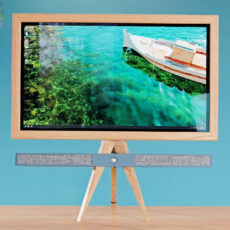
- DESIGNED TO LOOK LIKE A PICTURE FRAME: Looks like real art with a slim design that mounts flush to the wall, customizable bezels* to match your style...
- YOUR PERSONAL ART GALLERY ON YOUR TV: When you're not watching TV, the Frame transforms into art**. Access a curated collection from the Art Store...
- LIFELIKE PICTURE WHEN IT’S ON, MUSEUM-WORTHY WHEN IT’S OFF: Enjoy stunning colors when you're watching TV and admire lifelike artwork when you're...
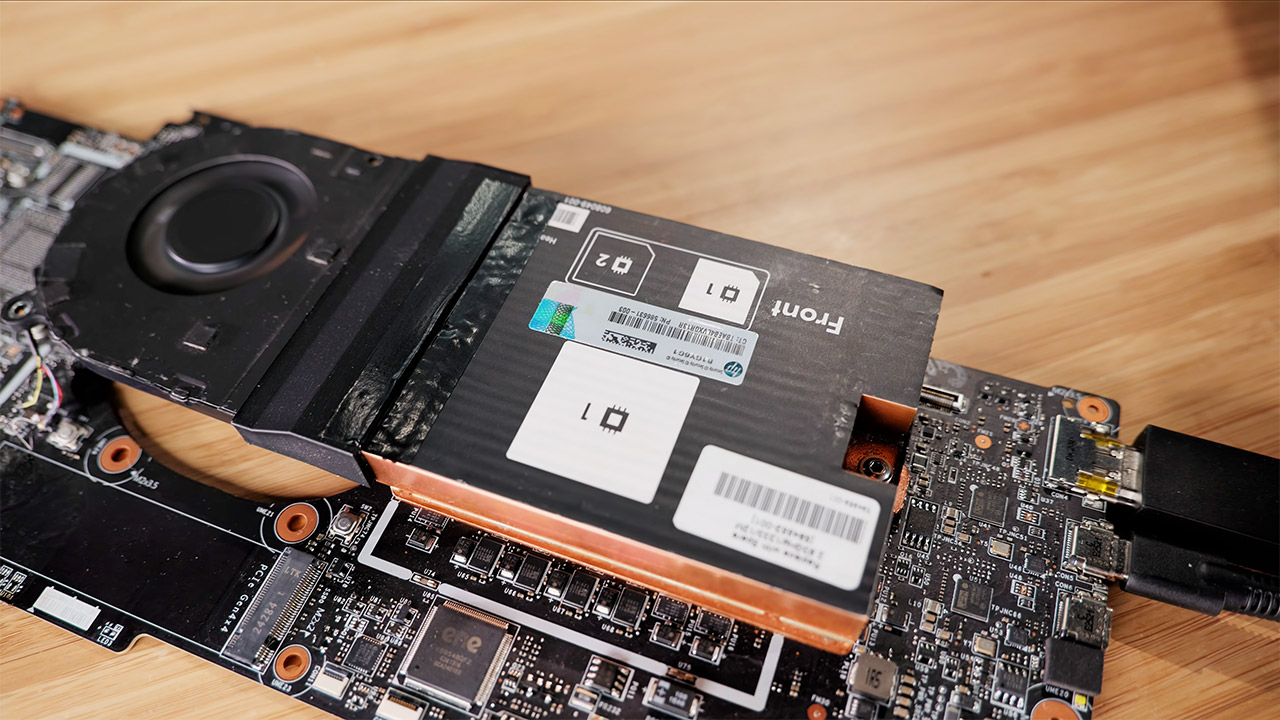
The hardware is kept basic on purpose because the thing is operating on a secondhand laptop board that Perks purchased on the cheap. In one of the compartments, they cut and drilled a copper plate to direct heat from the processor into a salvaged server cooler, then installed a small laptop fan beneath a simple cover. The board receives power via USB-C from a regulator connected to a concealed hub. The speakers sit behind basic covers. One slot holds a notebook and a pen. The mouse has a magnet on the underside and attaches to a screw in the compartment wall via a short ribbon. The keyboard rests on its metal back and attaches to a post using a magnet. There’s a small silver button beside the hub that activates the device. Linux Mint runs on the board, which is lightweight enough to keep the reused parts comfortable.
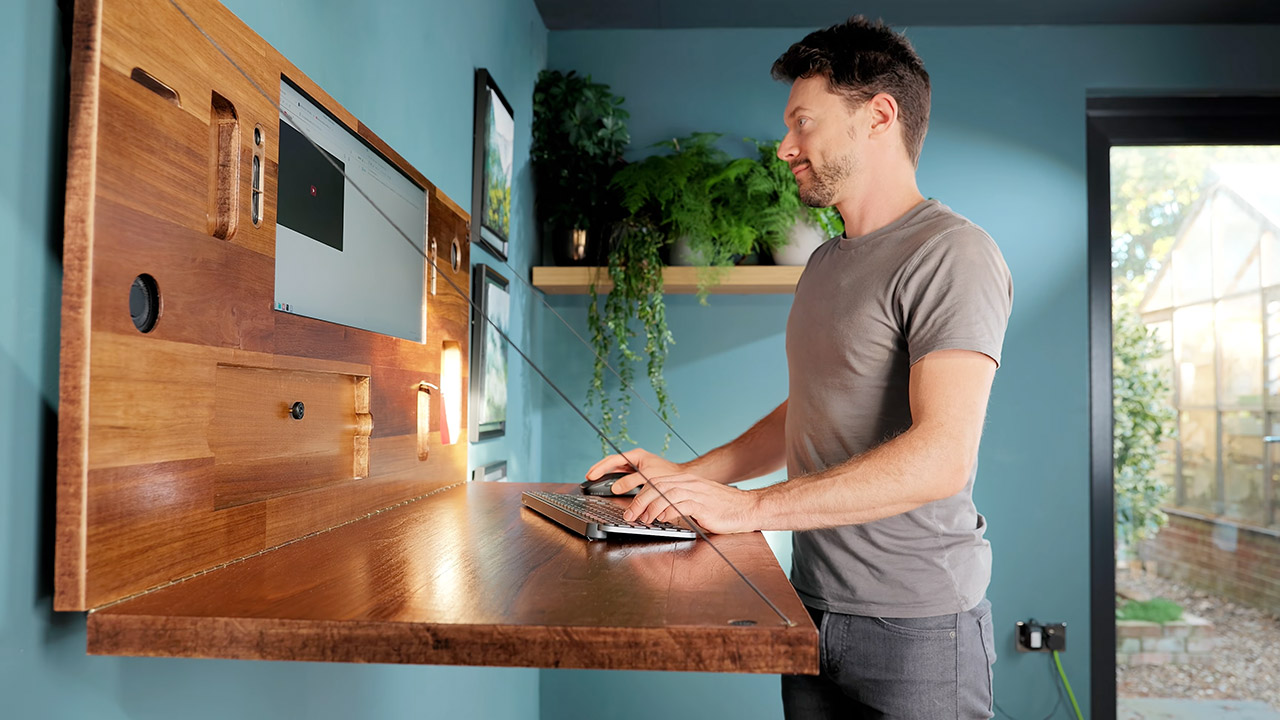
Power is delivered to the panel via small strips of copper tape affixed to the wall, all of which have been primed and painted to mix in with the plaster. At the low end, there’s a transformer that produces direct current at around 90 watts and is spaced out sufficiently to keep the tape cold and prevent a short circuit. The brackets on the rear of the thicker board support the weight and are aligned with the pine beams. When you close the thing, it hangs flat against the wall. When you open it, the cords keep the angle while the veneered face is ready for use.