
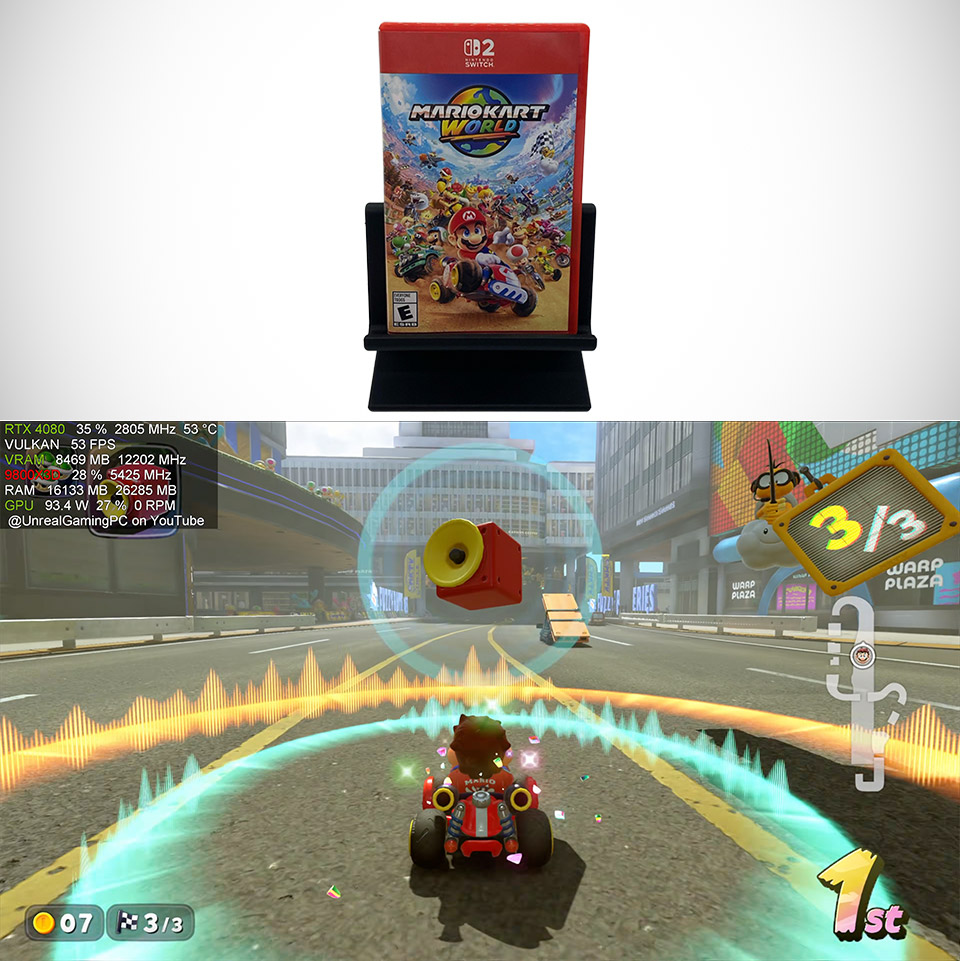
Barely a week after the Nintendo Switch 2 jailbreak surfaced, a free open-source emulator called Eglantine has already shown Mario Kart World holding a steady 60 frames per second on desktop PCs. Developer Camille LaVey started the project as a fork that draws from Eden, Yuzu, and Sudachi, then layered in the experimental Switch 2 work that Takoroka first added to Eden under the name NX2. Written in C++ and built for Windows, Linux, and macOS, the code arrives as frequent pre-releases that land nearly hourly, each one carrying small, concrete fixes rather than vague promises.
Early footage from systems such as a Ryzen 7 9800X3D combined with an RTX 4080 or an older i9-10900K with an RTX 5070 Ti shows the game finishing full races at the desired frame rate, but only after the shader cache has warmed up slightly. Even so, you may notice the occasional temporary hiccup when a course loads up new effects for the first time, as well as servicing internal resolutions that push the system beyond 30 GB of RAM, despite the GPU only needing about 15 GB of VRAM. According to community reports, even on slightly less powerful hardware, such as a Ryzen 5 5600G with an RTX 5070, single-player runs will still peak at around 40 to 53, which makes sense given the processor’s power and the emulator’s current Vulkan, asynchronous shaders, and texture recompression settings.

- Save $37.98 on everything you need to play with this bundle
- Includes Nintendo Switch 2, the most powerful Nintendo system yet
- Includes the Mario Kart World digital game download
Some specialized forks, such as Eglantine-MKW, have already focused on a specific version of the racing game, version 1.8.0, and added a slew of important additional features. For example, they’ve included automatic BC3 texture compression for cards with less than 12 GB of VRAM, more tightly controlled shader-cache processing to prevent the emulator from failing after a few minutes, and a neater shutdown process. These adjustments have helped maintain peak memory consumption to roughly 6.6 GB, even when simulating a lower-memory GPU, allowing a previously wrecked build to complete a race. Other titles are also being worked on, such as Splatoon Raiders, which has become more constant in its pacing, while recent updates have even resolved some of the cinematic freezes and purple-screen issues in Donkey Kong Bananza, allowing the game to advance beyond its introductory sequences.
If you want to try out the current builds, you’ll need to provide your own keys, firmware, and game dumps because nothing copyrighted is included with the download. When it comes to getting started, keep things simple using the Vulkan renderer, 1x resolution, GPU mode set to Fast, and asynchronous shaders enabled. Profile-guided optimization builds are available for CPUs that support them, and the project includes a user manual and Discord channels where you can exchange notes with other testers. Keep in mind that this is currently a very experimental emulation, so you may encounter errors such as missing geometry, momentary delays, or the need to clear the shader cache following an update.
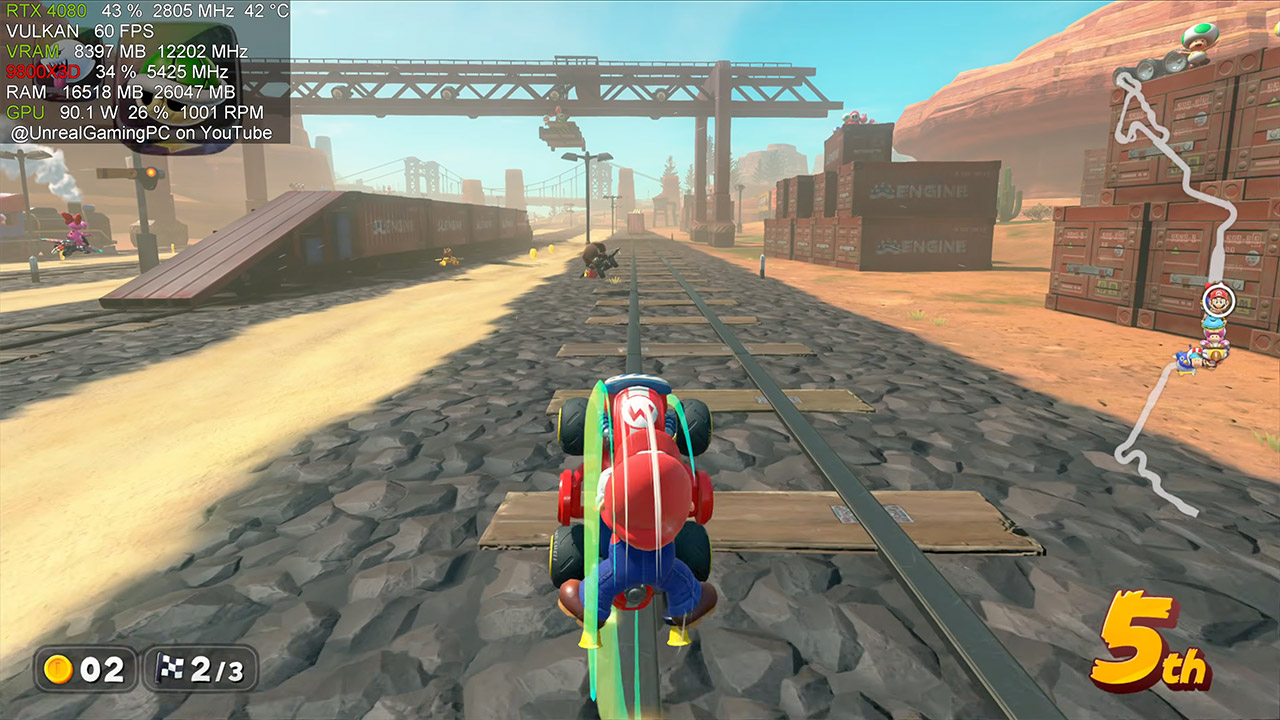
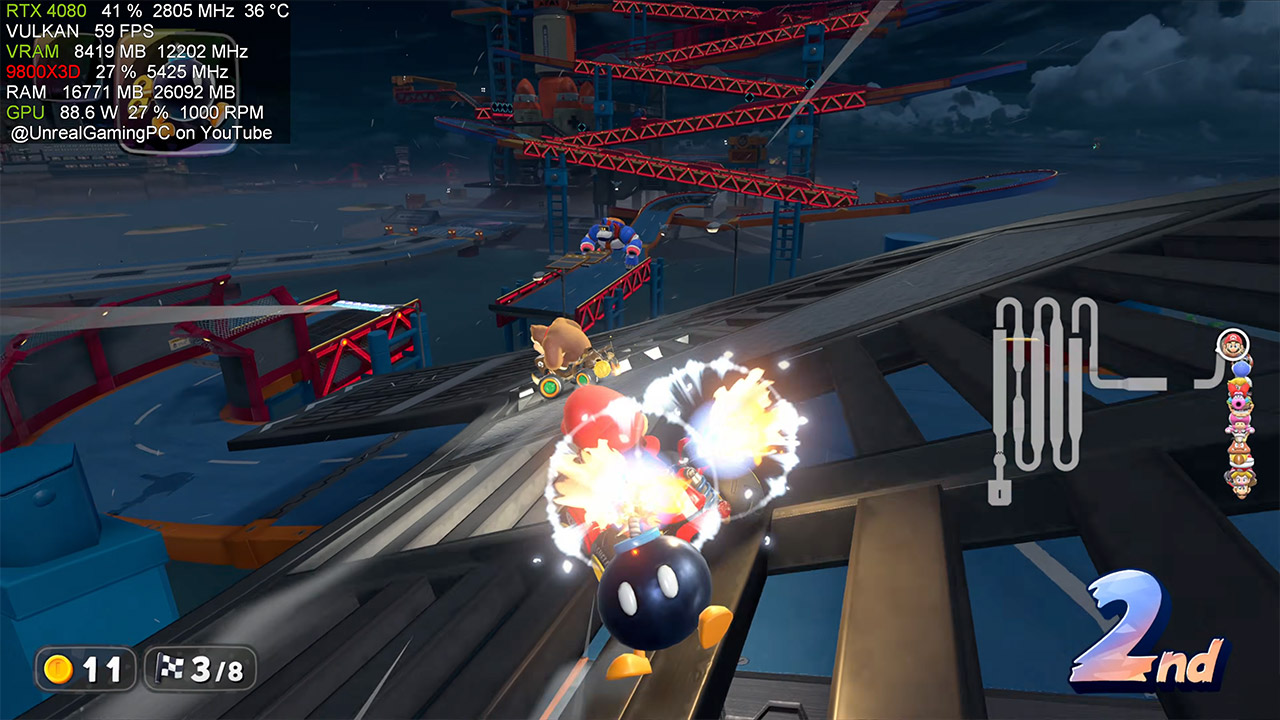
What’s interesting is how quickly the actual work gets completed. Five named builds were released in a single five-hour window at the end of October, each addressing a distinct issue such as frozen moving objects, VRAM exhaustion, or double controller inputs. Later commits introduced LAN play support for Mario Kart World, improved NUP container identification to ensure that updates have the correct memory layout, and began processing more native shader forms on the Switch 2. The same rapid pace has already resulted in usable video decoding paths and some experimental frame rate options, all while the core project continues to accept pull requests from new contributors.
[Source]