
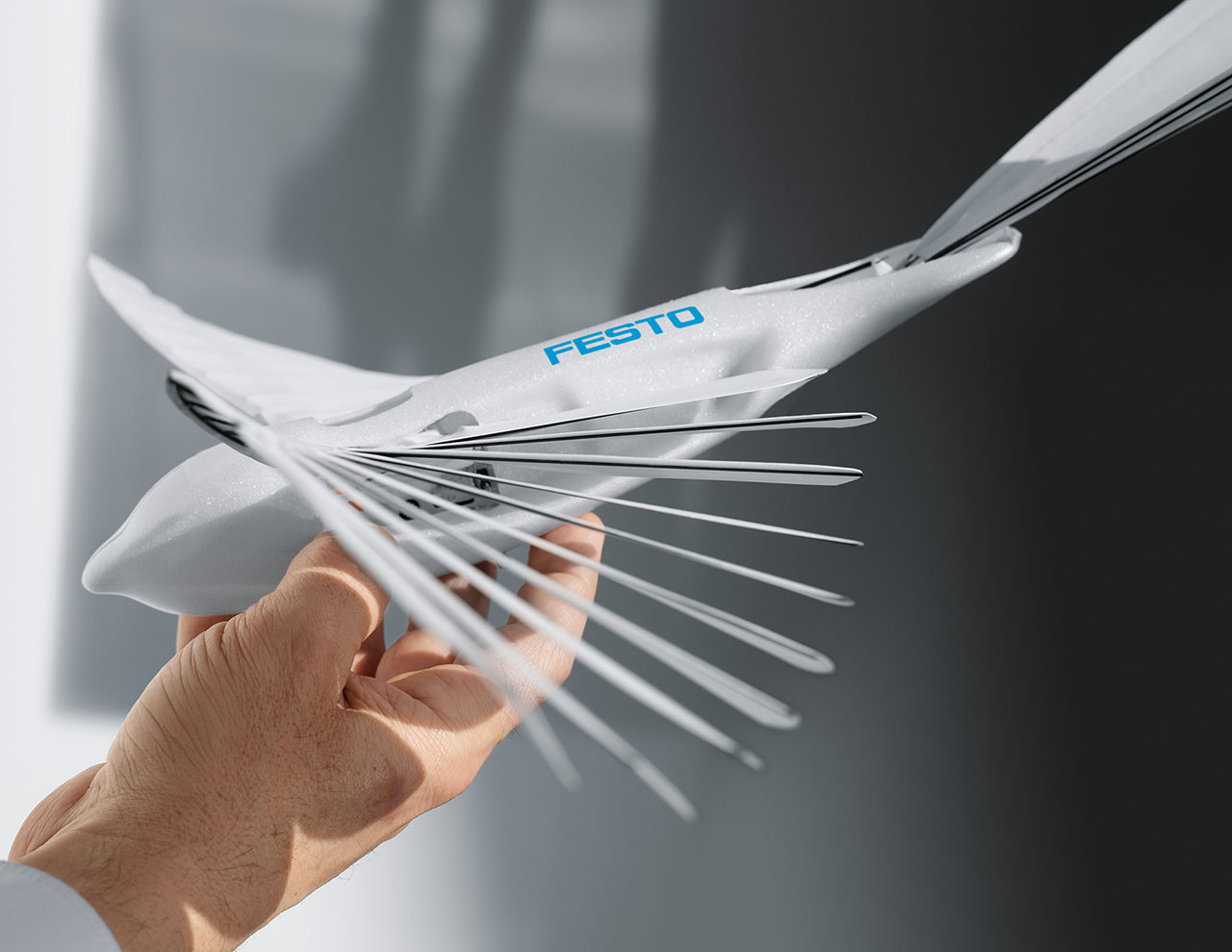
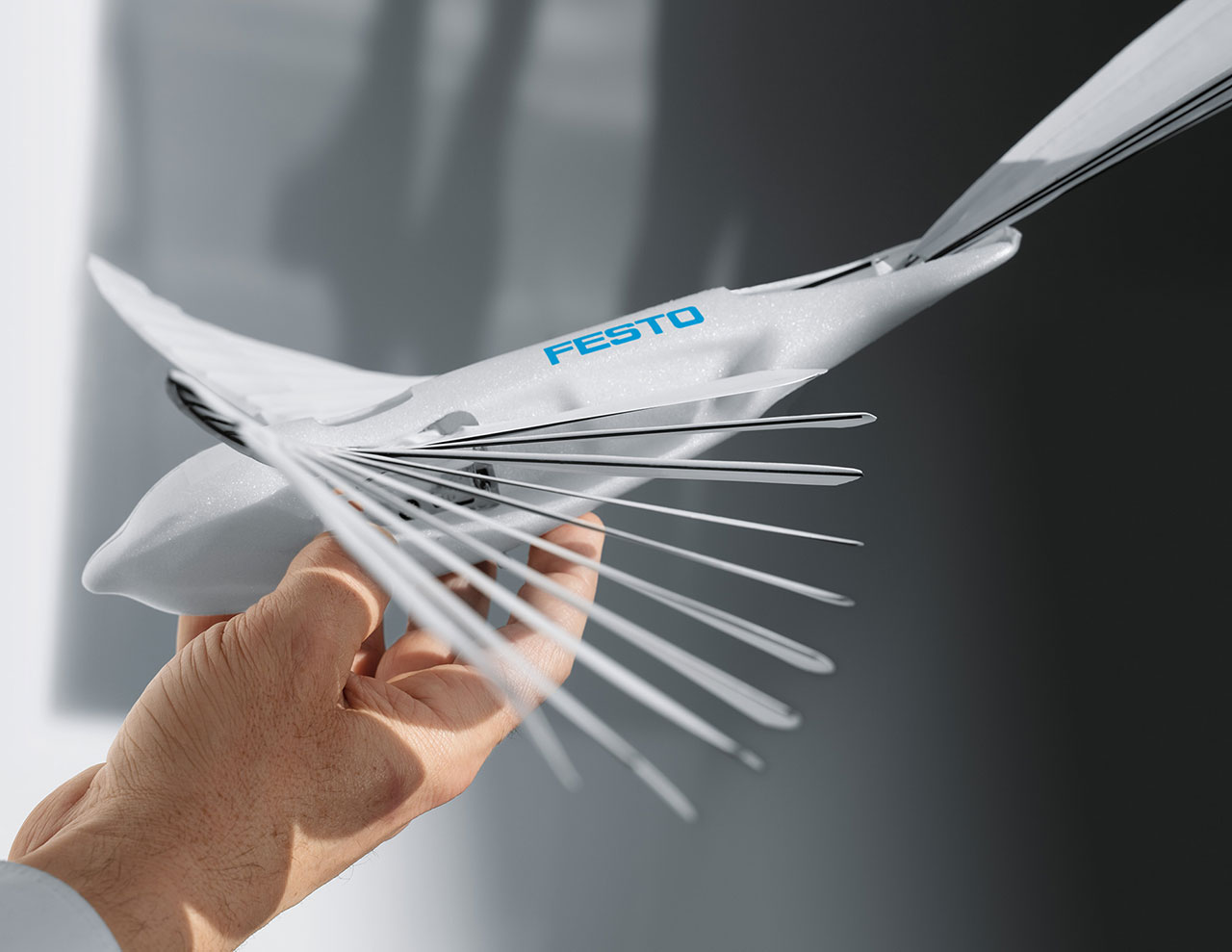
Unlike other robotic birds, Festo’s BionicSwift has a radio-based indoor GPS with ultra-wideband technology (UWB) to allow it to fly safely and in a coordinated pattern in a defined airspace. Its wings are modeled after the plumage of real birds and weighs just 42 grams despite having a body length of 44.5 centimeters as well as a wingspan of 68 centimeters.
In order to replicate natural flight, the wings boast individual feathers made from a flexible ultra-lightweight, but very robust, foam, that overlaps each other. Connected to a carbon quill, they are attached to the actual hand and arm wings just like its real-life counterpart. The individual feathers fan out during the wing upstroke, enabling air to flow through the wing, and then close during the downstroke to provide the flying robot with a more powerful flight.

- Who doesn't love robots? Introduce kids to the creative world of coding with the best educational STEM toys to foster their curiosities. Building...
- Includes 847 LEGO pieces that kids can build and rebuild into 5 cool multifunctional models. The best and most popular robotics toys for 7-12 year old...
- Construct and code Vernie the Robot to dance, rock out on the Guitar4000, foster Frankie the Cat, interact with the Autobuilder, or explore a new...
The intelligent networking of flight objects and GPS routing makes a 3D navigation system that could be used in the networked factory of the future. For example, by precisely locating the flow of materials and goods, process workflows can be improved and bottlenecks can be predicted. In addition, autonomous flying robots could be used for transporting materials, with their flight corridors a way of optimizing the use of space within a factory,” said Festo.
