
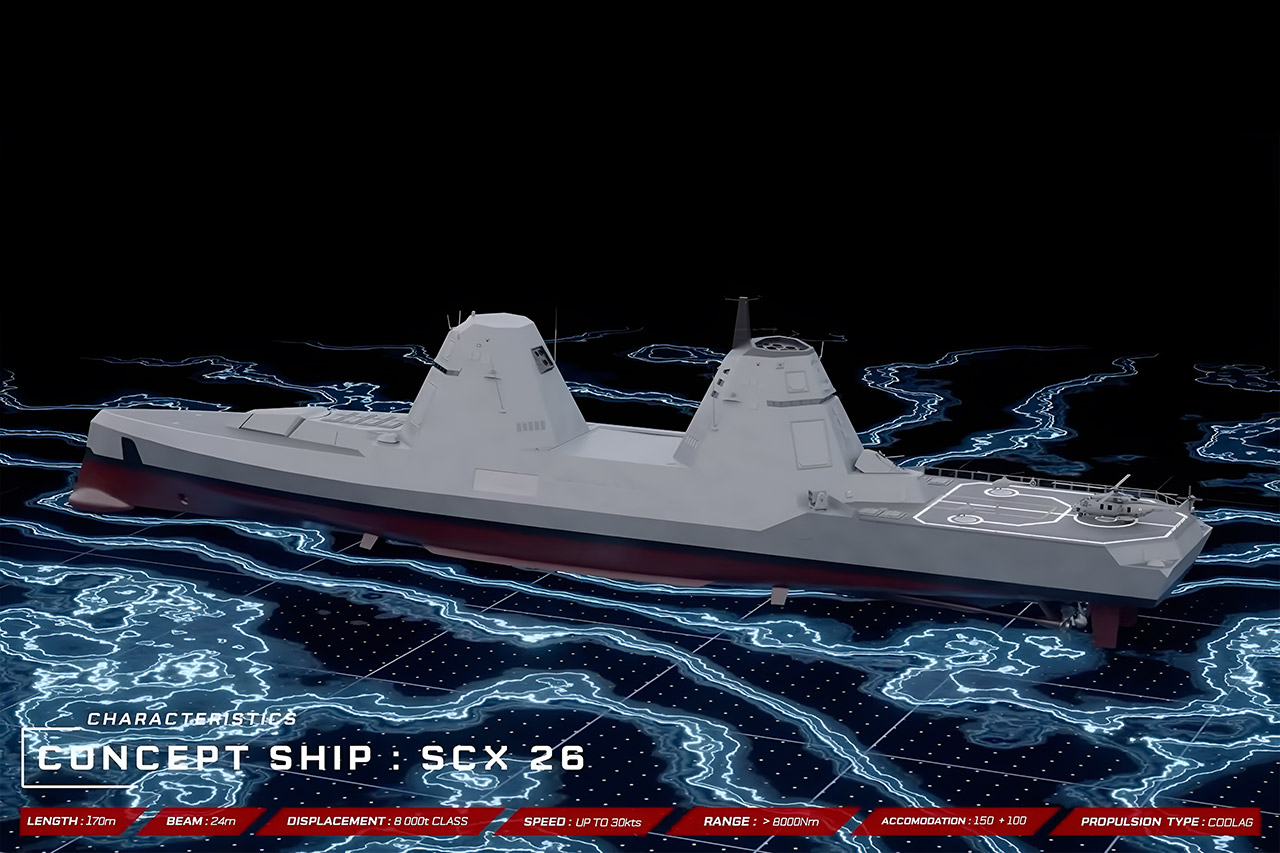
Naval Group placed a 170-meter concept ship, called the SCX 26, on display at Euronaval 2026 that measures roughly 8,000 tonnes and is drawn for speeds of 30 knots with a range beyond 8,000 nautical miles. The design places two large, widely separated superstructures along the hull, each carrying its own bridge and mast so sensors, antennas, and command functions stay distributed. A single hit or electronic failure on one section therefore leaves the other able to continue operating, while the spread of equipment also reduces mutual interference among radar and electronic warfare systems.
The bow and stern parts contain almost a hundred vertical launch cells of various types. A closer examination at the ship’s model and blueprints reveals that it has a base fit of twelve Sylver modules, totaling 96 cells, eight in the front and four in the back, meant to carry Aster 30 interceptors and MdCN land-attack cruise missiles. That’s not all; there’s also room for additional short-range CAMM missiles in those same modules, as well as future launcher modules that could be slotted into the flexible central area, potentially pushing the total past 100 and up to 128.

- Ultra-Light, Palm-Sized Foldable Design - Compact and foldable, this palm-sized drone slips easily into a pocket and offers 42GB of internal storage...
- 1-Inch CMOS With 4K/60fps HDR Video - 1-inch CMOS sensor captures 4K/60fps HDR video with sharp detail and vibrant colors for stunning high-quality...
- True Vertical Filming & 225° Flexible Gimbal Rotation - Capture creative footage with a gimbal that offers true vertical filming and 225° roll...
It has a high powered gun for firing rapid successions of bullets, as well as a 57mm gun mount, and two multipurpose launchers for short range missiles, guided rockets, and decoys. They’ve also put a 100 kW laser on the front superstructure, which is aimed for taking down drones and other cheap targets, doing so by concentrating all of its energy on them, so you don’t need to fire off pricey missiles for every approaching threat.
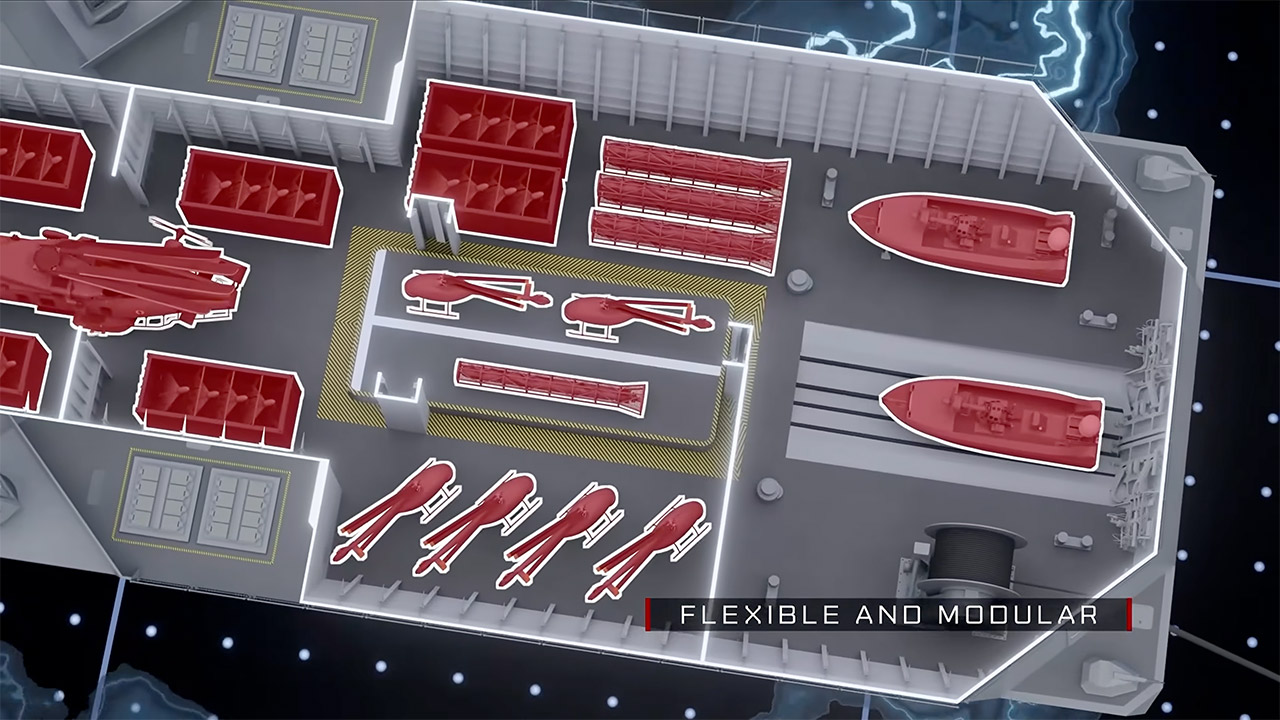
A massive mission bay at the back of the ship takes up roughly one-third of its length and connects to a wide flight deck via a high-capacity elevator. This area has all of the necessary equipment for lifting, preparing, maintaining, and recovering airborne, surface, and subsurface drones, as well as helicopters. There will also be on-board 3D printers for creating spare components, allowing the ship to alter its unmanned force for surveillance, electronic warfare, anti-submarine work, and force protection as the mission evolves.
The ship employs a combined diesel-electric and gas-turbine propulsion system that can supply the electric drive, which is useful for remaining silent while conducting anti-submarine operations at cruising speeds, and the extra power from the gas turbine is useful for reaching higher speeds or powering all of the energy-hungry weapons and sensors. They intend to have a core crew of 150 people and up to 100 additional professionals to handle fleet leadership, intelligence, and direct management of unmanned vehicles.
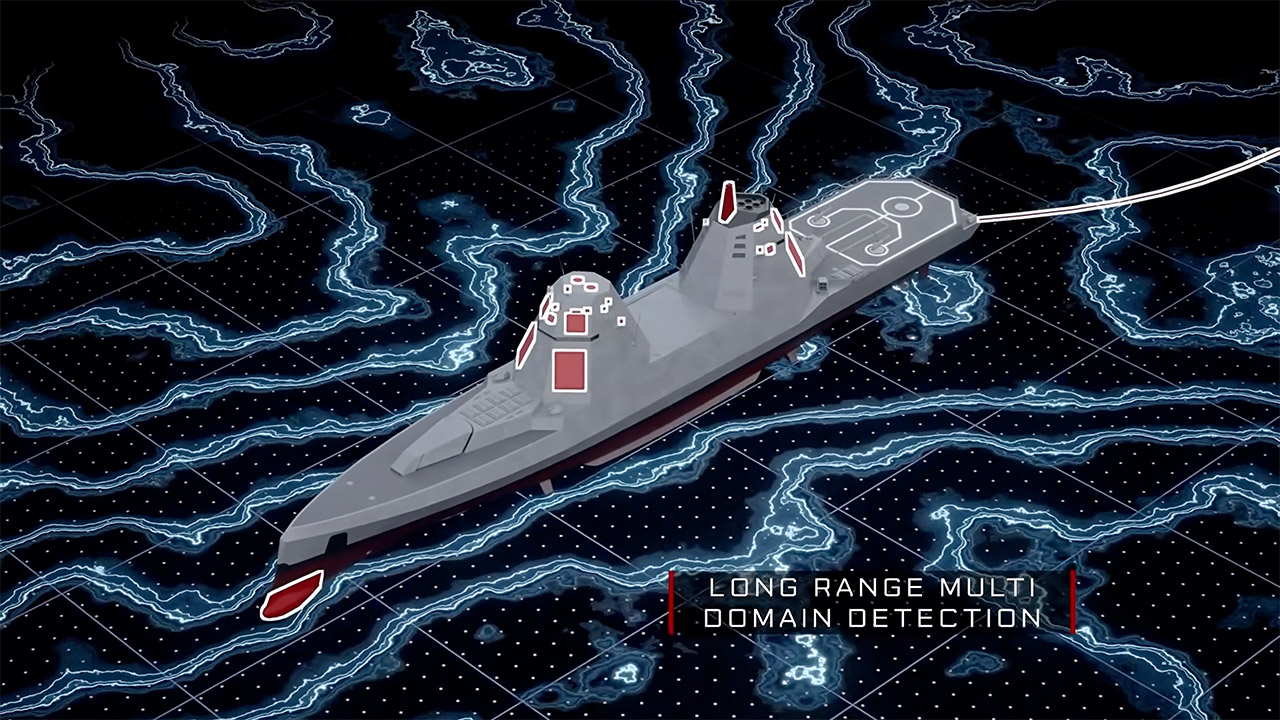
They’ve outfitted it with a UHF radar for detecting long-range threats such as ballistic and hypersonic missiles, as well as a Sea Fire-type active array for a more precise picture of what’s coming your way, a full sonar suite with both hull-mounted and towed arrays, and a plethora of electronic warfare equipment. The complete structure is meant to function as both a strike platform & a coordination hub, so you can hook up with crewed vessels and all the unmanned systems out there in air, sea and underwater.
The SCX 26 is described by Naval Group as a forward-looking look at the future rather than an actual funded program or building project, as they are simply exploring what the surface combatant of the 2040s might look like when confronted with a variety of threats such as saturation missile attacks and swarming drones. They’ve already begun testing hydrodynamic models, as evidenced by the twin-superstructure configuration, the modular central area, and the emphasis on distributed systems and energy weapons, all of which reflect lessons learned from recent conflicts in which having a single weak point in your systems or a limited ammo supply can be extremely costly.
[Source]