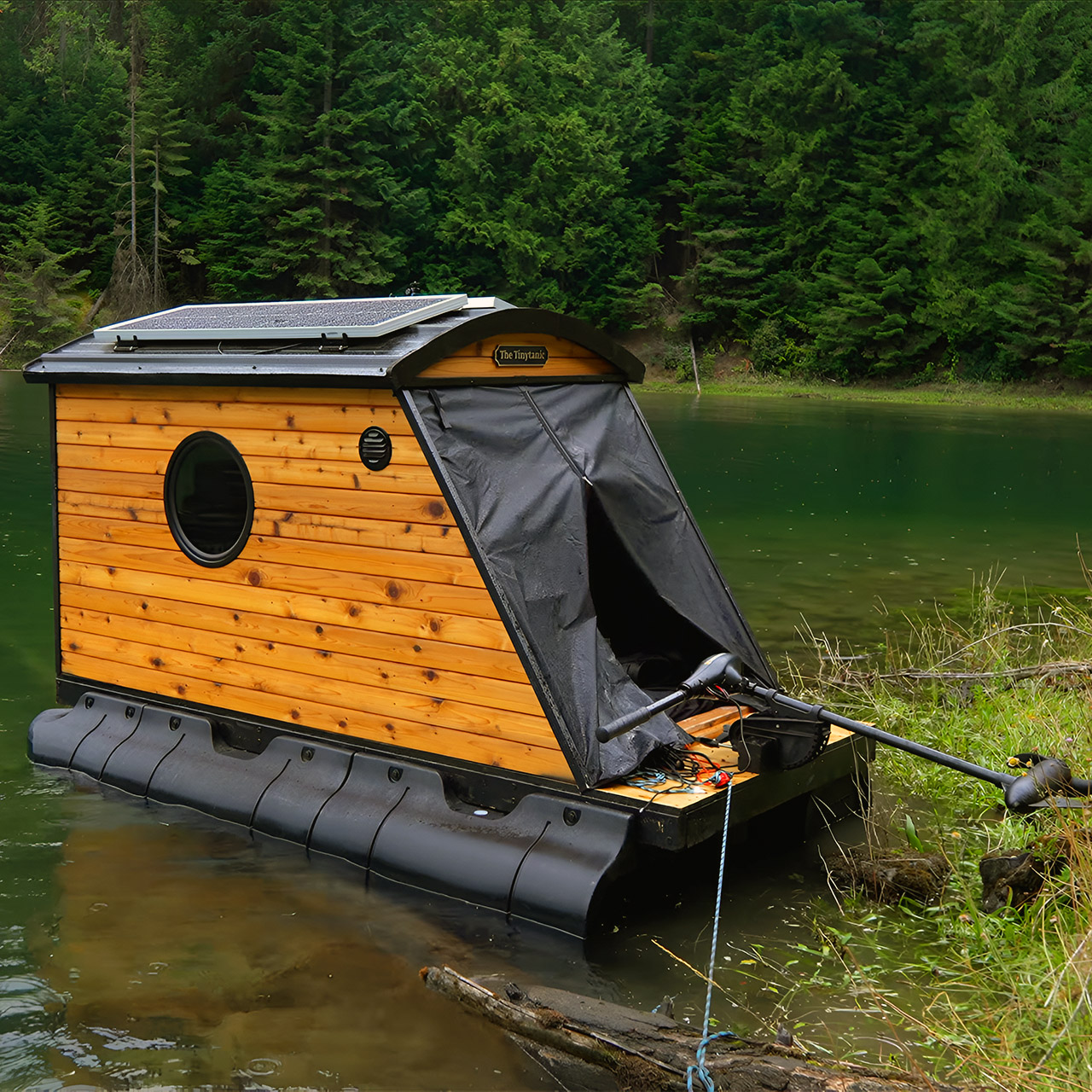
David Rule has spent years shrinking living spaces until they barely qualify as rooms. His latest project takes that habit onto the water. Named Tinytanic, the vessel measures eight feet long and three and a half feet wide, delivering roughly twenty-eight square feet of usable interior. Built from weather-resistant cedar on a set of compact pontoons, it sits low enough to ride in the bed of an ordinary pickup truck.
Inside, the ceiling height barely scrapes above 42 inches, so you’re mostly trapped sitting or lying down rather than standing up. Layout-wise, the boat still manages to squeeze in a full-size bed platform, a ridiculously narrow counter that tries to serve as both kitchen and storage, a 12V fridge, a small single-burner butane stove, and a sink with a tiny electric pump and filter that simply scoops up water straight from the river or lake. And get this: gray water gathers in the most basic of jugs rather than draining overboard.

- Brand-Oriented and Outdoor Charger Pro: With over 10 years of experience in solar power banks, BLAVOR has already gained the favor and trust of...
- Leading USB C Input Output Tech and Wireless: The latest upgrade includes a USB-C output with 20W fast charging capability, which can charge your...
- Premium Battery and Smallest Solar Charger: BLAVOR uses the safer Lithium-cobalt battery, which is 50% more cycling times than a normal Li-polymer...
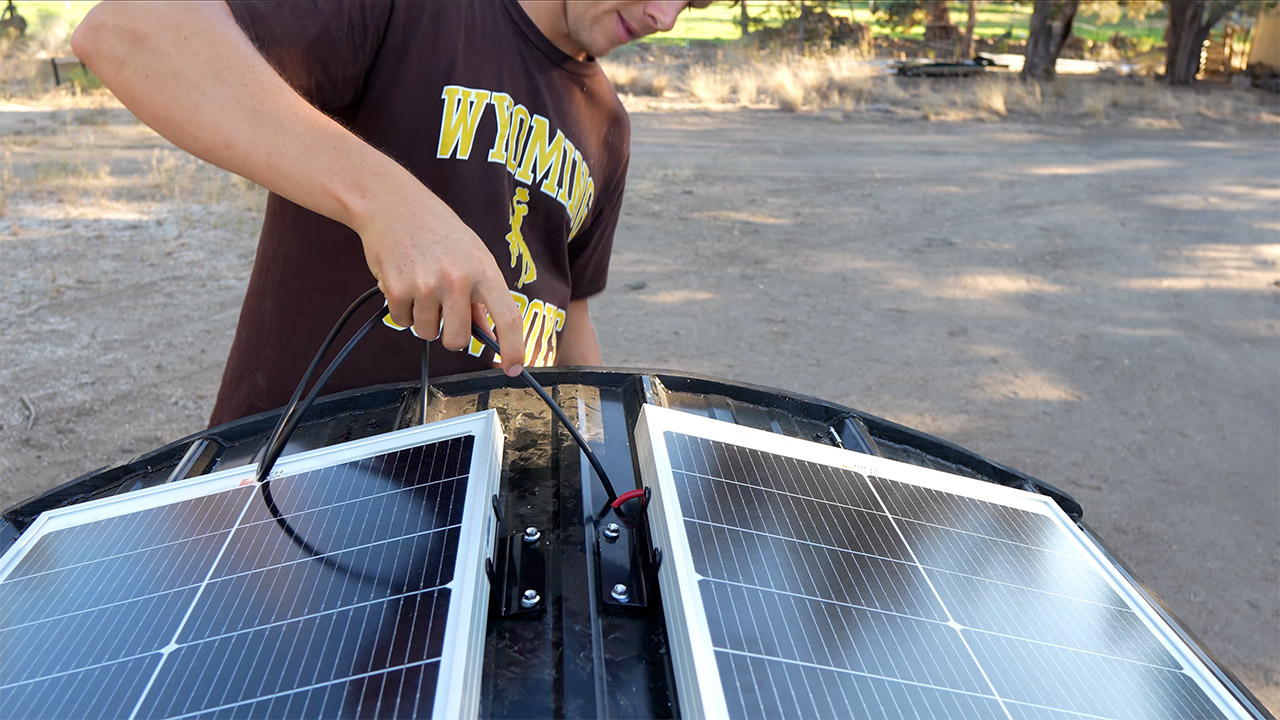
Two 100W solar panels affixed to the aluminum roof provide power for the boat. These panels use a charge controller to provide electricity to a 100 amp marine lithium battery. The same battery powers the LED lights, a 12V fan, USB charging, and a Minn Kota trolling motor capable of producing 30 pounds of force. On still water, the motor pootles along at about the same speed as a human walking. Rule did his best to keep consumption under control throughout the testing phase by just floating with the current when possible and turning off unnecessary loads.
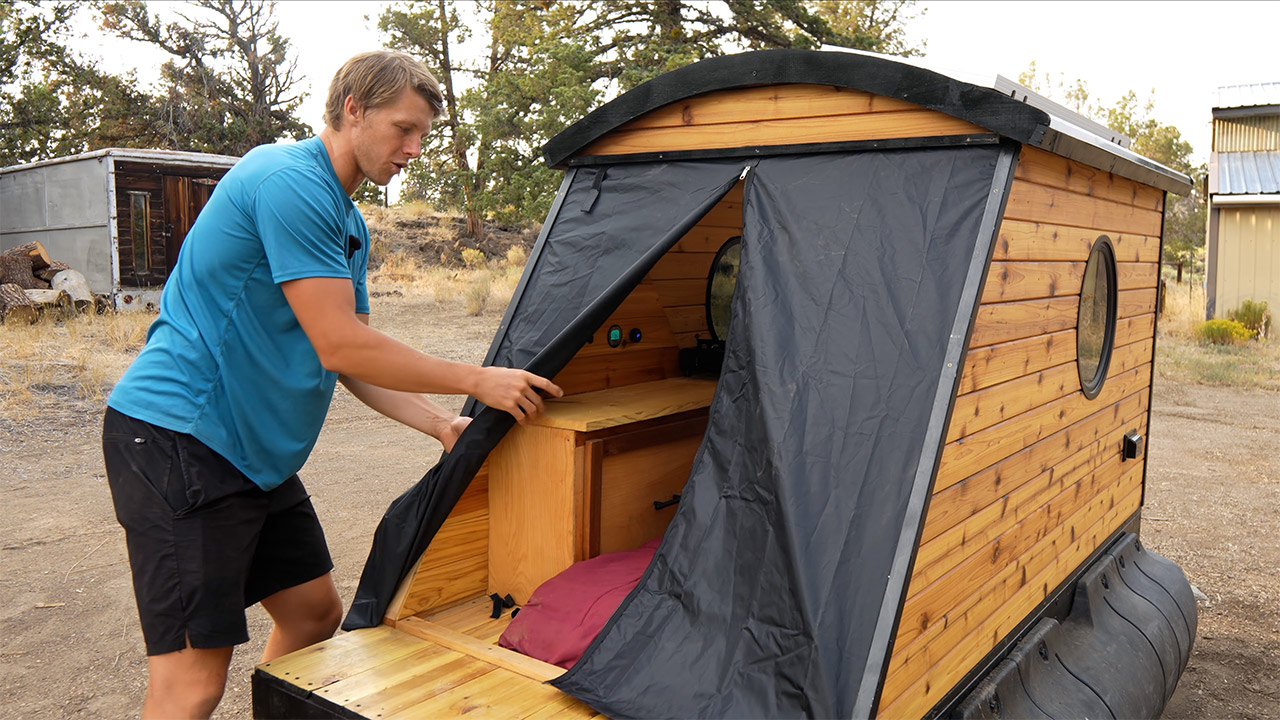
The side wall features a zipper that opens to a canvas panel, allowing fresh air in, while a tiny ceiling vent and a fan try their best to waft the stale air away. There are round side windows and a big polycarbonate panel up at the bow that allow for plenty of natural light and river views without adding a single pound to the boat.
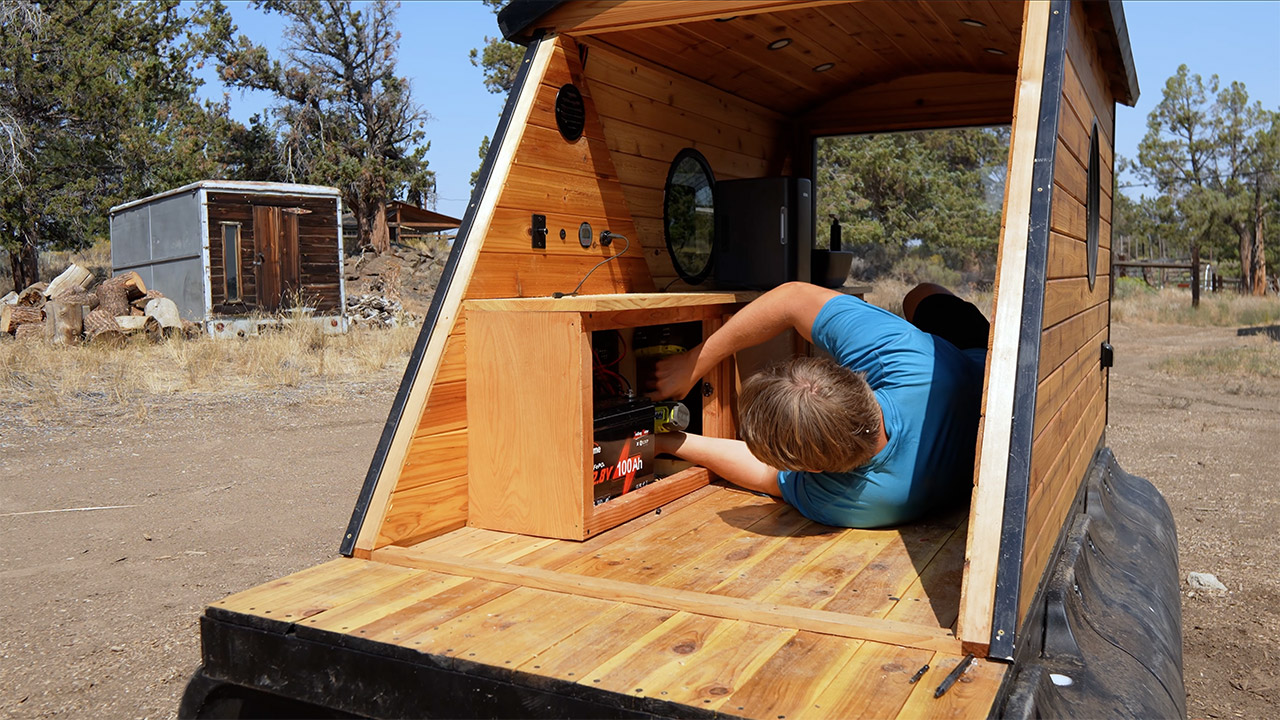
Rule has stated that he got the idea for the boat after watching YouTuber Zach Fowler’s previous 35-square-foot fishing houseboat, which was already, by all accounts, quite extreme. So he reduced the length, narrowed the beam, and maintained all of the essentials. The pontoons and an aluminum frame that bolts together were made initially, followed by the tongue-and-groove decking, framed walls, and arched ceiling.
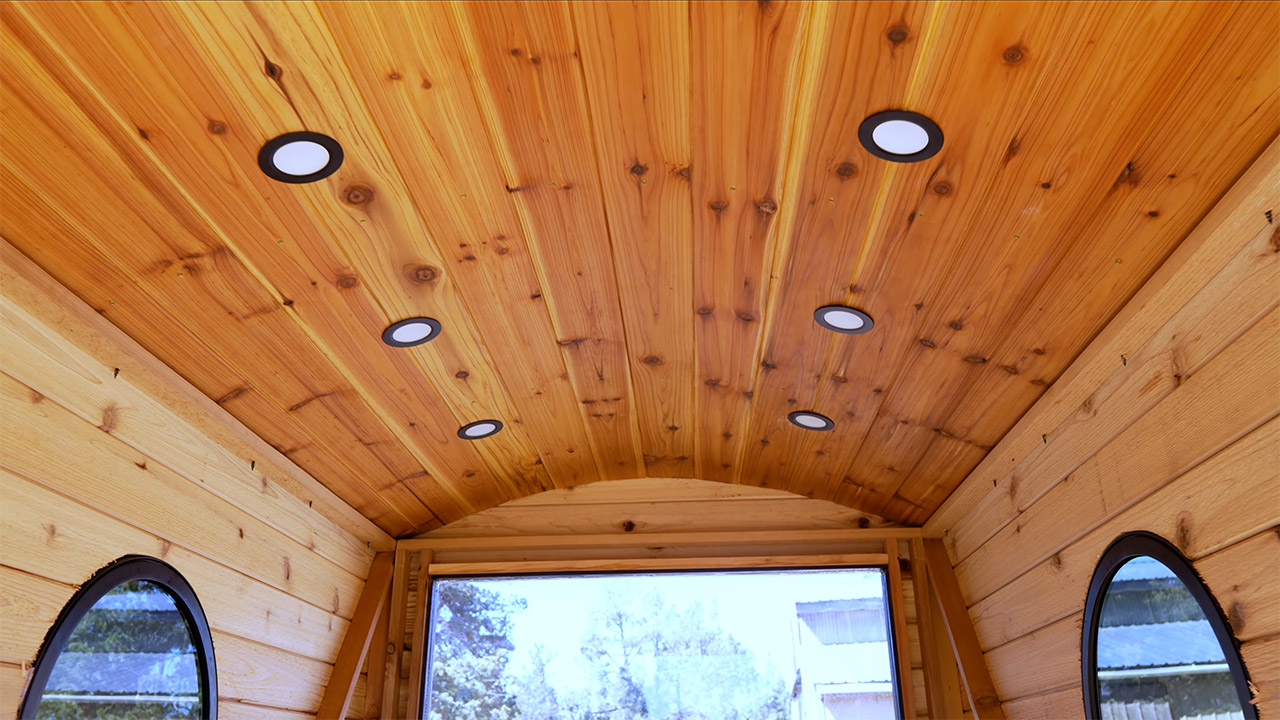
Round portholes were inserted into the sides, and the front window was sealed with polycarbonate. The inside cabinetry kept things slim, allowing the bed to take up only one long side and the cook station to occupy the other. When the weather turns nasty, the back is sealed off with a waterproof zipper door.
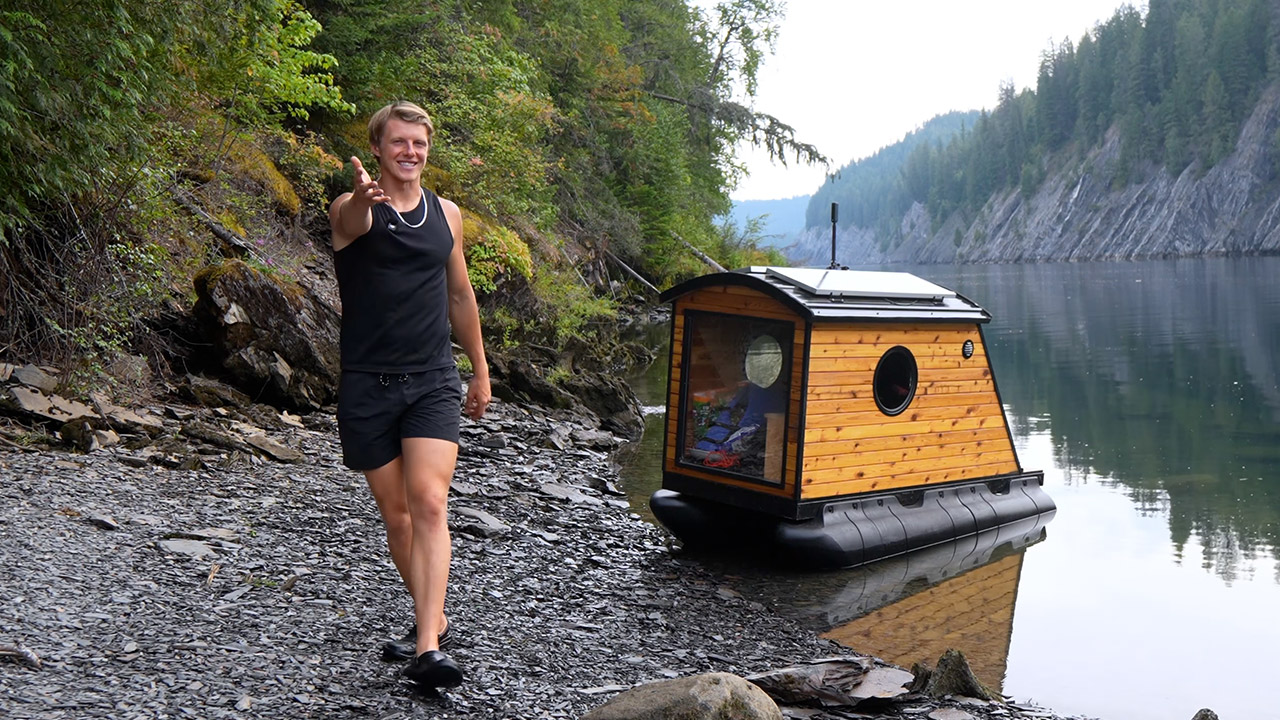
Rule took the boat out on the Pend Oreille River in Washington for its first journey, covering around 12-19 miles from Metaline Falls to Peewee Falls in three days, sleeping the entire time at small boat-in sites along the canyon. He made modest meals, filtered his drinking water, fished a little, and slept nites under the extremely low wood ceiling, all while being rained on and watching his reservoir levels rise.
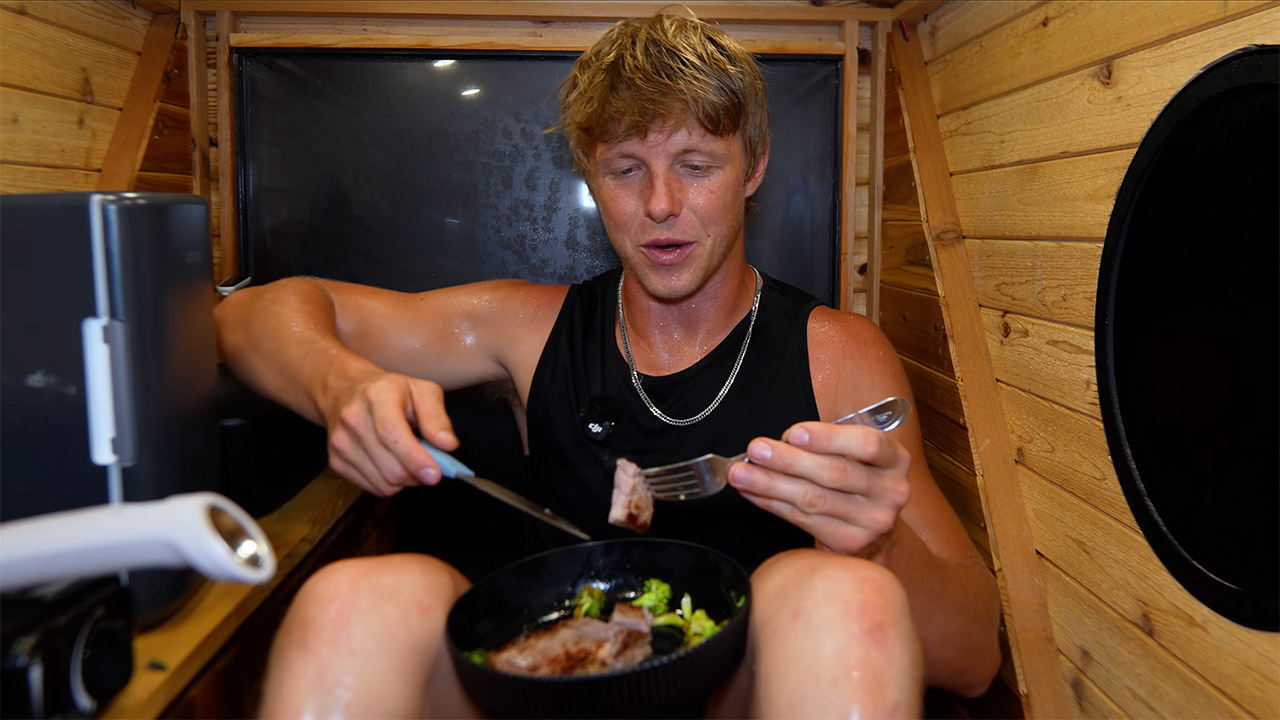
The hull remained rock stable, and the solar input continued to produce useable electricity even on overcast days. Constant engine use made him more cautious about rationing, mostly because it would eat away at his solar input. People later claimed that any shade on the panels, even from a camera mount, would significantly reduce output on a yacht of size. Rule’s footage just shows the boat pootling along under its own power while remaining dry inside.