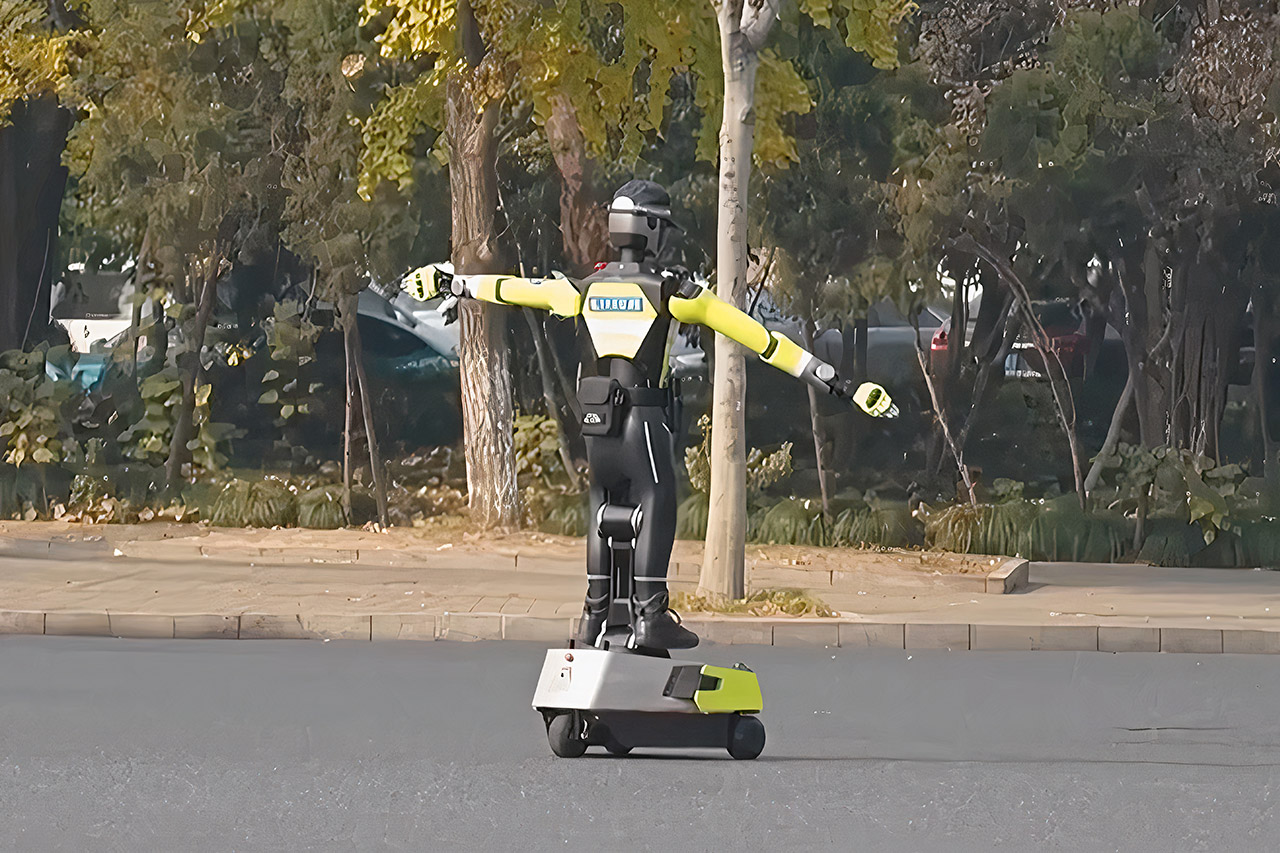
Hangzhou, home to a stunning 12 million people who are continuously speeding around town on motorcycles and in cars, has had one major issue: getting traffic to flow smoothly at crossings. However, a new high-tech traffic officer has recently appeared at the intersection of Binsheng Road and Changhe Road in the Binjiang area, and it has sparked much discussion among locals. They’ve named it Hangxing No. 1, and it’s a genuine oddity: a 1.8m-high traffic robot with arms sticking out at all directions.
Now, the facts on this beast are fairly impressive: it’s on wheels, can zoom across the road with ease, and has a bunch of cameras on its head that give it a bird’s-eye view of everything going on. Sensors under its wheels are ready to detect even the smallest movement, and a loudspeaker on its screen face warns anyone who listens. Engineers spent hours studying the body language of genuine traffic officers, video them directing traffic with their arms or simply standing still. The robot then responds in perfect rhythm with the traffic lights, with one arm raised for “start moving” and both arms crossed for “halt in your tracks.”

- LEGO SET FOR ADULTS – The WALL-E and EVE (43279) building set offers adults 18 years old and up an immersive construction challenge featuring...
- 4 DISNEY PIXAR CHARACTERS – Builders can create iconic robots WALL-E, EVE, M-O and Hal from the hit movie—each with authentic functionality like...
- MINDFUL BUILDING EXPERIENCE – This detailed construction set lets builders practice advanced construction techniques for an immersive and relaxing...
When Hangxing No. 1 first began tossing its weight around, the entire streetside crowd gathered to witness. The robot even noticed a scooter rider who was not wearing a helmet and spoke quietly with them to point out their mistake: “Please wear your helmet for safety,” the robot stated. And when pedestrians attempted to cross while the lights were red, the robot simply responded, “Wait for the green light.” Details of the Binjiang traffic brigade are already coming in, and they report that even in a city where every second matters, compliance rates for observing the rules have increased from 82% to 97%, a minor but welcome win.
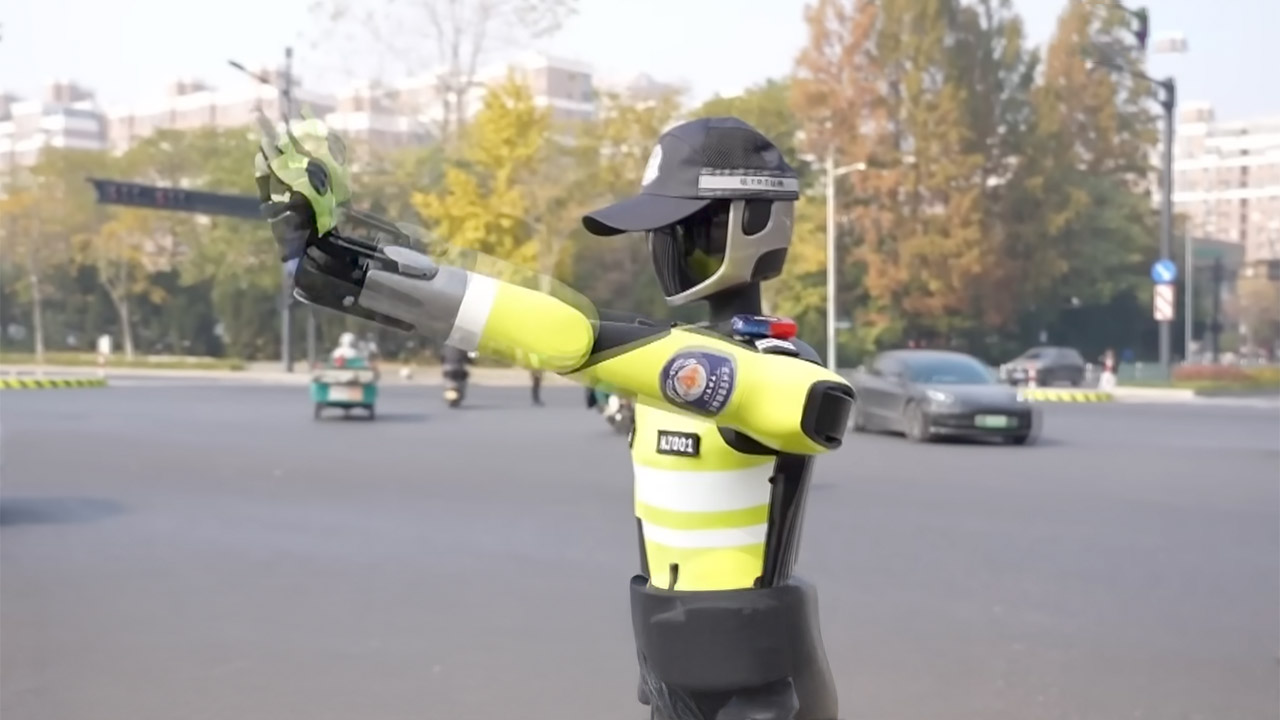
Behind the scenes, the software is in complete control, always monitoring for potential problems. The cameras send live footage to an AI system, which detects problems as they occur, such as a car creeping over the stop line, a person taking a shortcut while the lights are red, or a cyclist getting too close to traffic, and immediately logs the incident, sending the details to the police database for record keeping. Meanwhile, an officer is normally on-site to keep an eye out during the early shifts, springing into action only if the AI’s gentle warnings fail to have the desired impact. Zhang Wanzhe, a member of the brigade’s staff, detailed how the system improves over time, reviewing footage from peak hours to assist strengthen its judgment calls. The initial experiments began in October at multiple crossings, working out problems like as false alerts produced by shadows or gusts of wind.
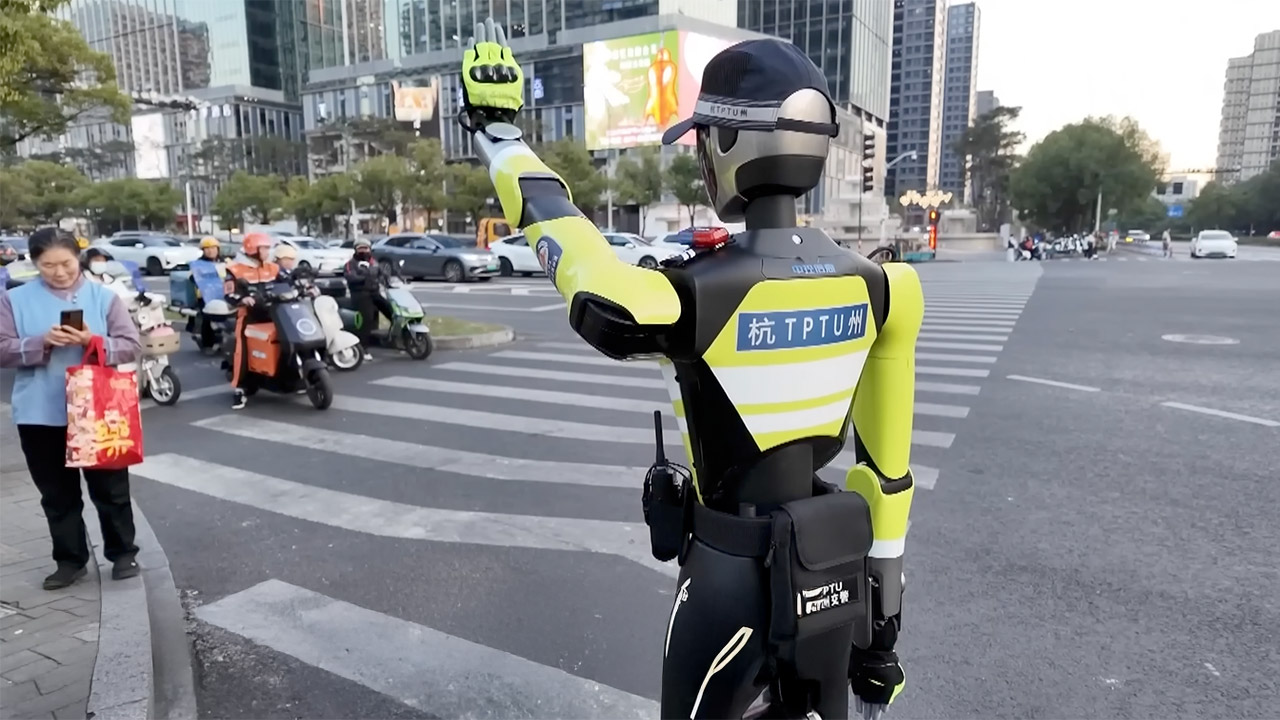
The battery pack in Hangxing No. 1 can run the entire device for six to eight hours on a single charge, which is roughly enough time to go through the busiest periods without taking a midday break. If the power runs out, it will automatically return to the next station and plug in, while the humans in charge of the handover take care of the rest. The fact that the system can connect to the larger City Brain network of cameras and data from Hangzhou allows the robot to see the big picture. So, if red lights go out two blocks away, it can transmit an early alert here and help alleviate traffic congestion before it worsens. The developers created everything from the ground up, including the weather-resistant hardware, motion controllers for smooth movements, and even a speech synthesizer that can talk in local dialects.
[Source]