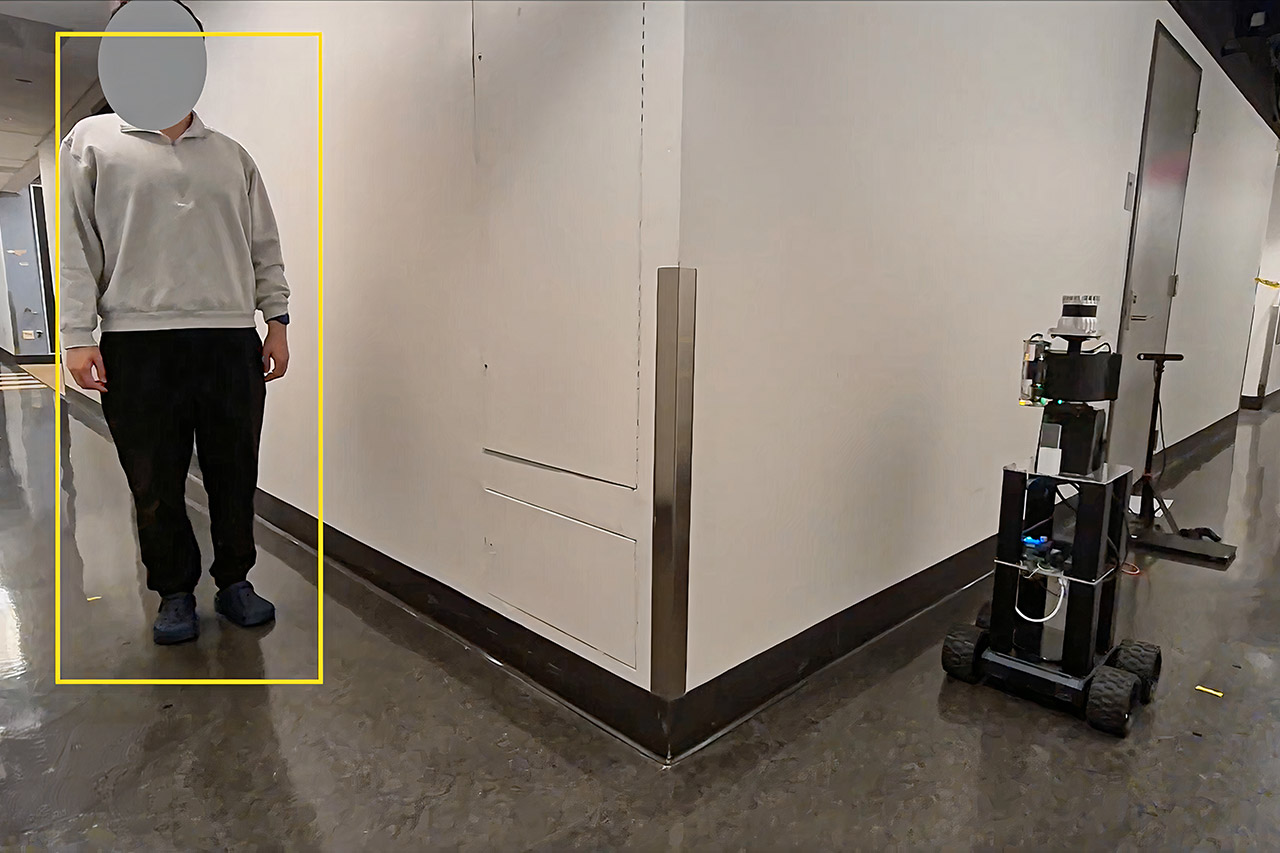
Engineers at the University of Pennsylvania developed HoloRadar, a system that allows a mobile robot to create a 3D map of its surroundings even when it cannot see them directly in front of it. That means that a pedestrian hiding around the corner of a hallway, as well as walls, entrances, and obstructions, will appear on the robot’s map in astonishing detail, thanks to radio signals that bounce off surfaces in the same way that light bounces off mirrors.
Radio waves have a far longer wavelength than visible light, so when they hit a smooth surface like a wall or a tile floor, they simply reflect back out cleanly rather than scattering around the shop. The robot’s small mmWave radar device then sends a pulse and waits for echoes to return. Some of the echoes come directly back from the objects in vision. Others bounce off things before returning, bringing information from regions the robot cannot see. Until today, it was difficult to determine which was which and untangle all of those overlapping returns.

- LEGO SET FOR ADULTS – The WALL-E and EVE (43279) building set offers adults 18 years old and up an immersive construction challenge featuring...
- 4 DISNEY PIXAR CHARACTERS – Builders can create iconic robots WALL-E, EVE, M-O and Hal from the hit movie—each with authentic functionality like...
- MINDFUL BUILDING EXPERIENCE – This detailed construction set lets builders practice advanced construction techniques for an immersive and relaxing...
HoloRadar gets around it in a simple two-step approach. First, a neural network sharpens the raw radar data. It then separates them into independent, high-resolution images for each bounce level, giving you one for direct reflections, one for single-bounce routes, and another for double bounces. This stage effectively lifts the signal and separates all the tangled echoes. Then a physics-based model steps in and determines where everything should go based on how light behaves (or, rather, radio signals). It employs reflection laws, such as Snell’s law, to determine where things are in respect to one another. Finally, a refinement network combines all of the rectified points into a clean 3D voxel map. That map then classifies space as either empty or occupied by a structure or a person.
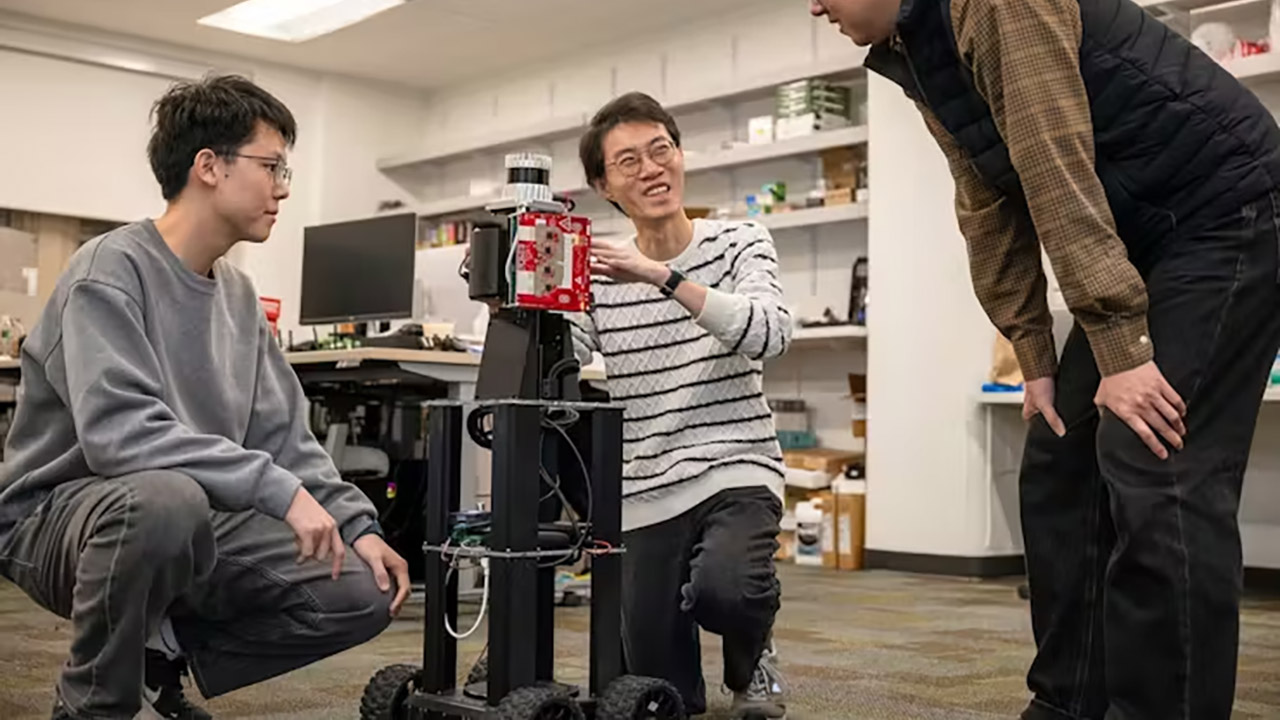
The method was tested in actual corridors, T-shaped, L-shaped, crossroads, you name it, across five different buildings and 32 various corner configurations. The robot rolled through all of them, capturing thousands of scans. When the robot could observe the scene directly, the reconstruction accuracy was 86%. Even while attempting to rebuild scenes it couldn’t observe, the system was able to get it right 55% of the time, which was a significant improvement over previous attempts. In terms of individuals, the robot was able to identify them from behind a corner with an astonishing 93% accuracy and an average error margin of only 14 cm. The entire process occurs in real time, with the robot updating its map every 180 milliseconds or so.
The radar runs on a frequency range of 77 to 81 Ghz, which is commonly utilized in automotive systems, which is good news because it eliminates the need for any elaborate environmental preparation. There’s no need to set up extra transmitters or special surfaces; simply place the robot inside and let it start moving and scanning. With each stride, it has a deeper understanding of what is going on around it, which is quite useful.
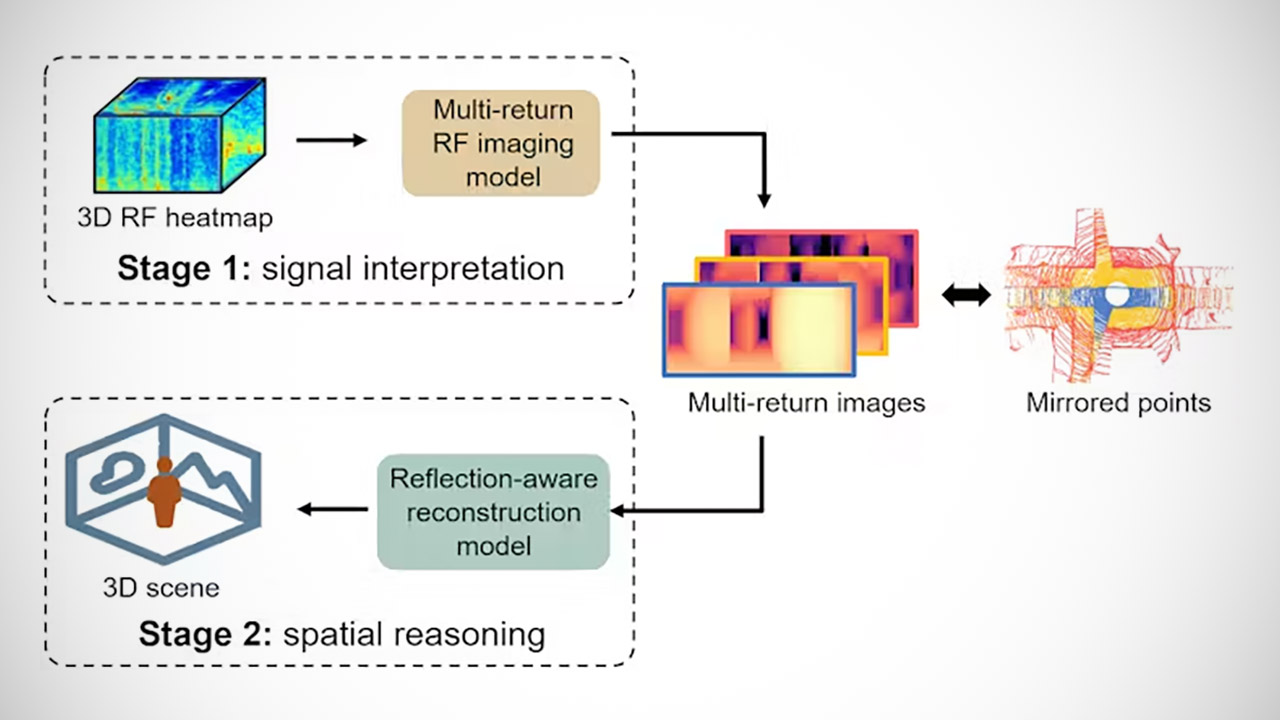
Photo credit: Sylvia Zhang
It’s not just about getting from A to B; autonomous vehicles can gain a critical few seconds to react to someone flying out of a side roadway or a blind driveway. Search and rescue robots can scan the ruins of a collapsed building and locate persons trapped in small spaces without relying on cameras, which do not work in smoke or darkness. Warehouse robots may even be able to anticipate when someone is about to step out from behind a shelf, thereby reducing the amount of collisions that occur in busy areas.
[Source]