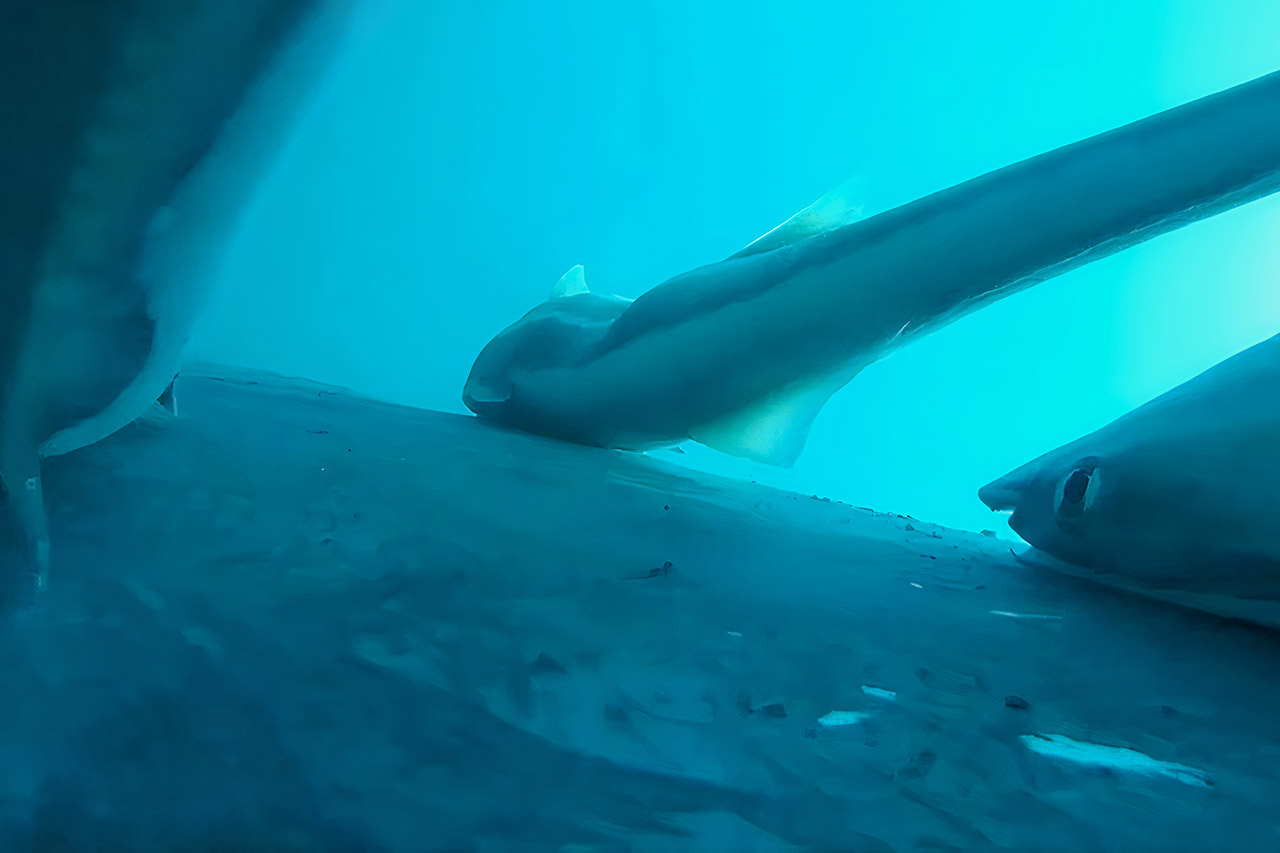
Dr. Olaf Meynecke just wanted to see humpback whales migrate. So, he attached small suction-cup cameras to their backs along Australia’s eastern coast to record feeding patterns and social calls on the long journey from Antarctica to Queensland. Instead, the lenses filled with fish.
Dozens of remoras – flat-headed hitchhikers also known as sucker fish – clogged each frame. Up to 50of them were attached to the exact spots where the cameras were positioned, turning a study of whales into an unintentional documentary about the creatures that ride them. Remoras can’t swim far on their own. A plate of flexible tissue on top of their head acts as a suction cup, allowing them to attach to sharks, turtles, dolphins or in this case a 40 ton humpback doing 30 km/h. Whales become living taxis, transporting fish thousands of kilometers while remoras feed on dead skin flakes and sea lice.
No products found.
When a whale decides to breach, it surges upward, releasing every remora as the surface fractures. They peel off in perfect sync, hover for a second, and then snap back when the whale crashes down. The cameras see them twisting in the water, realigning and reattaching to the same spot of skin in seconds. One clip shows the sequence 5 times in one breach, each release and return crisper than the last.
Meynecke watched hours of these excursions, and found that whales with a large load of remoras breached more often than those nearby. Some surfaced, rolled and looked back as if counting passengers. It seemed to be a disgruntled shrug to loosen the crowd rather than play. Scientists call it mutually beneficial. Remoras remove parasites, whales get a free exfoliation. But the videos suggest the whales don’t always agree. A calf covered in fish leapt all afternoon while its mother circled below, calm and fish-free.
[Source]