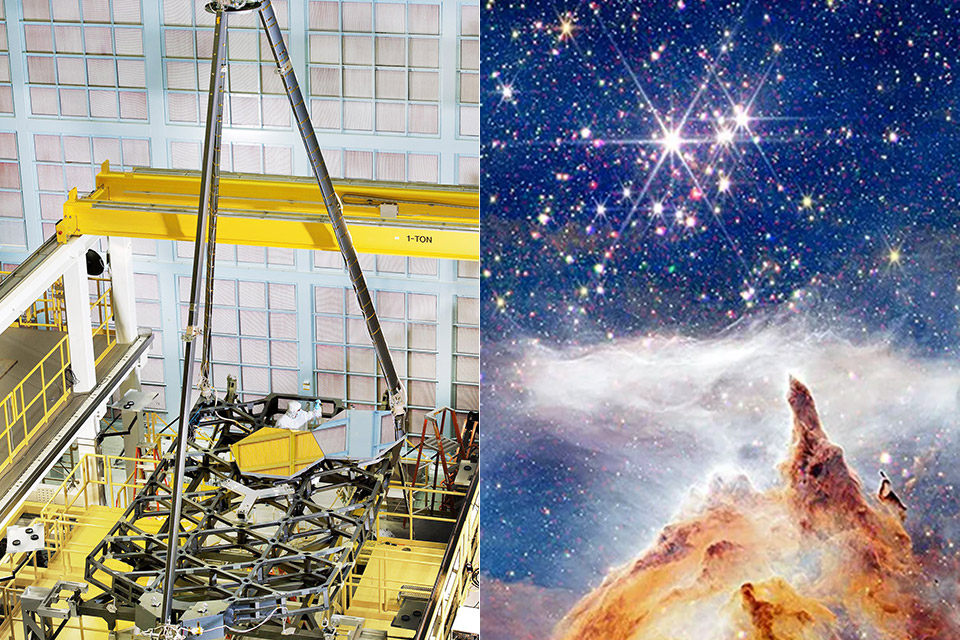
NASA’s James Webb Space Telescope continues to capture views that transport you far into the cosmos, and this latest look at Pismis 24 is particularly compelling. When you combine that with Chandra’s keen eye for high-energy bursts, you have an unmistakable depiction of chaos and creation. Pismis 24 is a young cluster of massive stars that are still in their prime, clustered together in a tight young group around 5,500 light years away in the constellation Scorpius, hidden within the expansive Lobster Nebula section of NGC 6357, one of the Milky Way’s most prolific star formation locations.
That location is where the galaxy prefers to birth its biggest stars, and the radiation and powerful winds from all the newborns are physically carving the surrounding gas and dust into stunning shapes, transforming the nebula into this wild, sculpted environment visible in many wavelengths.

- BUILD AN OFFICIAL NASA ROCKET – Kids prepare to explore outer space with the LEGO Technic NASA Artemis Space Launch System Rocket (42221) building...
- 3-STAGE ROCKET SEPARATION – Young builders can turn the hand crank to watch the rocket separate in 3 distinct stages: solid rocket boosters, core...
- STEM BUILDING TOY FOR KIDS – This educational rocket kit was created in collaboration with NASA and ESA to showcase the authentic system that will...
When Webb stares at it in near-infrared light, taken by its NIRCam camera, the vista resembles a rocky, starlit mountain peak. There are golden brown dust peaks rising up like frozen waves, engraved by the intense ultraviolet light, star gusts, and other phenomena. Wispy clouds extend across the ridges, and dazzling spots of light mark nascent stars that poke through the material. Some infrared light can pierce through the obscuring dust, revealing the delicate textures of gas pillars, the glow of heated molecules, and the outlines of denser regions where stars are still forming.
Chandra’s X-ray data then overlays the image with bursts of red, green, and blue light, each of which is simply tracing out extreme activity – young massive stars are generating these powerful magnetic fields, and rapid rotation is flinging high-energy particles all over the place. The combination creates a tremendously dynamic contrast; Webb shows the colder, dusty cradle where stars form, while Chandra focuses on all the violent outbursts that mark their arrival.
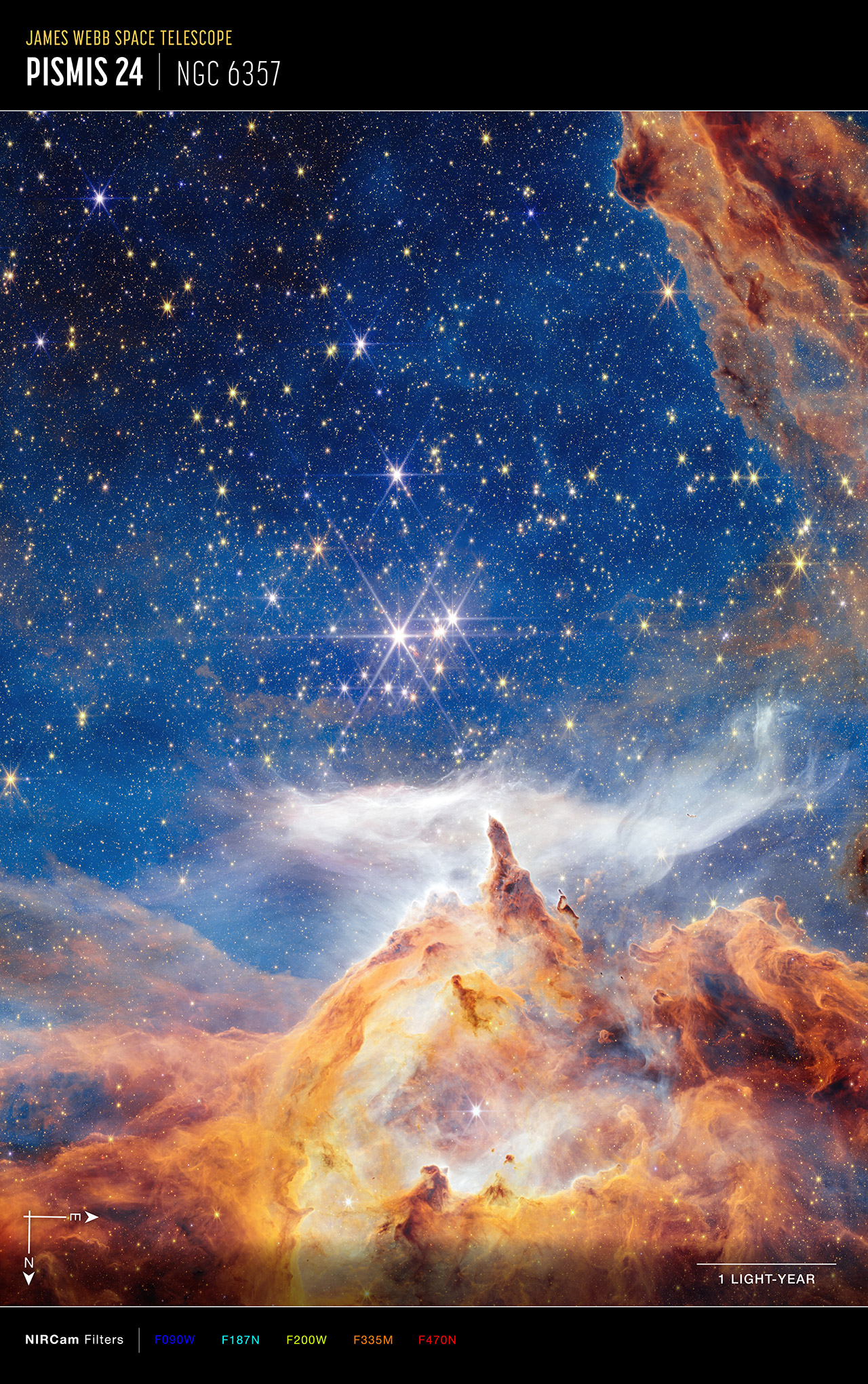
Pismis 24 even has some of the most luminous stars in the galaxy, with their brightest member, which was previously assumed to be a single massive star, turning out to be at least two different stars linked in a close pair. One of them has around 74 times the mass of the Sun, while the other is about 66 times, making them two of the heaviest confirmed. Stars like that just burn extremely hot and quickly, emitting radiation that initiates fresh star formation and disperses all of the raw material required for additional births. The fact that this cluster is only a few million years old implies that these processes are occurring in real time, at least on an astronomical scale.
According to observations, the massive stars in the cluster are actively shaping their environment; their intense output is smashing into the disks around the lower mass stars, destroying proplyds, small protoplanetary systems, and sculpting them into tails that all point away from the giants. The entire region is essentially a window into how extreme stars can affect everything around them, from quickening cloud collapse to making room for future generations.