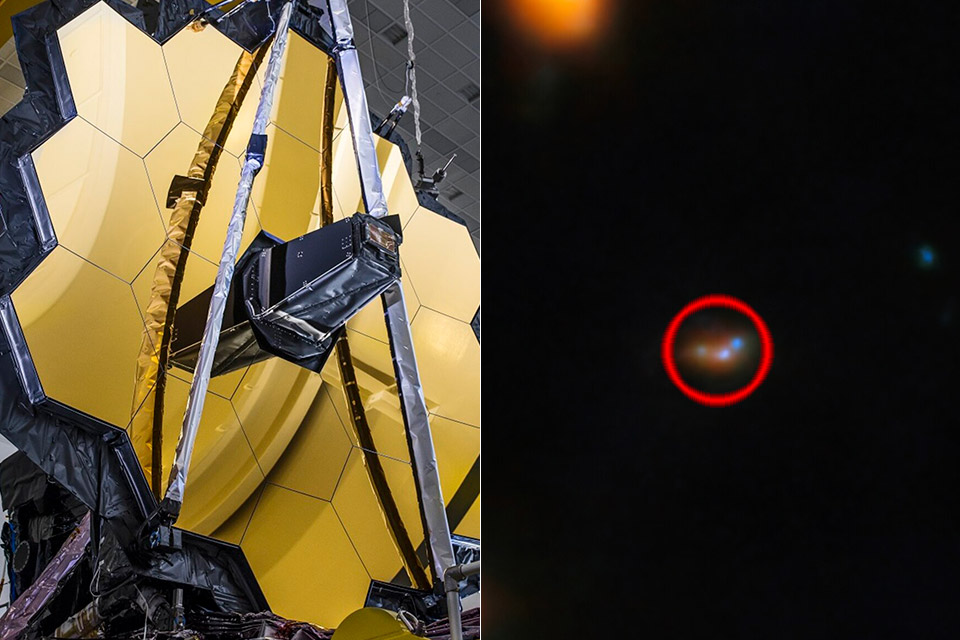
NASA’s James Webb Space Telescope has already captured countless images, but what really stands out are the galaxy mergers. Why? Astronomers have not been able to figure out why they detected light from hydrogen atoms which should have been entirely blocked by the pristine gas that formed after the Big-Bang.
Using new Webb data, they discovered small, faint objects surrounding the very galaxies that show the mysterious hydrogen emission. When this data is combined with state-of-the-art simulations of galaxies in the early Universe, theey show that the chaotic merging of these neighboring galaxies is the source of this hydrogen emission.

- BRIGHT, SHARP VIEWS ANYWHERE: Unlike many beginner telescopes, this quality refractor features fully coated glass lenses and a 70mm aperture for...
- PERFECT FIRST TELESCOPE FOR BEGINNERS: Designed for adults and kids to enjoy together, this beginner-friendly telescope sets up in minutes and...
- EASY NO-TOOL SETUP: No complicated assembly or tools needed. The full-height tripod and telescope tube set up in seconds and pack neatly into the...
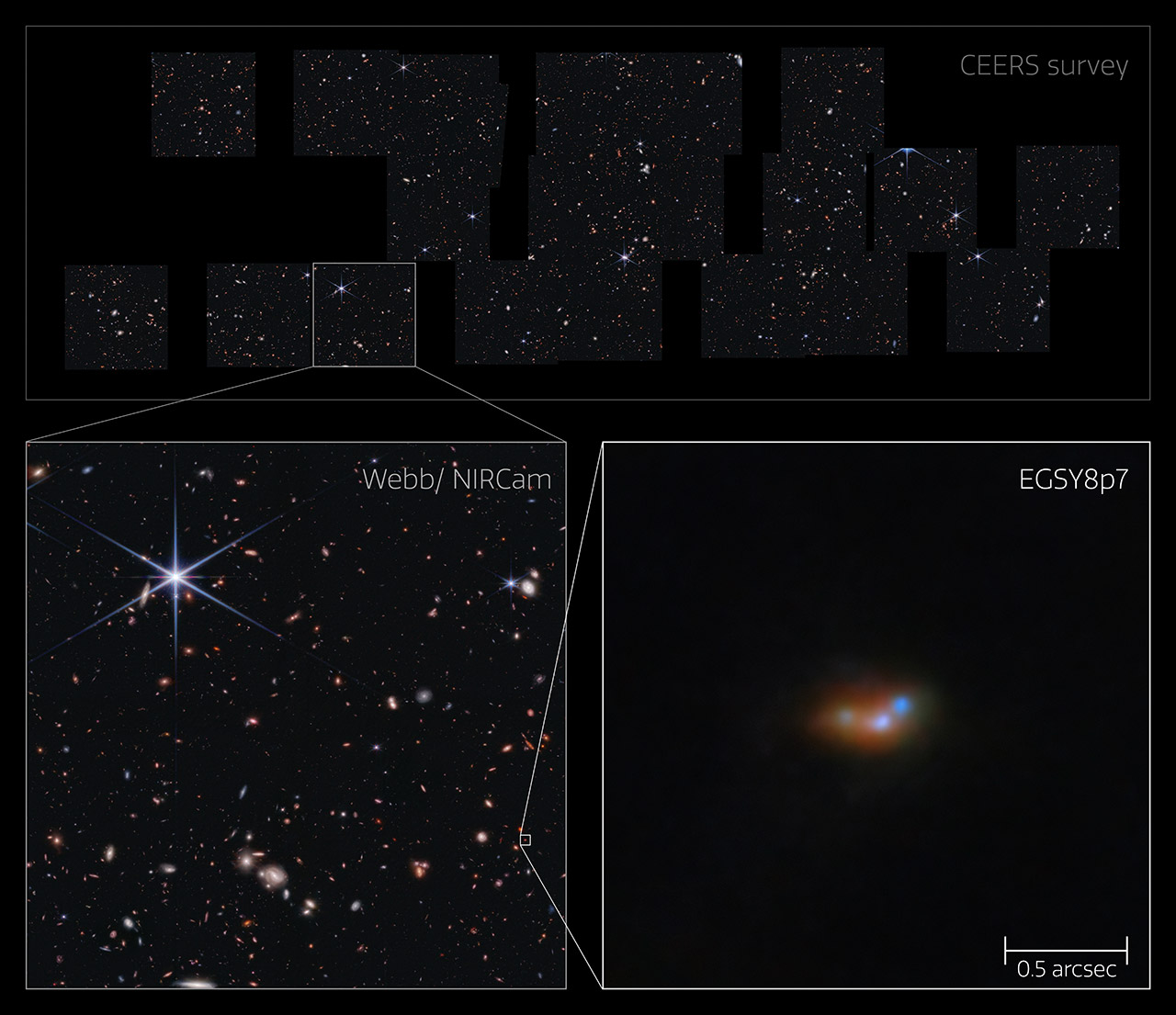
One of the most puzzling issues that previous observations presented was the detection of light from hydrogen atoms in the very early Universe, which should have been entirely blocked by the pristine neutral gas that was formed after the Big-Bang. Many hypotheses have previously been suggested to explain the great escape of this ‘inexplicable’ emission,” said Callum Witten, University of Cambridge Researcher.
[Source]