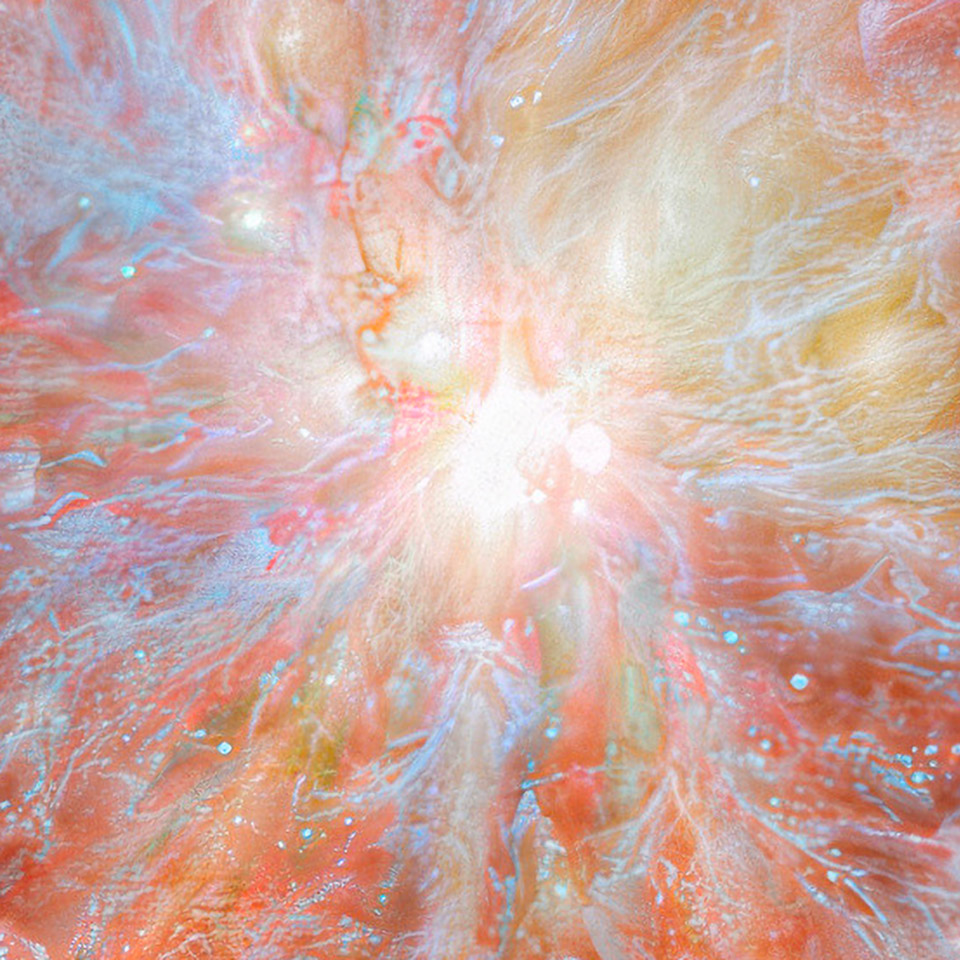
NASA’s James Webb Space Telescope recently observed the H II region in the Large Magellanic Cloud (LMC), a satellite galaxy of our Milky Way. This nebula, called N79, spans 1,630 light-years and is actually a region of interstellar atomic hydrogen that is ionized, as shown by Webb’s Mid-InfraRed Instrument (MIRI).
This region is typically regarded as a younger version of the Tarantula Nebula, which suggests that N79 has a star formation efficiency that exceeds its older counterpart. What we see in this image is one of the three giant molecular cloud complexes, known as N79 South (or S1), where the ‘starburst’ pattern surrounding this bright object is a series of diffraction spikes.

- ADVANCED TECH MEETS ICONIC DESIGN: The NexStar 4SE pairs Celestron’s legendary orange tube with a fully computerized GoTo system—ideal for those...
- 4-INCH MAKSUTOV-CASSEGRAIN OPTICS: The 4" aperture, combined with high-contrast, long focal length optics, delivers sharp views of the Moon and...
- FULLY AUTOMATED GoTo MOUNT WITH NEXSTAR+ HAND CONTROL: Use the NexStar+ hand control to select from a 40,000+ object database. The computerized mount...

At the longer wavelengths of light captured by MIRI, Webb’s view of N79 showcases the region’s glowing gas and dust. This is because mid-infrared light is able to reveal what is happening deeper inside the clouds (while shorter wavelengths of light would be absorbed or scattered by dust grains in the nebula). Some still-embedded protostars also appear in this field,” said the European Space Agency.
[Source]