Concrete surrounds us as the backbone of our cities, but what if the walls of your home could store enough energy to keep your lights on, your fridge running, and your devices charged? At MIT, researchers have turned this wild idea into reality, creating a new kind of concrete that doubles as a battery.
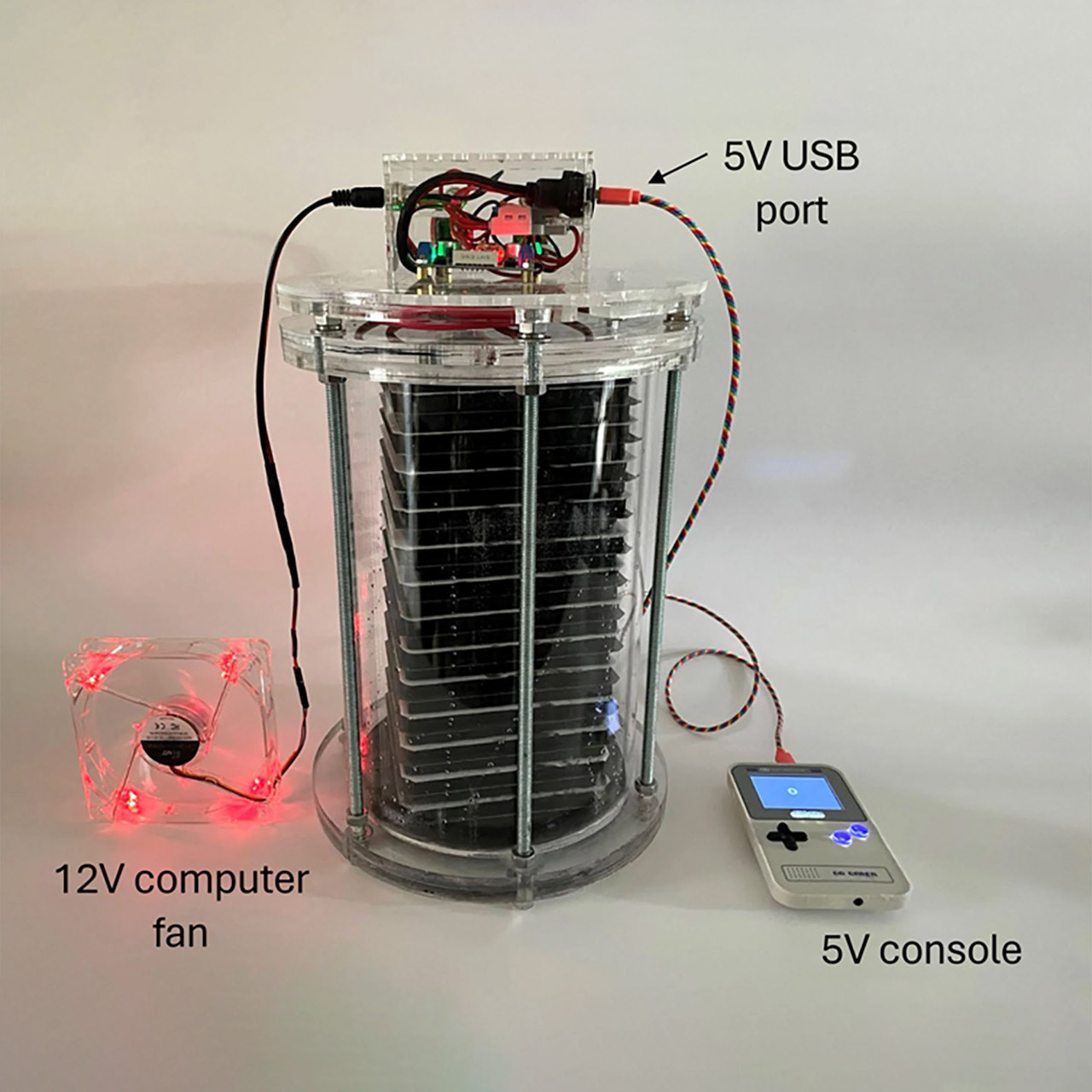
Two years ago, MIT scientists mixed cement, water, and a fine black powder called carbon black to create something they call electron-conducting carbon concrete, or ec3. This wasn’t your average sidewalk slab. By adding an electrolyte, like potassium chloride, they turned the mixture into a supercapacitor—a device that stores and releases energy quickly. Back then, it was a proof of concept, impressive but bulky. To power a typical home for a day, you’d need about 45 cubic meters of ec3, roughly the volume of an entire basement. Now, with smarter chemistry and a deeper understanding of how this stuff works, they’ve slashed that down to just 5 cubic meters—about the size of a basement wall. A single cubic meter, roughly the size of a refrigerator, can now hold over 2 kilowatt-hours of energy, enough to run that fridge for a day.

- [The Keychain Revolution: True Grab-and-Go] Forget stuffing bulky chargers into tight pockets. Measuring a pocket-sized 3.2 x 1.5 x 1.1 inches and...
- [3-in-1 Emergency Backup for Your Gear] A micro rescue hub for your mobile ecosystem. Designed as an intentional emergency boost for your phone (not a...
- [20W PD Fast Revival in a Snap] Tiny frame, massive efficiency. Equipped with a 20W PD output, it delivers a 57% charge to iPhone 16 Pro and a swift...
How does this work? Start with the basics: cement, water, and carbon black, a superfine powder containing nanoscale particles that carry electricity. Mix them together, let the concrete cure, and you’ll get a material with a web-like network of carbon. Add an electrolyte—a liquid that transports charged particles—and you have a system that can store and release energy. The carbon network acts like a sponge, absorbing charged particles and storing them until you need a burst of power. The team’s previous method involved soaking hardened concrete in electrolyte, but their new approach is more efficient. They blend the electrolyte directly into the water before the concrete hardens, so they can make thicker, more energy-dense slabs with no extra steps.
To get to this point, they used a high-tech imaging technology called FIB-SEM tomography, which cuts away tiny layers of ec3 and takes pictures of each one. This showed the topology of the carbon network, a fractal-like web around microscopic holes in the concrete. After trying several other electrolytes, they found a winner: a mix of quaternary ammonium salts (found in disinfectants) and acetonitrile, a conductive liquid used in industrial processes. This combination increased the concrete’s energy retention by a factor of ten over the 2023 version.
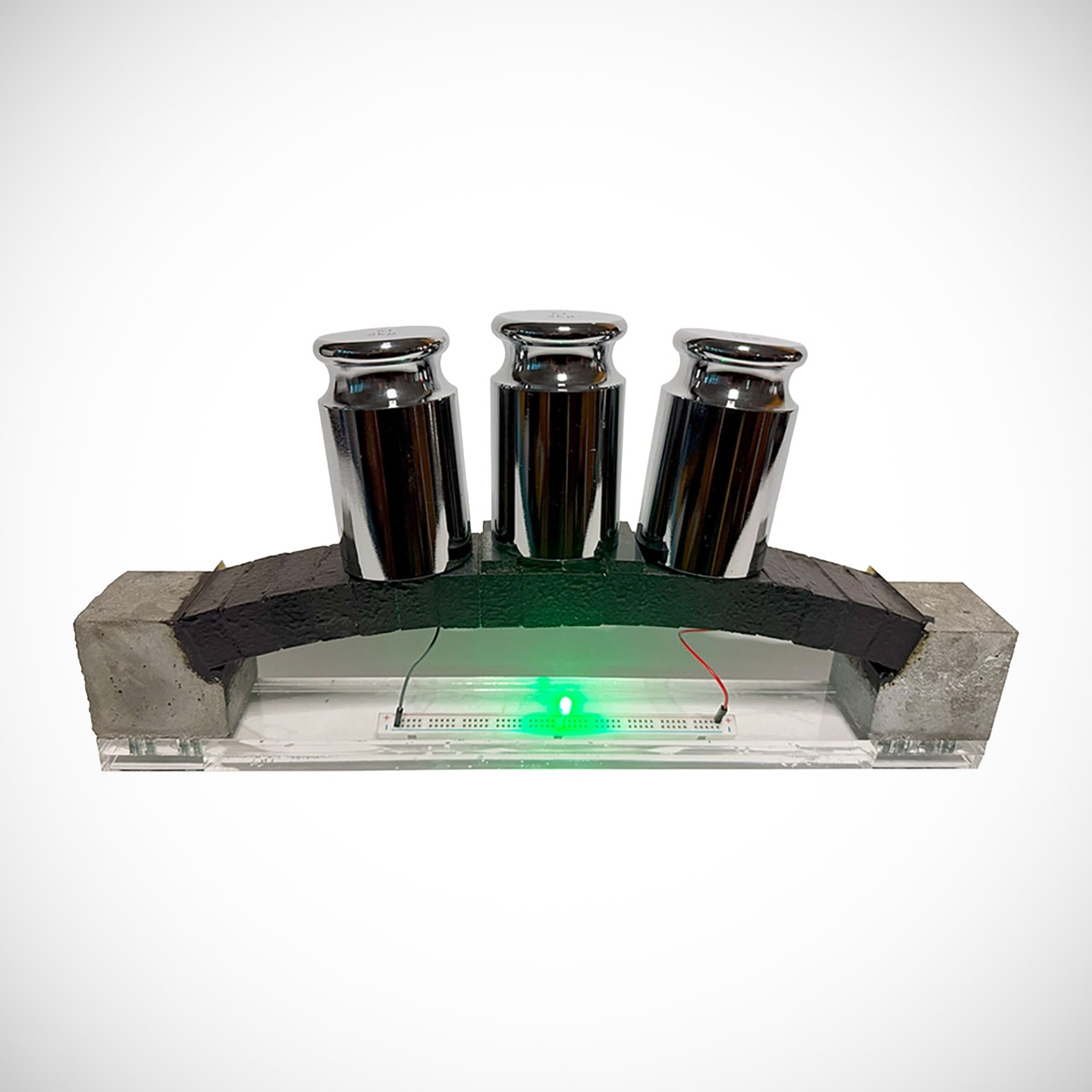
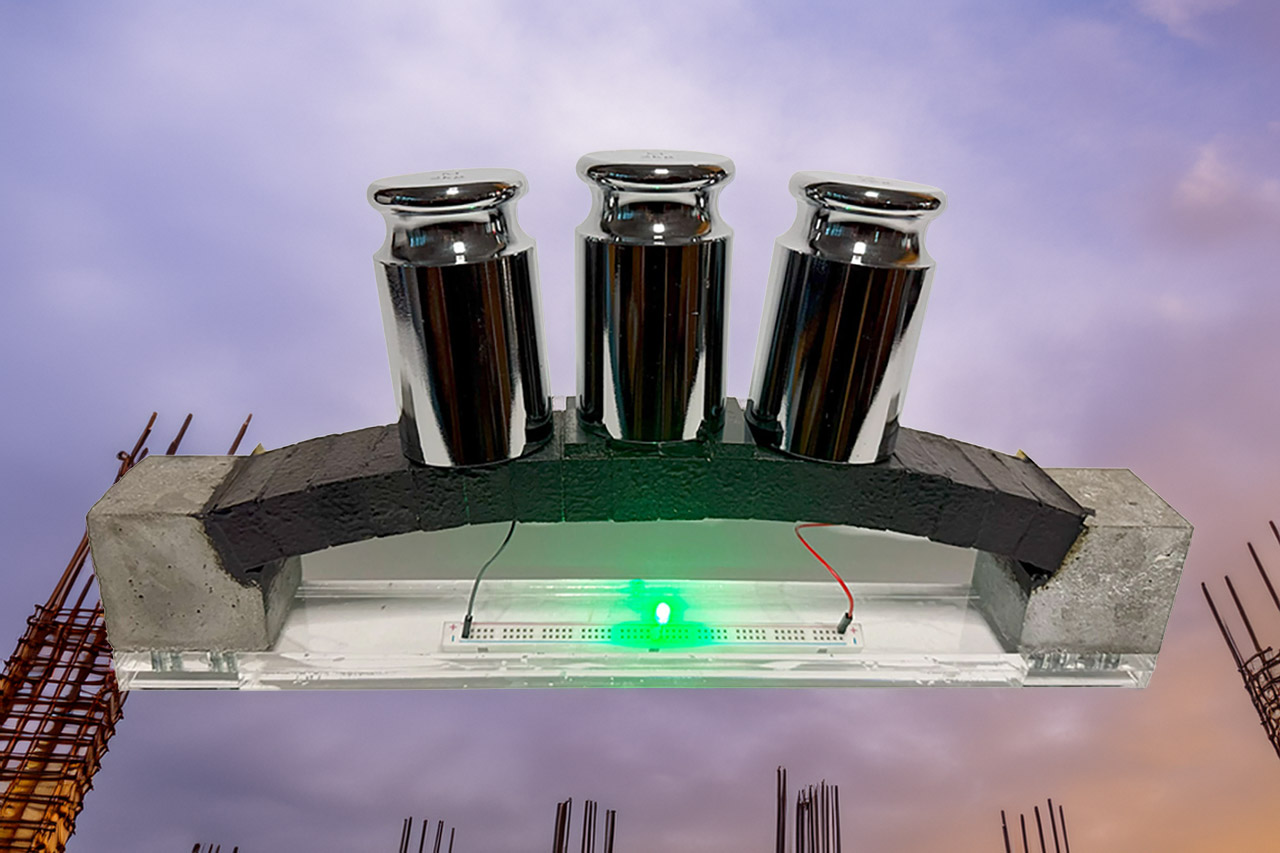
To show what ec3 can do, the team built a tiny dome inspired by the robust domes of ancient Roman construction. This powered a 9v LED light while carrying its own weight and extra loads. During testing, the light flickered as they added more weight. This means the concrete may be able to sense stress, like strong winds on a bridge, and alert when a structure is under pressure.
The possibilities are huge because concrete is the most widely used construction material in the world, from skyscrapers to parking lots. Converting it into a battery could solve a major problem for renewable energy. Solar panels and wind turbines generate electricity when the sun shines or the wind blows, but storing that energy for overcast days or calm nights is hard. Traditional batteries rely on limited elements like lithium and are expensive to scale. Ec3 is made from low cost, abundant materials (cement, water, and carbon black) and can last as long as the structure it is embedded in. A cubic meter of ec3 may not have the energy density of a lithium ion battery, but when it comes to whole walls or roadways, the volume makes up for it.
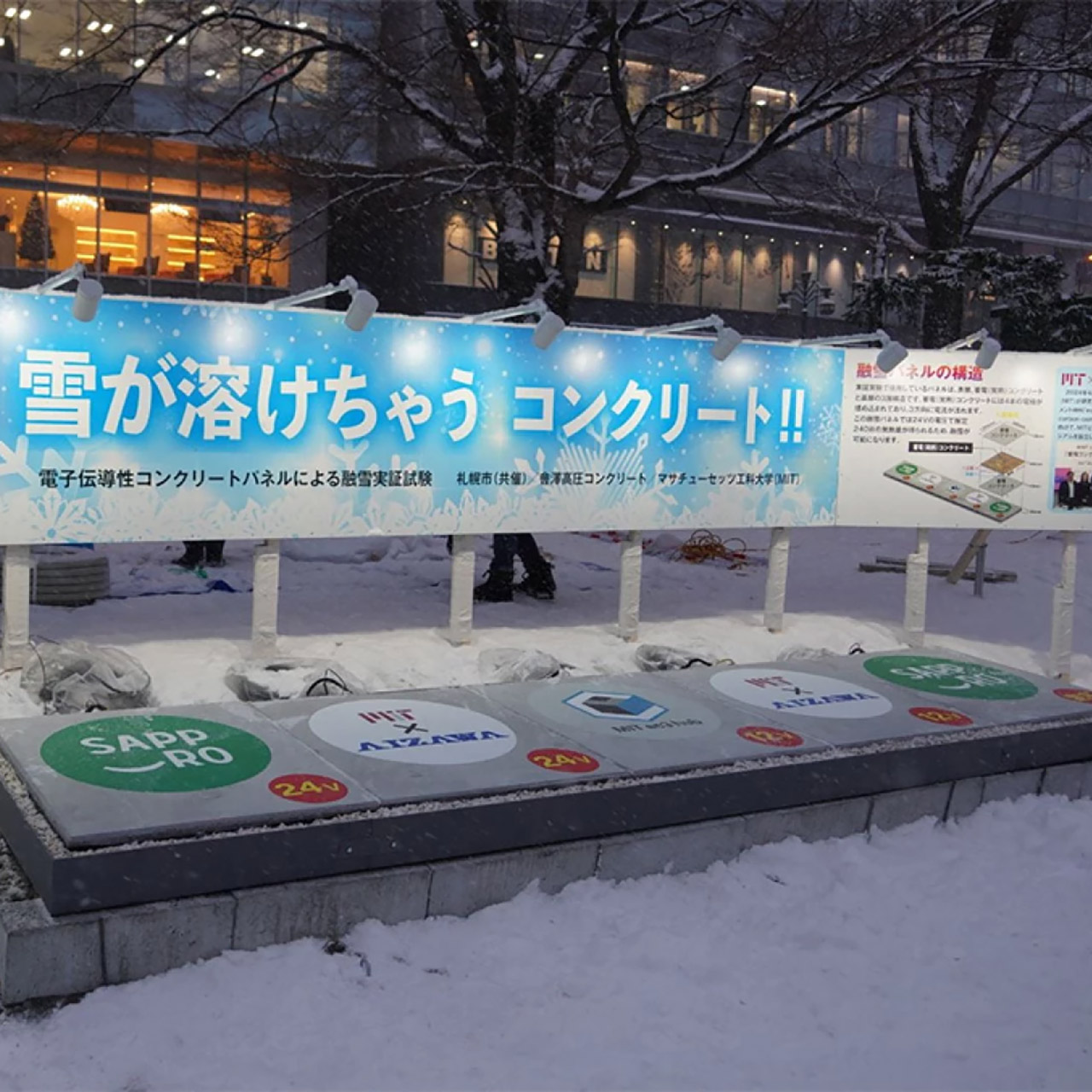
Future roads can charge electric cars as they drive, or there could be homes that store enough solar energy to go off grid. In Sapporo, Japan ec3’s thermal conductivity has been used to heat sidewalks, keeping them ice free without salt. Coastal cities could use it too, since one of the tested electrolytes – seawater – makes it a natural fit for marine environments, like supports for offshore wind farms. The researchers see this as part of a broader push to make concrete multifunctional, able to store energy, heal its own cracks or even capture carbon from the air.
[Source]