Every day Americans throw away mountains of food scraps—banana peels, coffee grounds, veggie trimmings—that clog landfills or at best sit in compost bins. But what if those leftovers could be useful, like a coaster, a cup holder or a decorative piece? The FOODres.AI 3D printer, created by MIT grads Yiqing Wang and Biru Cao, turns organic waste into functional items right from your kitchen.
Yiqing Wang and Biru Cao, both with backgrounds in architecture and design from MIT, launched this project through the university’s IDEAS social innovation program. They were shocked to learn that 40-50% of U.S. household food goes to waste. “We saw an opportunity to rethink how people interact with food scraps,” Wang says. “Instead of seeing them as trash, we wanted to turn them into something valuable.” Their solution combines artificial intelligence, 3D printing and an easy to use app to make this accessible to everyone, no skills needed.
No products found.
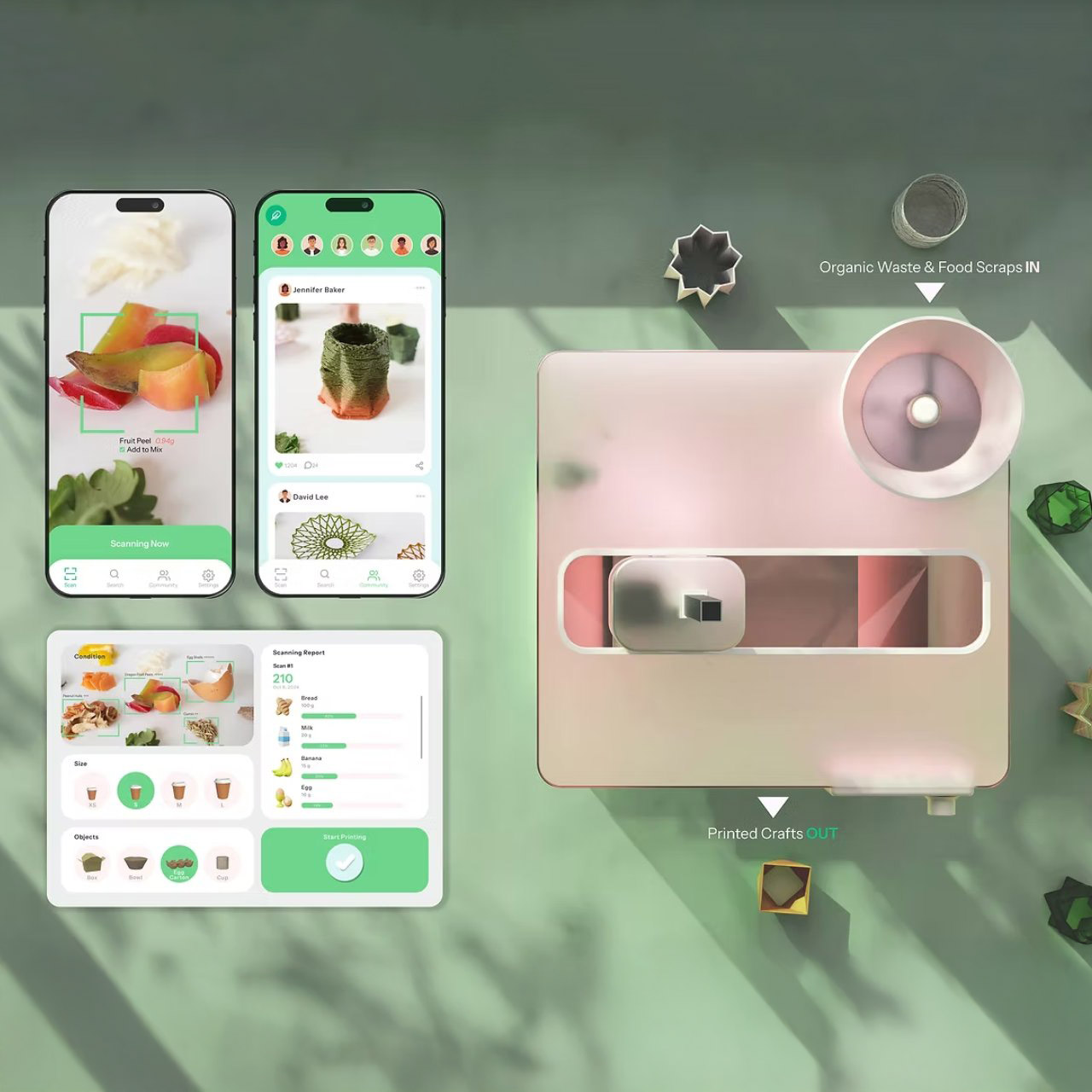
Using the FOODres.AI printer is as simple as throwing in your scraps. A mobile app, paired with your phone’s camera, scans the waste and then uses AI to identify the material and its properties. The app then offers “print recipes,” suggesting items based on what you’ve got. “The AI does the heavy lifting,” Cao explains. “It analyzes the scraps and figures out how to process them into something printable.” You can choose from a design library or upload your own, adjust the size and shape of the final product.
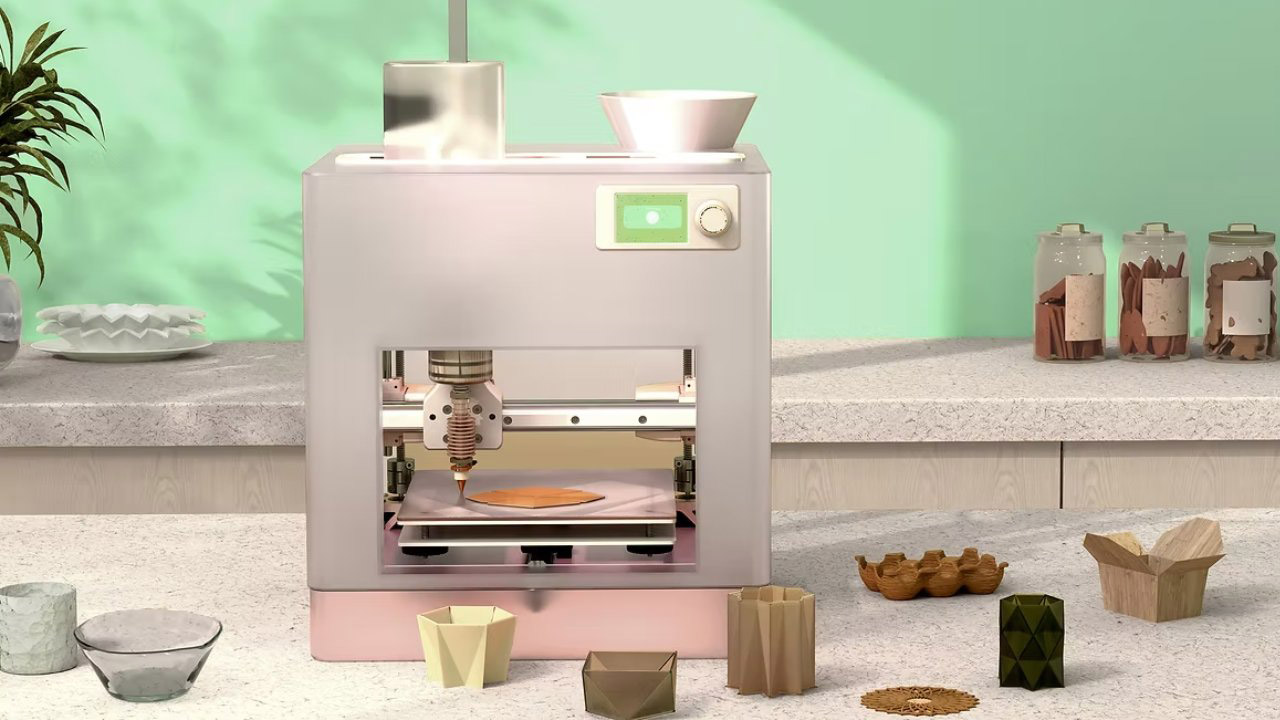
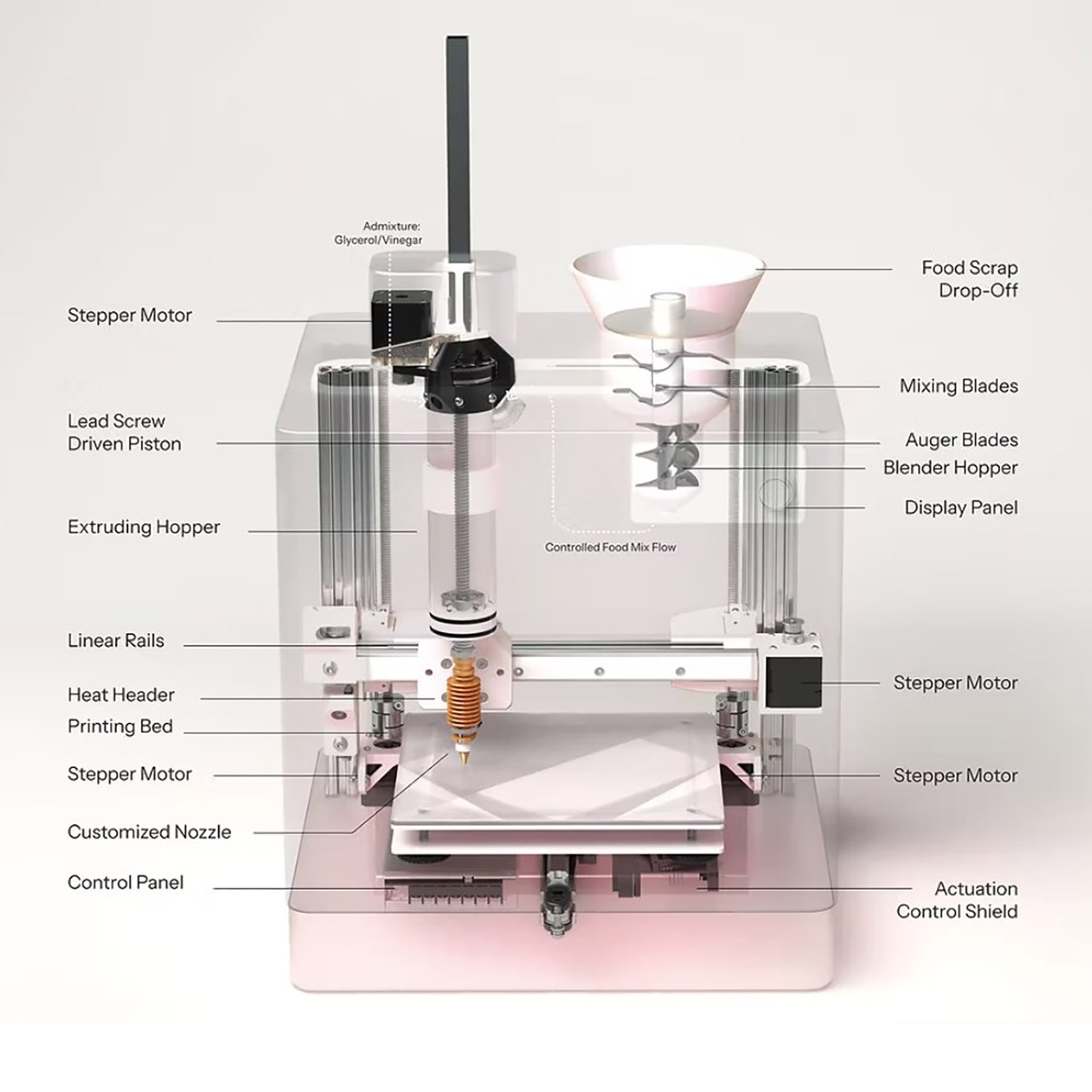
Inside the printer, a custom three-axis extrusion system takes over. The scraps go into a built-in heating and mixing chamber where they’re turned into a bioplastic paste made entirely from your kitchen waste. This paste is extruded layer by layer to create the chosen object. The whole process is hands-off, the machine does everything from processing to printing. The result? A coaster made from yesterday’s coffee grounds or a tray from wilted spinach, all without needing to know a thing about 3D printing.
By turning kitchen waste into useful items, it creates what Wang and Cao call “hyper-local circular economies.” This reduces the need for new materials and keeps waste out of landfills, all from your home. In the U.S. where food waste makes up to 50% of household organic waste, the impact is massive. “We’re not just making objects,” Wang says. “We’re making people rethink waste as a resource.” With its compact size and ease of use, this is a daily sustainability win.
[Source]